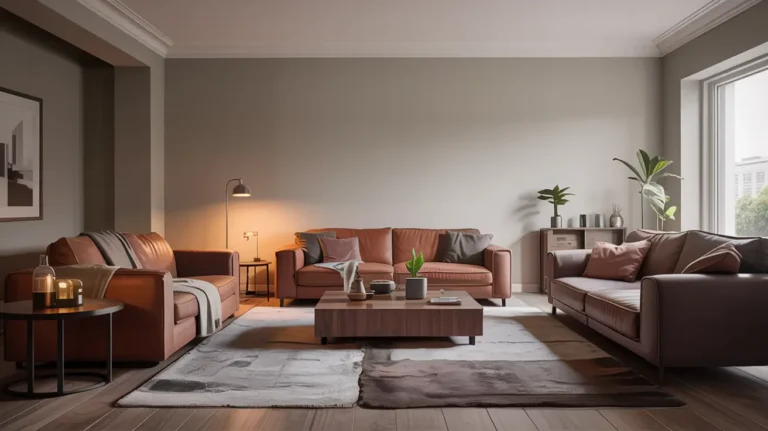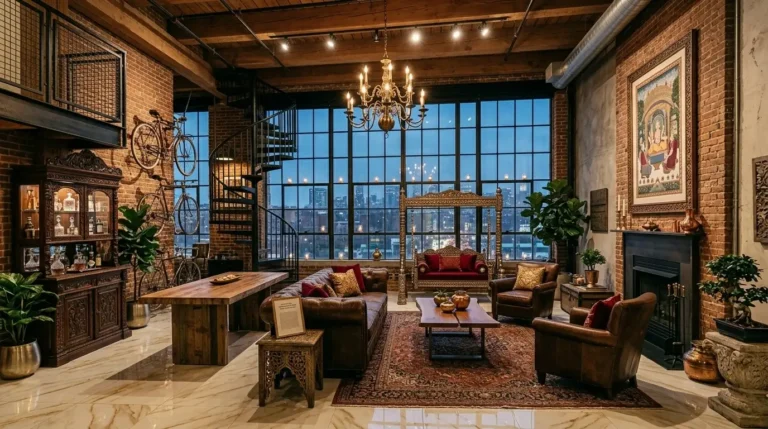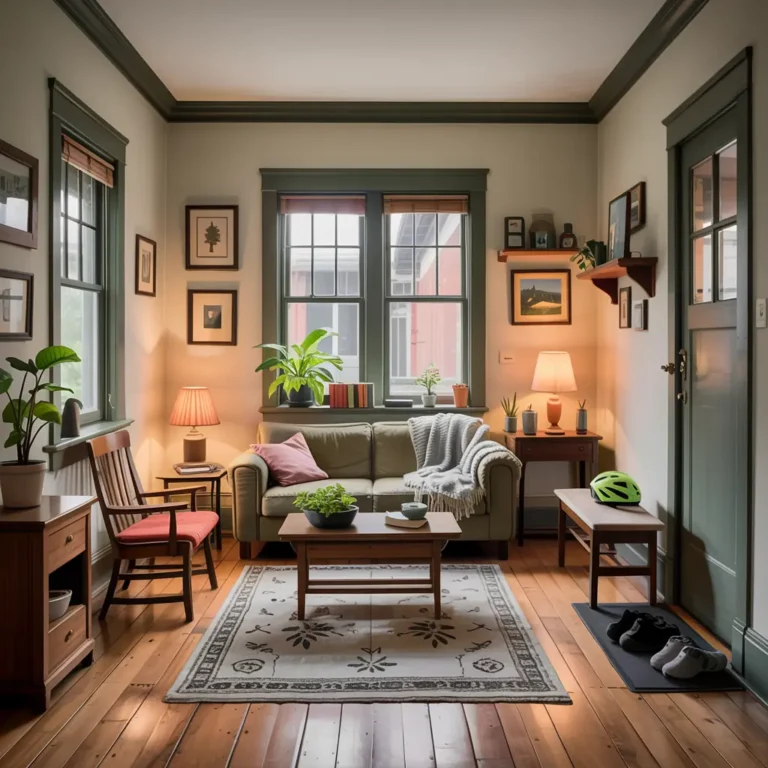

Most people think smart home interior design means buying gadgets and plugging them in. That assumption leads to homes full of mismatched devices, exposed wires, and five separate apps that nobody in the family can actually operate. Smart home interior design is something fundamentally different. It is the purposeful integration of IoT-connected technology into the architectural planning and aesthetic fabric of your living space, where every device either disappears into the design or actively enhances it.
What Is Smart Home Interior Design?
Smart home interior design is the intentional integration of IoT-connected devices, including smart lighting, smart thermostats, automated window treatments, and smart security systems, into a home’s spatial planning and aesthetics. The goal is to make technology invisible while improving comfort, energy efficiency, and personalization across every room of the living space.
What separates this discipline from ordinary home automation is design intent. A smart switch is not smart home interior design. A smart switch that matches the wall finish, controls a circadian lighting scene, and responds to voice commands without any visible wiring behind it — now that qualifies. The technology earns its place by serving the design, not competing with it.
In 2026, leading residential interior designers anchor this approach around one defining principle: the home should adapt to you, not the other way around. When a living room shifts from a bright productivity space to a cinematic viewing environment with a single voice command, that adaptability is what distinguishes an intelligent living space from simply an expensive one.
What Does “Invisible Technology” Mean in Smart Home Interior Design?
“Invisible technology” means smart devices, including recessed speakers, flush-mount sensors, in-wall charging stations, and concealed wiring, are physically embedded into the architecture itself. You experience the results automated lighting, hands-free climate control, voice-activated security without ever seeing the hardware responsible for delivering them.
Concealing technology is an active design decision made well before installation begins. Recessed speakers sit flush with ceilings. Smart thermostats are specified in finishes that match surrounding cabinetry. Motion sensors integrate into doorframes. In-wall charging stations replace standard outlet covers with purpose-designed hardware. Every visible surface tells only the interior design story, while intelligent infrastructure runs quietly beneath it.
This principle holds across design styles. A minimalist Scandinavian interior and a traditional period home can both carry full smart home integration without either one looking like a technology showroom.
What Are the Core Components of a Smart Home Interior Design?
The core components are smart lighting, smart thermostats, automated window treatments, smart security systems, voice-controlled systems, whole-home audio systems, and a centralized control hub. These communicate through Zigbee, Z-Wave, or Wi-Fi 6 protocols and respond to voice commands, mobile dashboards, or geofence-triggered automation.
Each component adds a distinct layer to the intelligent living experience. Here is how the primary ones function as genuine design elements.
How Does Smart Lighting Transform the Interior Design of a Room?
Smart lighting does far more than replace a standard bulb. Tunable LED fixtures adjust color temperature throughout the day, from cool daylight tones in the morning to warm amber light in the evening, directly supporting circadian rhythm alignment. Occupancy sensors dim or switch off lights automatically, delivering measurable energy consumption reduction without any input from the occupant.
Interior designers use smart lighting to build what the industry calls mood-based lighting scenes. One room can function as a focused workspace, an intimate dining environment, or a relaxed evening retreat using identical fixtures and the same physical footprint. The behavioral shift occurs at the light frequency level, not through moving any furniture.
How Do Smart Thermostats Integrate Into a Space Without Disrupting Its Look?
Smart thermostats like the Google Nest mount flush to feature walls in finishes selected to complement surrounding materials. They recognize occupancy patterns independently and enable zoned climate control across separate rooms. Geofence-triggered automation adjusts temperature before you arrive home, so comfort begins at the driveway rather than after you’ve walked in.
Beyond the aesthetic fit, smart thermostats produce the most immediate financial return through occupancy-based energy optimization. Empty rooms stop consuming heating or cooling resources. Behavioral patterns are learned within days of installation, and the resulting utility bill savings offset a meaningful portion of the initial investment.
How Do Automated Window Treatments Work as Part of a Smart Interior?
Motorized shades, smart blinds, and smart curtains integrate with the centralized control hub to respond to sun position, interior temperature, and scheduled daily routines. They block UV exposure during peak afternoon hours, protecting furniture and artwork, while concealed wiring keeps the window frame visually uncluttered and clean.
What elevates automated window treatments from gadget to genuine design element is their coordination with lighting and climate systems. When afternoon sun raises interior temperature, blinds close and the thermostat adjusts simultaneously. No command is required. The home responds to the environment before the occupant notices a problem.
What Role Do Voice-Controlled Systems Play in the Interior Design Experience?
Amazon Alexa, Google Assistant, and Apple Siri function as invisible interfaces between occupants and every connected device. They enable hands-free operation of smart lighting, smart locks, whole-home audio systems, and climate control, removing the need for physical remotes or visible touchscreens that interrupt the visual language of the designed space.
Speaker placement is a real interior design consideration here. Architectural speakers recessed into ceilings deliver whole-home audio with zero visible hardware. Smart hub devices specified in fabric or matte finishes sit on surfaces without drawing attention. In higher-end projects, voice control zones are mapped into the floor plan before walls are built.
How Are Smart Security Systems Integrated Without Altering a Home’s Aesthetic?
Smart security systems use design-matched hardware, including flush-mount motion sensors, smart locks that replace standard deadbolts, and smart doorbells with cameras set into existing frames, to deliver real-time monitoring without the visual weight of traditional security equipment. Smart smoke detectors and carbon monoxide detectors coordinate with lighting to produce visual alerts that are functional without being industrial.
The discreet security principle extends outdoors as well. Outdoor motion-sensor lighting activates only on demand and reads as standard landscape lighting during daylight hours. Every device operates through one mobile dashboard, giving full-home security coverage without a single component that visually announces its purpose.
Which Smart Home Ecosystem Should You Choose in 2026?
The right smart home ecosystem depends on your privacy priorities, device preferences, and long-term compatibility requirements. Apple HomeKit leads on privacy. Google Home leads on AI-driven automation. Amazon Alexa offers the widest device range. Matter protocol, now the 2026 open connectivity standard, eliminates brand lock-in entirely and represents the strongest future-proofing argument for any home built or renovated today.
| Feature | Apple HomeKit | Google Home | Amazon Alexa | Matter Protocol |
| Privacy | Highest | Moderate | Moderate | Device-dependent |
| AI Automation | Moderate | Highest | High | Not applicable |
| Device Range | Limited | Wide | Widest | Universal |
| Ecosystem Lock-In | High | Moderate | Moderate | None |
| Best For | Apple households | AI-driven automation | Budget and flexibility | Future-proofing every build |
| Protocol Support | Thread / Zigbee | Zigbee / Wi-Fi | Zigbee / Z-Wave / Wi-Fi | All protocols unified |
For anyone building or renovating in 2026, specifying Matter-compatible devices from the outset removes the single biggest long-term risk in smart home design: choosing the wrong ecosystem and inheriting its limitations for years.
What Is the Difference Between Hardwired and Wireless Smart Home Systems?
Hardwired smart home systems run through structured wiring panels and Ethernet infrastructure, delivering maximum reliability and stronger hack resistance. Wireless systems use Zigbee, Z-Wave, or Wi-Fi 6 and install without structural changes, making them the practical route for retrofitting and rental properties. Both system types can now operate on Matter protocol for long-term compatibility.
| Feature | Hardwired | Wireless |
| Reliability | High | Moderate |
| Installation Cost | $10,000 to $15,000+ | $500 to $5,000 |
| Best For | New builds, major renovations | Retrofits, renters, apartments |
| Hack Resistance | Higher | Lower |
| Scalability | High | High via modular expansion |
| Protocol Support | Ethernet, structured wiring | Zigbee, Z-Wave, Wi-Fi, Matter |
The design implication is clear: hardwired systems justify their cost in new construction where walls are already open. Wireless systems are the practical and budget-accessible path for existing homes where retrofitting full cable infrastructure would require reopening finished surfaces.
How Much Does Smart Home Interior Design Cost in 2026?
Smart home installation costs range from $49 for a single entry-level device to over $15,000 for full whole-home automation, with the industry average sitting at approximately $897. Costs scale with scope, infrastructure type, and whether you engage an HTA Certified integrator for pre-wire planning and system design documentation.
| Tier | Budget Range | What Is Included |
| Entry-Level | $49 to $500 | Smart lighting, smart thermostat, voice assistant |
| Mid-Tier | $500 to $5,000 | Smart security, motorized shades, whole-home audio |
| Luxury | $5,000 to $15,000+ | Full hardwired integration, integrator collaboration, complete pre-wire infrastructure |
The phased approach delivers the strongest ROI on smart home upgrades. Begin with smart lighting and a smart thermostat. Both install without contractors, generate immediate utility bill savings, and establish your centralized control hub before security systems, audio, and automated window treatments are layered in.
Can You Retrofit Smart Home Technology Into an Older Home Without Renovation?
Yes. Older homes support fully functional smart interiors through wireless smart home systems that require zero structural changes. Smart switches replace standard wall plates. Smart locks install over existing deadbolts. Smart blinds mount using tension or adhesive systems. A portable smart hub connects every device through one app, and every piece of hardware removes cleanly if you move out.
This matters particularly for renters, who represent a large and underserved audience in smart home design content. The modular system design approach makes the economics work too. You are not buying a complete system at once. You build it room by room, device by device, with each addition communicating through a shared protocol. On a Matter-enabled network, a device added three years from now connects as seamlessly as the first one installed today.
How Does a Smart Home Environment Affect Mental Wellbeing?
Responsive smart home environments reduce decision fatigue by automating low-stakes choices that quietly consume mental energy throughout the day. Circadian lighting regulates sleep quality and morning alertness at the physiological level. Geofence-triggered automation removes the background anxiety of forgotten tasks. Research links ambient intelligence in living environments to lower cortisol levels and improved mental clarity across both work and rest periods.
This is the angle that nearly every competitor entirely ignores. Wellness-centric home design in 2026 positions circadian lighting, indoor air quality monitoring, and VOC level tracking not as luxury features but as measurable contributions to occupant health. When your home handles the routine decisions independently, your attention is redirected to the things that actually require it.
How Can Smart Home Design Support Accessibility and Neurodivergent Needs?
Smart home design significantly improves daily independence for people with mobility impairments, sensory sensitivities, and cognitive differences. Voice-controlled systems remove the need to reach physical switches. Smart locks enable fully keyless, hands-free entry. Geofence-triggered automation handles repetitive daily tasks without demanding deliberate interaction. Smart beds and indoor air quality monitors create precisely controlled, low-stimulus environments that respond to the body rather than requesting constant input from it.
For older occupants, the same features that read as convenience for the general household become genuine safety and independence tools. Smart smoke detectors that push mobile alerts, smart locks that allow authorized remote access, and automated lighting that prevents falls in dark hallways share the same design logic as convenience features. The application differs, but the installation does not.
Conclusion
Smart home interior design in 2026 is not about having the most devices or the highest-spec hardware. It is about designing a living environment where technology works quietly in the background, improving comfort, energy efficiency, wellness, and safety without ever demanding your attention. Start with the foundational components, build on an open ecosystem, plan for future-proofing from the first device, and treat every technology decision as an interior design decision. Homes that achieve this do not look smart. They simply feel extraordinary to live in.
FAQs About Smart Home Interior Design
Does smart home interior design increase home resale value?
Yes. Integrated smart home systems, particularly hardwired setups that include smart lighting, smart security, and whole-home audio, increase property value and attract buyers who prioritize energy efficiency and modern convenience. The ROI on smart home upgrades is strongest when technology is embedded at the design phase rather than surface-mounted as a visible retrofit after construction is complete.
What is the best first step when planning a smart home interior?
Start with smart lighting and a smart thermostat. Both install without structural changes, operate across Apple HomeKit, Google Home, and Amazon Alexa, and produce immediate utility bill savings. They establish your centralized control hub before security systems, automated window treatments, or whole-home audio are added in subsequent phases.
What is Matter protocol and why does it matter for smart home design in 2026?
Matter is an open-source connectivity standard backed by Apple, Google, Amazon, and Samsung that allows devices from different brands to communicate on one unified network. It eliminates ecosystem lock-in and resolves long-standing compatibility conflicts between Zigbee, Z-Wave, and Wi-Fi devices. In 2026, specifying Matter-compatible devices is the single most effective future-proofing decision in any smart home design project.
How do I protect a smart home from cybersecurity threats?
Cybersecurity in smart home design means selecting devices with encrypted network protocols, creating a separate IoT network segment that isolates smart devices from personal computers, enforcing regular firmware update schedules, and assigning strong unique passwords to every connected device from initial setup. These are design-layer decisions made at the beginning of the project, not reactive fixes applied after a vulnerability is discovered.