
Baroque interior design is a style built on grandeur, opulence, and drama, using gilded accents, crystal chandeliers, carved furniture, and ornate moldings inside a symmetrical layout. It started in 17th century Italy and France, but you do not need a palace to pull it off in your own home.
If the words “too much” or “stuffy museum” pop into your head when you picture this style, you are not alone. Most people either go overboard or avoid it completely out of fear. Let’s break down what actually makes this design approach work, without turning your living room into a costume party.
What Is Baroque Interior Design?
Baroque interior design is a decorating style rooted in grandeur, opulence, and drama that began in 17th century Italy before spreading through France under Louis XIV. It uses gilded accents, crystal chandeliers, ornate moldings, carved furniture, and painted ceilings, all held together by symmetry and a clear sense of structure.
This style grew out of the Catholic Church’s Counter-Reformation, when religious and royal power needed a visual language strong enough to impress and persuade. That history is exactly why Baroque interior design still feels so commanding today. It was built from the ground up to grab attention.
Is Baroque the Same as Rococo?
No, they are related but different. Baroque is bold, symmetrical, and tied to grandeur and drama, often connected to the Catholic Church and Louis XIV’s power. Rococo grew out of Baroque but softened it, favoring lighter colors and delicate curves over Baroque’s heavier, more theatrical statement pieces.
Think of Rococo as Baroque’s gentler younger sibling. Where Baroque uses deep jewel tones and bold scale, Rococo leans into pastel tones and smaller, more playful ornamentation. Both styles share carved detail and gilded finishes, but the overall mood lands very differently in a finished room.
What’s the Difference Between Baroque, Rococo, Hollywood Regency, and Modern Baroque?
Baroque is the original 17th century style built on symmetry and grandeur. Rococo softened it with pastel colors and gentler curves. Hollywood Regency and Modern Baroque, made popular by designer Dorothy Draper, reinterpret Baroque drama with bold contemporary color, glam finishes, and a lighter overall footprint.
[Comparison Table] Baroque vs Rococo vs Hollywood Regency vs Modern Baroque
| Style | Era | Color and Mood | Best For |
| Baroque | 17th century Italy and France | Deep jewel tones, gilded, theatrical | Statement rooms, formal spaces |
| Rococo | 18th century evolution | Pastels, soft curves, delicate | Bedrooms, intimate spaces |
| Hollywood Regency | 20th century reinterpretation | Bold contrast, glam, mirrored | Modern glam interiors |
| Modern Baroque | 20th century (Dorothy Draper) | Bright colors, bold scale | Eclectic, maximalist rooms |
What Are the Key Characteristics of Baroque Interior Design?
This style is defined by grandeur, opulence, and drama expressed through gilded accents, crystal chandeliers, ornate moldings, carved furniture, painted ceilings, and intricate tapestries. Even with that much detail packed in, symmetry and a clear central axis layout hold the entire room together visually.
You will also find fresco style ceiling work, raised stucco detailing, and marble veining used as grounding elements. These materials add weight and texture, keeping the space from feeling flat or one note despite all the ornamentation layered into it.
What Colors Are Used in This Style?
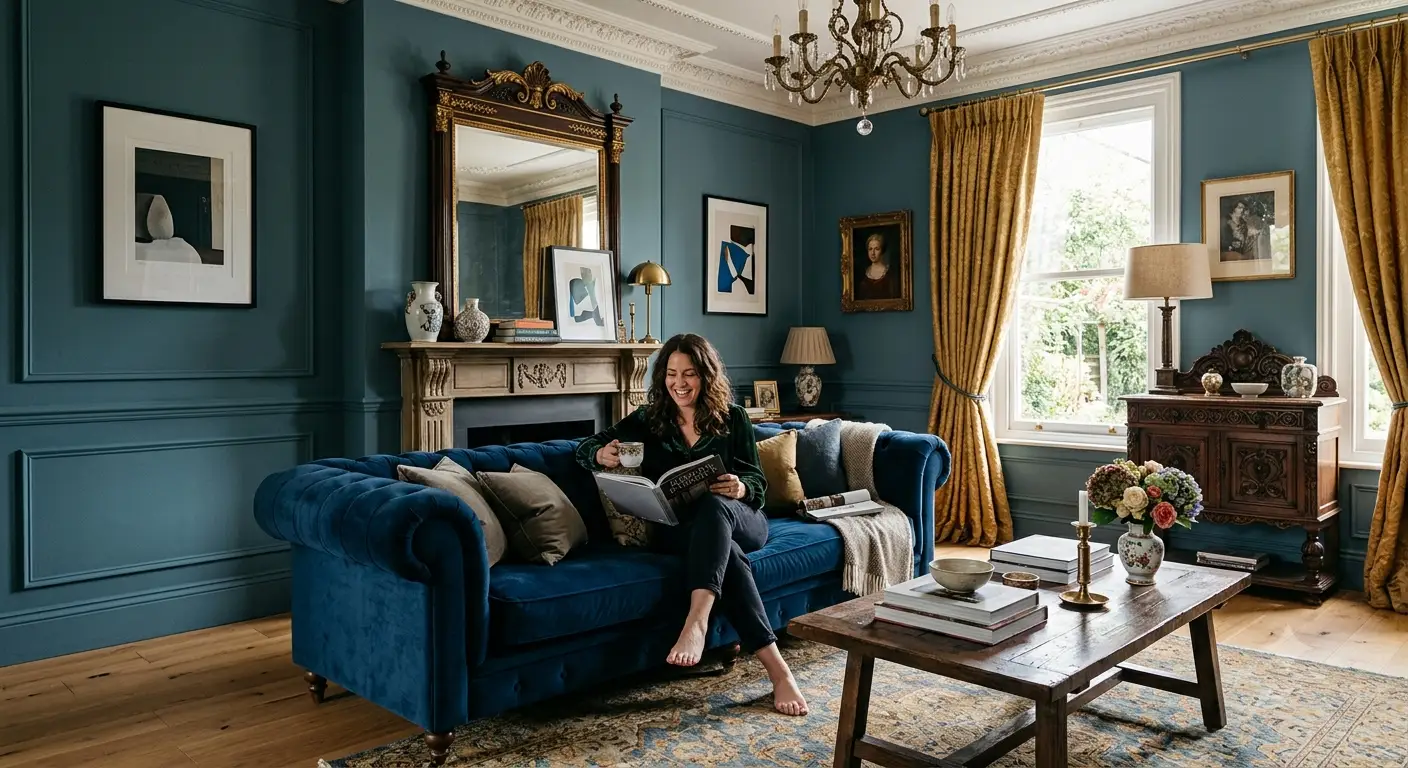
Baroque rooms lean on deep jewel tones like burgundy, emerald green, and navy blue, paired with gold accents for contrast and richness. These bold colors create drama on purpose, but they usually get balanced against neutral walls so the gilded accents and carved furniture actually stand out instead of getting lost.
What Furniture Defines Baroque Style?
Baroque furniture features curved legs, sculptural shapes, and carved detail inspired by floral motifs, scrollwork, and the acanthus motif. Pieces like the fauteuil chair are upholstered in velvet or damask fabric, designed to command attention on their own rather than just blend into the background.
How Do You Create a Baroque Interior Without It Looking Like a Museum?
Focus on curation and restraint instead of covering every surface in detail. Choose one or two statement furniture pieces, build the room around a clear focal point, and leave enough negative space so the grandeur feels intentional instead of cluttered or overdone.
Here’s a simple approach that works in almost any room:
- Pick one statement piece, like a carved sofa or a gilded mirror, and let it lead
- Build a central axis layout around that one focal point
- Balance deep jewel tones with neutral walls so the room can breathe
- Add a crystal chandelier or wall sconces as a secondary highlight
- Leave breathing room so detail does not compete with itself
Once that core piece is in place, everything else in the room should support it rather than fight for the same attention.
How Do You Avoid Baroque Interiors Looking Cluttered?
Cluttered Baroque rooms usually happen because too many small ornate pieces are fighting for attention instead of one or two strong choices doing the work. Stick to curation and restraint, repeat a limited color palette throughout the space, and let negative space frame your main focal point clearly.
How Do You Mix Baroque With Modern Furniture?
Eclectic mixing works best when a Baroque piece, like a carved mirror or a fauteuil chair, gets placed against a simpler modern backdrop instead of competing with other ornate styles. Let that single piece serve as the focal point, then keep everything around it neutral so the contrast does the visual work.
A carved console table against a plain white wall, for example, reads as intentional and striking. The same table surrounded by patterned wallpaper and more carved accents starts to compete with itself and loses its impact.
How Does Lighting Work in This Style?
Layered lighting is essential here, combining crystal chandeliers, wall sconces, and candlelight to create strong chiaroscuro style contrast between light and shadow. This dramatic lighting highlights ornate moldings, carved furniture, and painted ceilings, reinforcing the theatrical feel that defines the entire room.
Is Baroque Interior Design Expensive?
It can be, but it does not have to be. True antiques and investment pieces sit at the top of the price range, while reproduction furniture and a few statement accents, like gilded accents or one chandelier, let you capture that same drama for a fraction of the cost.
What’s the Difference Between Authentic Antiques and Reproductions?
Authentic antiques carry real age, history, and craftsmanship, often sourced through vintage marketplaces like 1stDibs. Reproductions recreate the look using modern materials and manufacturing at a much lower cost. Both can deliver grandeur, but antiques tend to hold or grow in value over time as collectible pieces.
Where Can I Buy Baroque Furniture?
Authentic and vintage pieces are commonly sourced through marketplaces like 1stDibs, while reproduction furniture and statement accents come from retailers that carry carved furniture, gilded mirrors, and chandeliers directly. Mixing in one real antique piece with a few reproduction accents balances authenticity with a realistic budget.
If you are starting out, buy your one true investment piece first, then build the reproduction accents around it once you know what tone and scale you actually want to live with.
Can Baroque Style Work in a Small Apartment?
Yes, as long as you apply restraint. Focus this design style on a single focal point, such as one statement mirror, a chandelier, or a carved sofa, instead of layering ornate moldings and tapestries across the entire space. Curation matters even more once square footage gets tight.
Can Renters Achieve This Style Without Permanent Changes?
Yes. Renters can lean entirely on furniture, textiles, and accessories instead of anything permanent like painted ceilings or built in moldings. A statement mirror, layered lighting through lamps or sconces, velvet upholstery, and deep jewel tone textiles can deliver real Baroque drama without touching the walls or ceiling at all.
Is Maximalism the Same as Baroque Style?
Not exactly. Baroque is one historical root of today’s maximalism, but maximalism is broader and blends grandmillennial style, eclectic mixing, and several design eras together. This older approach specifically brings the gilded accents, symmetry, and theatrical drama that ground a maximalist room in real history.
Designers are increasingly calling this “thoughtful maximalism,” meaning the layered, eclectic look stays intentional rather than chaotic. Baroque pieces fit naturally into that mindset since every carved detail already serves a clear visual purpose.
What Is Grandmillennial Style and Is It Related to Baroque?
Grandmillennial style mixes traditional, often Baroque inspired pieces, like carved furniture and floral motifs, with a younger, more personal sensibility. It connects to Baroque through shared elements such as ornate moldings and tapestries, but leans toward a collected, lived in feel rather than full theatrical grandeur.
How Are Designers Using AI Tools to Plan Baroque Rooms in 2026?
Interior designers are increasingly using AI rendering tools to test furniture placement, color combinations, and focal point composition before committing to expensive carved furniture or chandeliers. This lets homeowners preview deep jewel tones and gilded accents virtually before spending a dollar on the real pieces, which lowers the risk of an expensive mistake.
Final Thoughts
Baroque interior design does not have to mean palace sized rooms or a museum budget. Pick one or two statement pieces, build the room around a clear focal point, and let restraint do as much work as the gilding does. Get those basics right, and you will land on grandeur that feels intentional, not overwhelming, no matter how big or small your space actually is.
FAQs
What is Baroque interior design?
It is a 17th century style built on grandeur, opulence, and drama, using gilded accents, crystal chandeliers, carved furniture, and painted ceilings inside a symmetrical layout.
What colors are used in Baroque interior design?
Deep jewel tones like burgundy, emerald green, and navy blue paired with gold accents, usually balanced against neutral walls so the ornamentation stands out clearly.
What furniture is used in Baroque interior design?
Curved, sculptural pieces with carved detail, including the fauteuil chair, upholstered in velvet or damask fabric and inspired by floral and scrollwork motifs.
Is Baroque interior design expensive?
It depends. Authentic antiques sit at the top of the price range, while reproduction furniture and a few statement accents can capture the look affordably.
Can Baroque style work in a small apartment?
Yes, if you apply it to a single focal point rather than layering ornate moldings and tapestries throughout the whole space.
Is maximalism the same as Baroque style?
No. Baroque is one historical root of maximalism, but today’s maximalism blends grandmillennial style, eclectic mixing, and several other eras together.
Can renters do Baroque style decor?
Yes. Stick to furniture, textiles, and accessories like mirrors, lamps, and velvet upholstery instead of permanent changes to walls or ceilings.
Where can I buy Baroque furniture?
Vintage marketplaces like 1stDibs carry authentic antique pieces, while standard furniture retailers offer reproduction carved furniture, mirrors, and chandeliers at lower price points.