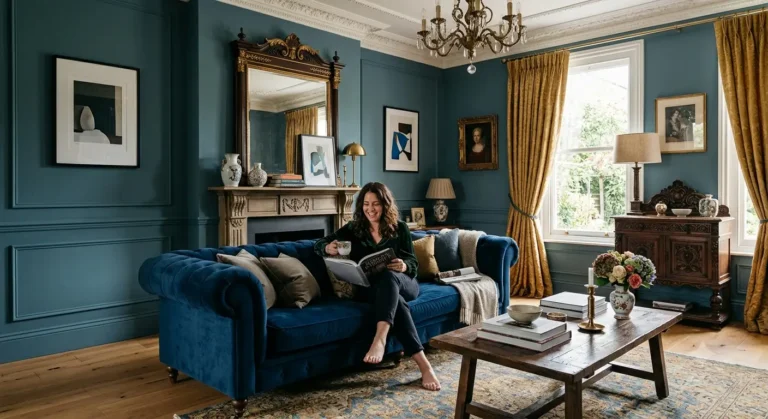

Edwardian interior design is the light, elegant home style that took over Britain between 1901 and 1910, right after King Edward VII took the throne. It swapped the dark, heavy rooms of the Victorian era for bright spaces filled with natural light, soft colours and simple, well made furniture. If you’ve ever walked into an old home with big bay windows, pale walls and delicate plaster mouldings and felt instantly calmer, you were probably standing in an Edwardian room.
This guide breaks down everything you need to know about the style. We’ll cover the history, the colours, the materials, the room by room details and how to bring this timeless look into a modern home in 2026 without spending a fortune or wrecking original features.
What Is Edwardian Interior Design?
Edwardian interior design is a decorating style from Britain’s Edwardian era, spanning 1901 to 1910 during King Edward VII’s reign. It replaced heavy Victorian interior design with light filled rooms, pastel colour schemes, Arts and Crafts movement simplicity and Art Nouveau details, all built around natural light and understated luxury.
The Edwardian period was short but it left a huge mark on British homes. It sat between two very different worlds. On one side was the crowded, ornate Victorian era. On the other was the modernism that followed World War One. Edwardian design borrowed a bit from Georgian interiors too, pulling back the clutter and focusing on proportion and calm.
What Makes a House Edwardian?
A house counts as Edwardian if it was built between 1901 and 1910. You’ll usually spot red brickwork, symmetrical facades, gable roofs and sometimes half timbered exteriors or mock Tudor cladding on the outside. Inside, look for plaster mouldings, picture rails and parquet flooring instead of the cluttered Victorian interiors that came before.
These houses tend to be wider than Victorian terraces. Builders had more land to work with in the growing suburbs, so rooms got bigger and hallways got wider too.
Why Did Edwardian Design Move Away From Victorian Style?
Social change, the health and hygiene movement and a growing demand for light and airy interiors pushed homeowners away from Victorian excess. People wanted natural light maximisation, restrained ornamentation and quality over quantity, with Georgian interiors offering a cleaner, calmer template to build from.
This wasn’t just a fashion shift. It was tied to real life changes happening across Britain at the time.
How Did Social Change Shape Edwardian Home Design?
The health and hygiene movement pushed builders toward brighter rooms with better airflow. Fewer homes had live in servants, so the back staircases and servant quarters common in Victorian houses started disappearing. This freed up floor space and led to more open, flexible layouts.
Suburbanisation played a huge role too. As families moved out of packed city centres, they built larger homes with gardens in places like Hampstead Garden Suburb, Dulwich and Blackheath. These areas gave architects room to experiment with lighter, more spacious layouts that simply weren’t possible in cramped Victorian streets.
What Architectural Features Define Edwardian Houses?
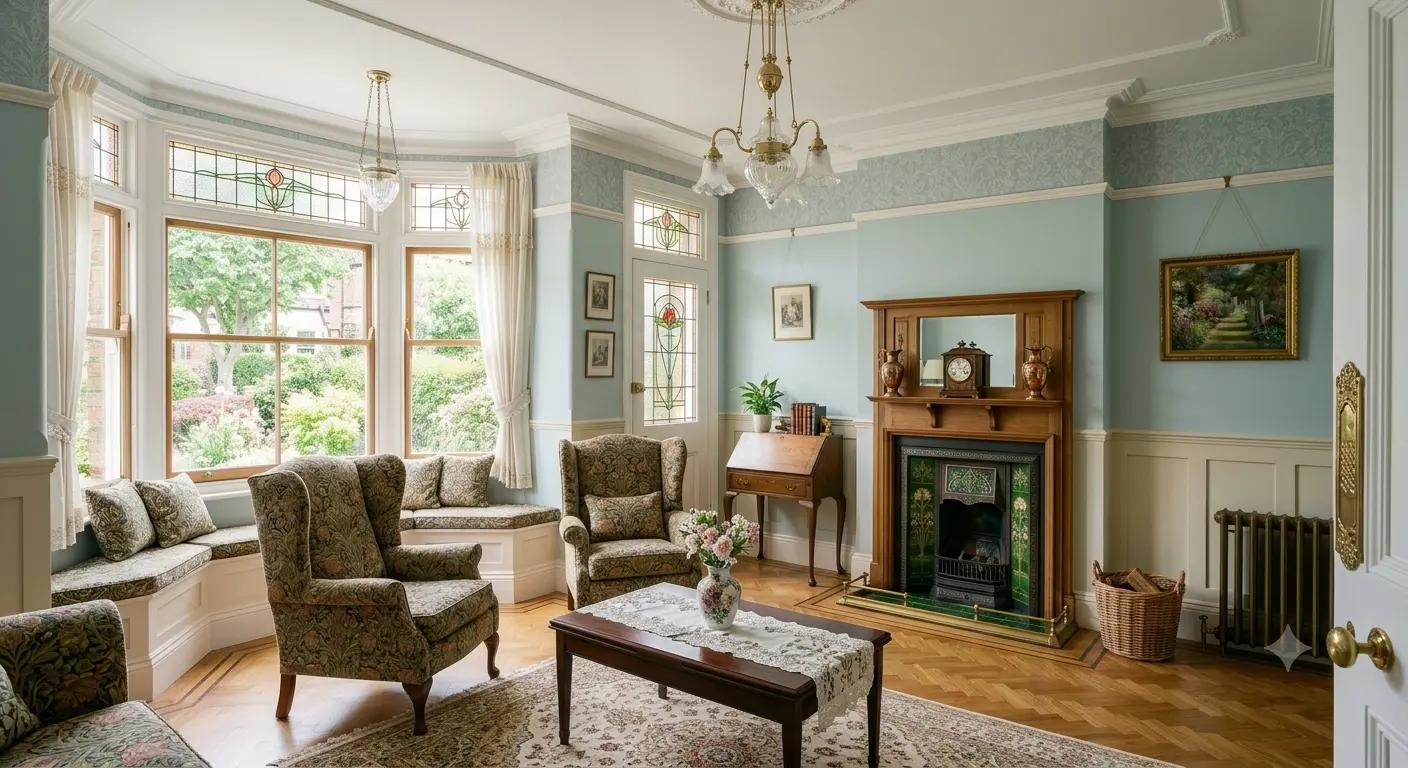
Edwardian houses are known for sash windows, bay windows, stained glass windows and leaded windows, paired with red brickwork and symmetrical facades. Inside, you’ll find plaster mouldings, ceiling roses, coving, cornicing, picture rails, dado rails and wood panelling throughout the main living spaces.
What Are Edwardian Sash Windows and Why Do They Matter?
Edwardian sash windows commonly used a six over two pane layout. The upper section had six small panes while the lower half was one large sheet of glass. This let far more light into the room compared to the tiny multi pane Victorian windows before it. Paired with bay windows and decorative glazing, these windows are one of the clearest signs you’re looking at a genuine Edwardian home.
Who Designed Notable Edwardian Houses?
Architect Edwin Lutyens designed some of the most celebrated homes of the period. His work includes Folly Farm, completed with garden designer Gertrude Jekyll in 1912, and Great Dixter, finished the same year. Lutyens also shaped much of Hampstead Garden Suburb, blending real craftsmanship with the airy proportions that define Edwardian architecture.
What Colours Are Used in Edwardian Interiors?
Edwardian interiors lean on a pastel colour palette. Think soft greens, creams, duck egg blue, lilac and pale yellow. This soft colour scheme reflects the era’s obsession with natural light maximisation, moving far away from the deep burgundies and forest greens found in Victorian interior design.
These colours weren’t chosen at random. Pale shades bounce light around a room much better than dark ones. Edwardian homeowners knew this, which is why walls and ceilings were often painted in the lightest tones while woodwork took slightly deeper shades for contrast.
- Sage green and olive
- Soft cream and ivory
- Duck egg blue and pale grey
- Lilac and soft pink
What Materials and Furniture Define This Style?
You’ll find mahogany furniture, oak furniture and wicker furniture throughout Edwardian homes, often finished with wrought iron detailing, brass fixtures or copper fixtures. Fabrics leaned on lace and linen fabrics, voile curtains and muslin curtains. Furniture followed a strict quality over quantity rule, a direct rejection of cluttered Victorian interiors.
What Flooring Is Common in Edwardian Houses?
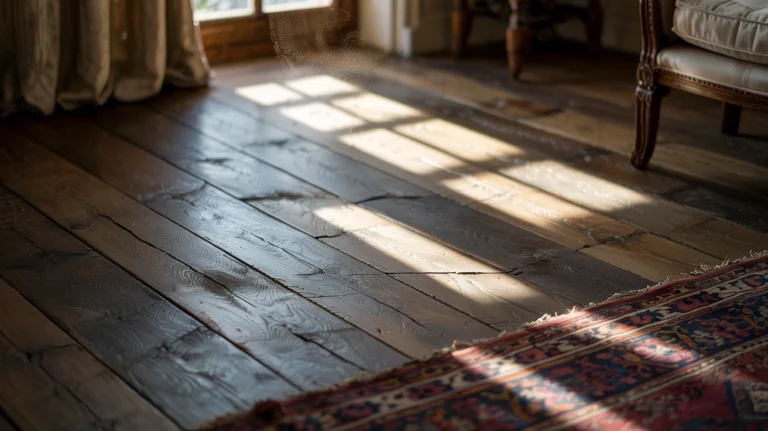
Parquet flooring and inlaid wood flooring were staples in living areas, often finished with a simple rug rather than wall to wall carpet. Kitchens and bathrooms leaned toward hexagonal tiles or white subway tiles, both chosen for how easy they were to keep clean.
How Does Art Nouveau Influence Edwardian Interior Design?
Art Nouveau brought botanical motifs and stylised florals into Edwardian homes through floral wallpaper, damask patterns and stained glass windows. This artistic movement worked alongside the Arts and Crafts movement to soften the overall restrained ornamentation of the period without tipping back into Victorian clutter.
You’ll see this most clearly in the details. A plain plaster ceiling rose might carry a subtle acanthus leaf pattern. A door panel might hold a stained glass insert with a single stylised flower. Nothing overwhelming, just enough to add character.
How Do You Decorate Room by Room in Edwardian Style?
Getting the Edwardian look right means treating each room a little differently.
How Do You Decorate an Edwardian Living Room?
Use wing chairs, mahogany or oak furniture and a tiled fireplace surround as your focal point. Add pendant lighting or wall sconces for warmth in the evening. Dress your windows in voile curtains and resist the urge to overfill the space. Edwardian living rooms feel light and airy because they aren’t packed with stuff.
How Do You Decorate an Edwardian Kitchen?
Choose shaker style cabinets and freestanding furniture pieces, paired with white subway tiles or hexagonal tiles on the floor. This setup reflects the Edwardian shift toward practical, hygienic kitchens, a clear break from the more decorative kitchens found in earlier Victorian interior design.
How Do You Decorate an Edwardian Bathroom?
Install a clawfoot bathtub or pedestal sink alongside white subway tiles and hexagonal flooring. These heritage features tie directly back to the Edwardian focus on cleanliness, made possible by the era’s rapid advances in indoor plumbing.
How Do You Restore or Modernise an Edwardian House?
Restoring or updating an Edwardian home takes care but it’s not as scary as it sounds. Here’s what actually matters.
How Can I Retain Original Features While Updating an Edwardian Home?
Preserve heritage features like stained glass windows, ceiling roses, coving and plaster mouldings whenever you can. Use sympathetic renovation methods and heritage style windows if replacements are unavoidable, always keeping building regulations compliance in mind. The goal is respecting period charm, not erasing it for the sake of a quick update.
Can You Achieve an Edwardian Look on a Budget?
Yes, and this is easier than most people think. Focus on upcycling furniture and reupholstering old pieces with lace or linen style fabrics. Stick to a pastel colour palette across your walls, and add smaller heritage features like picture rails or dado rails where you can. Quality over quantity keeps your spending under control while still nailing the period charm.
- Repaint before you replace anything
- Reupholster instead of buying new
- Add one or two authentic details per room, not ten
What Are the Challenges of Restoring Edwardian Homes Today?
Restoring an Edwardian home means fitting modern plumbing, wiring and insulation into a structure that wasn’t built for any of it, all without damaging original plaster mouldings or panelling. Add in building regulations compliance around fire safety, and the process demands real patience along with a decent budget.
Sourcing original materials is another hurdle. Genuine Edwardian tiles, coving or stained glass panels are getting harder to find, and skilled tradespeople who understand this era of craftsmanship are in short supply too.
Can Edwardian and Modern Furniture Be Mixed Together?
Yes, layering old with new works well as long as scale and proportion match the room. Pair mahogany or oak antique pieces with clean lined modern furniture, and let heritage features like panelling, coving and parquet flooring anchor the space. Simple modern sofas often let ornate original details stand out even more.
Victorian vs Edwardian Interior Design: What’s the Difference?
Victorian interior design ran from 1837 to 1901 and favoured dark colours with dense ornamentation, the classic cluttered Victorian interiors look. Edwardian interior design followed from 1901 to 1910, embracing light and airy interiors, a pastel colour palette and restrained ornamentation inspired partly by Georgian interiors and its focus on natural light.
| Feature | Victorian Interior Design | Edwardian Interior Design |
| Era | 1837 to 1901 | 1901 to 1910 |
| Colour | Deep dark tones | Pastel colour palette |
| Ornamentation | Cluttered Victorian interiors | Restrained ornamentation |
| Windows | Small decorative panes | Bay windows sash windows |
| Influence | Gothic Revival heavy classicism | Arts and Crafts movement Art Nouveau |
| Flooring | Dark carpets | Parquet flooring inlaid wood |
Final Thoughts
Edwardian interior design has stuck around for over a century because it solves a problem people still care about today. Nobody wants a home that feels cramped, dark or overloaded with stuff. By focusing on natural light, a soft colour palette and a handful of well chosen heritage features, you can bring real Edwardian charm into almost any home, old or new, without spending more than you need to.
FAQs
Is Edwardian interior design still popular today?
Yes. Edwardian interior design remains popular thanks to its light and airy interiors and quality over quantity approach. It fits modern homes well because it never relied on heavy Victorian interior design darkness to feel elegant.
What colours are considered authentically Edwardian?
Soft greens creams duck egg blue lilac and pale yellow make up the authentic Edwardian pastel colour palette. These shades support natural light maximisation and directly reject the darker tones common in Victorian interior design.
Do Edwardian interiors require antique furniture?
No. Modern furniture with clean lines and balanced scale fits nicely into an Edwardian inspired room, especially when paired with heritage features like coving or picture rails already in the space.
Can I add Edwardian style to a small terrace or flat?
Yes. Focus on light colours, minimal furniture and one or two heritage features like a picture rail or a simple fireplace surround. You don’t need a huge house to capture the feel, just the right proportions and a calm colour scheme.
How much does it cost to restore an Edwardian house?
Costs vary a lot depending on how much original work survives. Small updates like repainting in period colours or reupholstering furniture cost very little. Full restoration involving windows, plasterwork and rewiring is a much bigger investment and usually needs a specialist contractor.