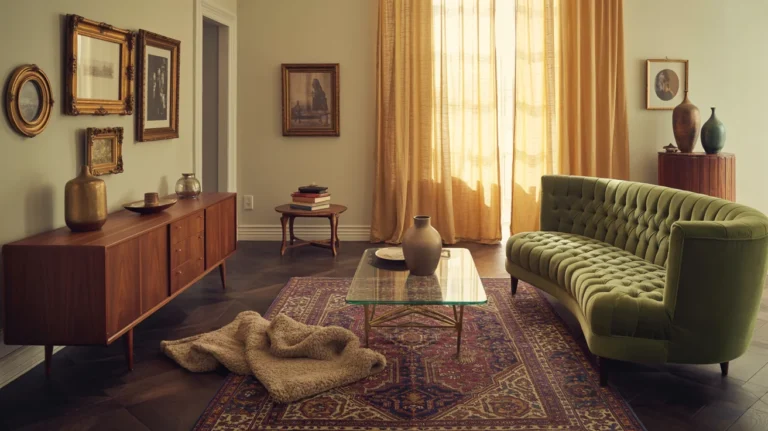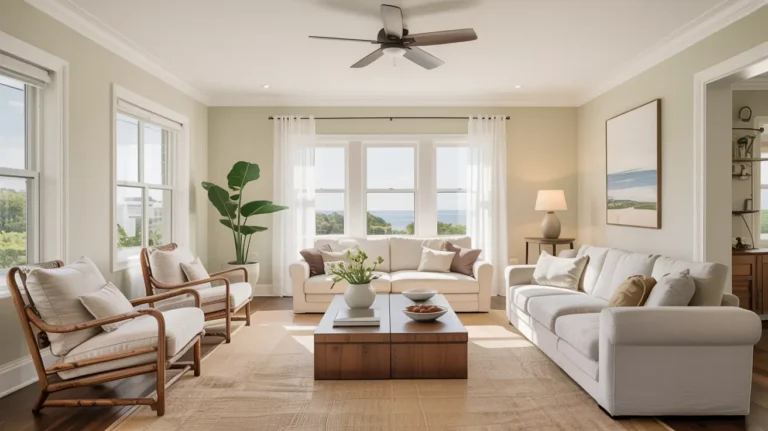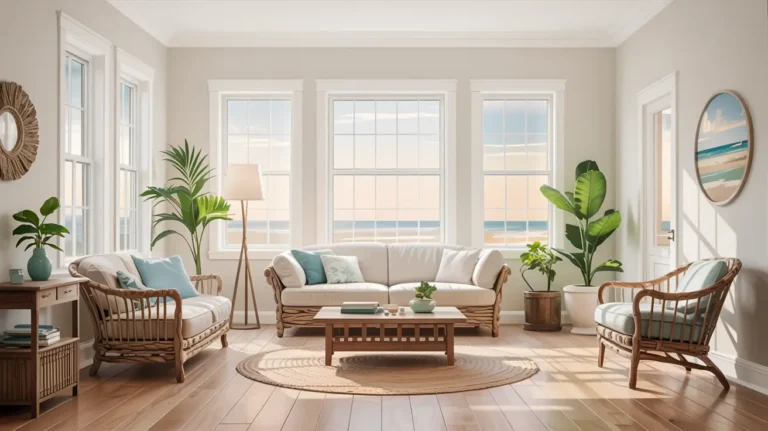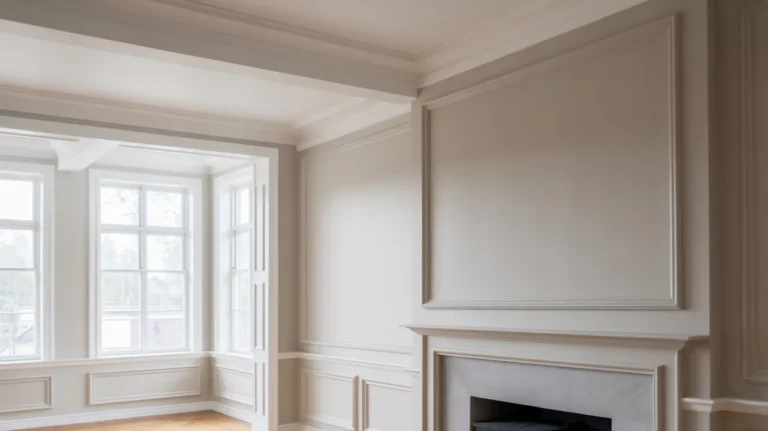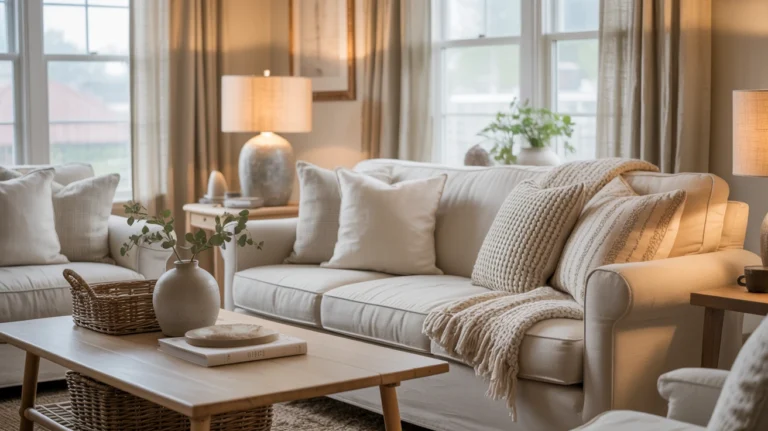

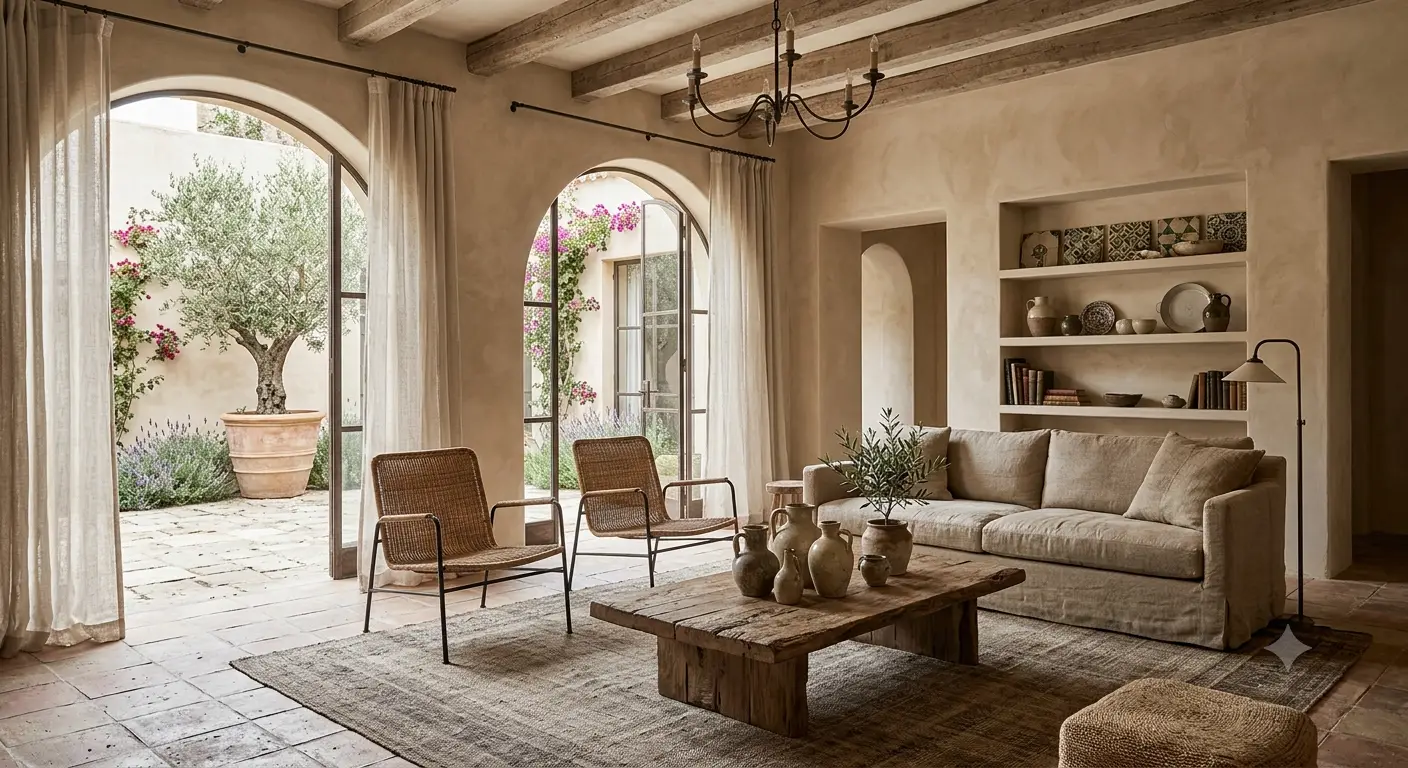
Mediterranean interior design blends terra-cotta roof tiles, arched doorways, and wrought iron with an earthy colour palette pulled from 21 countries around the Mediterranean Sea. It leans more colourful and rustic than typical coastal design. In 2026 the look has shifted toward limewash and quieter tones instead of the bright blue and white version most people picture.
Maybe you picture a Greek island or a Tuscan villa. Both count, and so does a small apartment two hours from any coastline, since none of this actually requires living near water. Let’s go through what makes a room genuinely read as Mediterranean and how to get there in 2026.
What Are the Characteristics of Mediterranean Interiors?
Mediterranean interiors share a clear set of signals no matter which country inspired them. The details work together to create warmth without feeling cluttered.
- Arched doorways and archways framing hallways or windows
- Exposed beams left visible on the ceiling
- Wrought iron on railings, light fixtures, or furniture legs
- Stucco or plaster walls with visible texture, not a flat finish
- Natural stone or mosaic tiles on floors and backsplashes
- Whitewashed walls acting as a neutral base for colour
This is indoor-outdoor living translated into a checklist. Every item on it exists because it once served a real purpose, keeping homes cool, bright, and connected to the outdoors. Los Angeles designer Jeff Andrews, who has built a career around this look for Architectural Digest, puts it simply: the style rewards light naturals and bold pops of colour over anything too polished or matched.
What Colors Are Considered Mediterranean?
Mediterranean colour schemes lean on an earthy colour palette: terracotta, sandy beige, olive green, and ochre, balanced against whitewashed walls as a neutral base. Blue and yellow show up too, but usually as accents rather than the main event.
Little Greene built an entire colour guide around this exact idea. Their approach pairs a rich colour like deep green or blue in one room with lighter neutrals nearby, so nothing feels flat or one note. Balancing light and dark tones this way is what keeps a Mediterranean room from tipping into either sterile white or overwhelming saturation.
What Tiles Are Used in Mediterranean Design?
Tile does more visual work in this style than almost anything else. Country Floors and Aparici both build entire product lines around it, and the range is wider than most people expect.
Common choices include:
- Zellige tiles, handmade Moroccan tiles with a slightly uneven, rustic finish
- Azulejos, the Spanish tile tradition known for vivid colour and pattern
- Mosaic tiles and terrazzo for floors that want texture without overwhelming a room
- Travertine or limestone as a quieter, natural stone alternative
- Iznik tiles, with Arabesque design details rooted in Turkish craftsmanship
- Hydraulic tiles for a bold geometric floor pattern
- Large-format tiles, non-slip tiles, or porcelain tile for bathrooms and patios
- Calacatta Viola Marble for a more upscale, veined look
One thing nobody selling these tiles tells you. Terracotta and Zellige are porous, so seal the grout after installation and reseal it about once a year. Wipe up oil or wine spills quickly since unsealed grout stains fast.
How Do You Decorate a Mediterranean Living Room?
Start with rustic furniture and carved wood furniture as your anchor pieces, then build texture around them. The goal is layering textures, not matching everything.
Add these one at a time:
- A flat-weave rug in a muted, natural tone
- Sheer curtains that let light move through the room
- Open shelving to display ceramic jugs and vases instead of hiding them
Mixing rustic and luxury works better than picking one lane. A rough wood coffee table next to a soft linen sofa feels lived in rather than staged, and that lived in quality is really the whole point.
How Do You Bring Mediterranean Style Into a Kitchen and Dining Room?
The kitchen and dining room carry more cultural weight in this style than almost any other room. Denby built entire tableware lines around exactly this idea, since Mediterranean life centers on the table.
Table linen in a neutral or earthy tone sets the base, then ceramic serveware and a simple centrepiece finish the look. Fresh olive branches or lemon trees in a jug work better than anything store bought. If you’re serving food to match, tapas or mezze style spreads suit the shared, unfussy nature of this kind of table setting.
How Do You Create Mediterranean Outdoor Spaces?
A courtyard, terrace, or patio isn’t an afterthought here. It gets the same care as any room inside. French doors or sliding doors keep the two spaces connected visually and physically.
Furnish outdoor areas with:
- Wicker or rattan seating, sometimes paired with wrought iron
- Olive trees, lavender, or bougainvillea for greenery
- Solar shades or gauzy curtains to soften harsh sun
Zoning outdoor spaces the same way you’d zone a living room, with seating separate from dining, makes even a small patio feel intentional. Bringing nature indoors works the same way in reverse, carrying plants and natural texture from the patio into the house. Energy-efficient windows and a swimming pool are common modern additions that don’t clash with the traditional look, especially in warm climates like California and Florida where this style has always felt at home.
Is Mediterranean Style Still in Style in 2026?
Yes, but the version people picture from the 2000s is fading out. 2026 design forecasts point to something called refined Mediterranean style, and it looks different from the blue and white version most people know.
The shift favors limewash over painted stucco, a muted Aegean blue instead of a bright primary blue, and colour drenching, painting walls, trim, and ceiling the same tone instead of scattered accent colours. It’s a quieter, more textured take on the same bones. If your version of Mediterranean interior design still leans on heavy wrought iron and golden Tuscan walls, that’s the look 2026 is moving away from. Think fewer, better pieces with real texture instead of more decoration layered on top.
Can This Style Work Without an Ocean View?
Yes, and this trips people up more than anything else. The style depends on connection to nature, texture, and light, not an actual view of water.
Natural stone, linen, and an earthy colour palette translate to a landlocked apartment just as well as a coastal villa. The goal is building a sanctuary at home, a space that feels warm and unhurried regardless of what’s outside the window. Skip the nautical clichés and lean on material and texture instead, and the look holds up anywhere.
How Do You Do Mediterranean Style on a Budget?
Decluttering costs nothing and does more for this look than any purchase will. Less-is-more styling means a few well chosen pieces beat a room full of matching decor.
From there, add one or two rustic furniture pieces or a set of ceramic jugs and vases rather than replacing everything at once. Second hand shops and flea markets are actually a better source than most retail stores, since distressed finishes and patina are the whole point here, not a flaw to hide. Renting? Flat-weave rugs, sheer curtains, and table linen deliver the same layering technique without touching walls or floors, and every one of them moves with you when the lease ends.
What’s the Difference Between Italian, Spanish, and Greek Interior Design?
These three get lumped together as one style, but they read differently once you know what to look for.
Italian interior design leans neutral, built around walnut, cedar, and chestnut wood and old-world craftsmanship. Spanish interior design runs bolder, with azulejos, distressed finishes, and patina doing most of the work. Greek interior design stays cooler and simpler, favoring geometric patterns and nautical touches like seashells and driftwood.
[Comparison Table] Italian vs Spanish vs Greek
| Style | Colour Mood | Signature Material | Texture |
| Italian | Neutral, refined | Carved wood furniture | Old-world craftsmanship |
| Spanish | Bold, warm | Azulejos | Distressed finishes, patina |
| Greek | Cool, simple | Geometric patterns | Nautical touches, seashells |
Final Thoughts
Mediterranean interior design rewards texture and restraint over matching everything perfectly. You don’t need a coastal view or a full renovation budget to get it right. Pick three or four elements from this guide, one earthy colour, one good tile choice, and a few rustic pieces, then build outward from there.
Start with colour and texture before you touch anything structural. The rest of the room will follow that lead, and it tends to happen faster than people expect once the first few pieces are in place.
FAQs
How do you mix Mediterranean style with furniture you already own?
Lean into an eclectic mix rather than replacing everything. Add one or two rustic furniture pieces and keep an earthy colour palette running through your textiles, and the rest of your furniture can stay exactly as it is.
How do you make a small house look Mediterranean?
Keep whitewashed walls as your base so the room stays bright, then add texture through a flat-weave rug and open shelving instead of bulky furniture. Small rooms actually suit this style well since it favors restraint over clutter, and one strong arched mirror can do more than a room full of small decor.
Is limewash paint worth it for a Mediterranean interior?
Yes if you want the authentic 2026 look. Limewash creates an uneven chalky texture flat paint cannot copy. It costs more upfront but it’s the clearest signal of the current refined version of this style.
What defines Moorish influenced Mediterranean design?
Moorish influence shows up mainly through tile pattern work, especially the roots behind Zellige tiles, plus arched forms throughout a home. It’s often reduced to one tile choice when it’s really its own design language.
How do you sustainably source materials for Mediterranean design?
Look for old-world craftsmanship in reclaimed or secondhand pieces instead of new production. Vintage wrought iron, reclaimed natural stone, and secondhand ceramics gain rustic charm and patina with age, which new pieces can’t fake no matter how much they cost. Architectural salvage yards are worth checking before any big box store.
What’s the difference between Mediterranean and coastal design?
Coastal design is the broader, breezier seaside category. Mediterranean interior design is a specific branch of it, more colourful and eclectic, shaped by indoor-outdoor living and Southern European culture rather than a generic beach house look.
What makes Santorini and Ibiza interior style different?
Santorini favors minimalist whitewashed walls and vaulted ceilings built for small spaces and strong light. Ibiza stays relaxed, pairing that same white base with terracotta and greenery. Laura Yerpes Estudio has built real projects around both looks.
When did this style become popular in the US?
The style reached the US in the 1920s, inspired by the Italian Renaissance of the 14th century and the Spanish Revival of the 16th century, both originally built with adobe and local stone. The French Riviera style added its own glamorous branch in the 1930s, and all three still shape the look today.