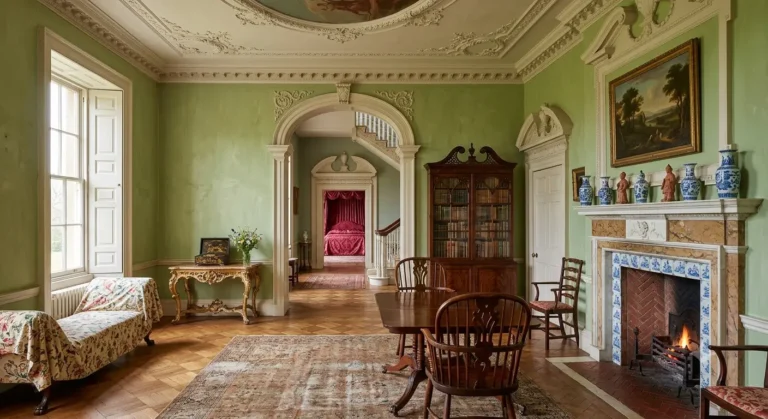

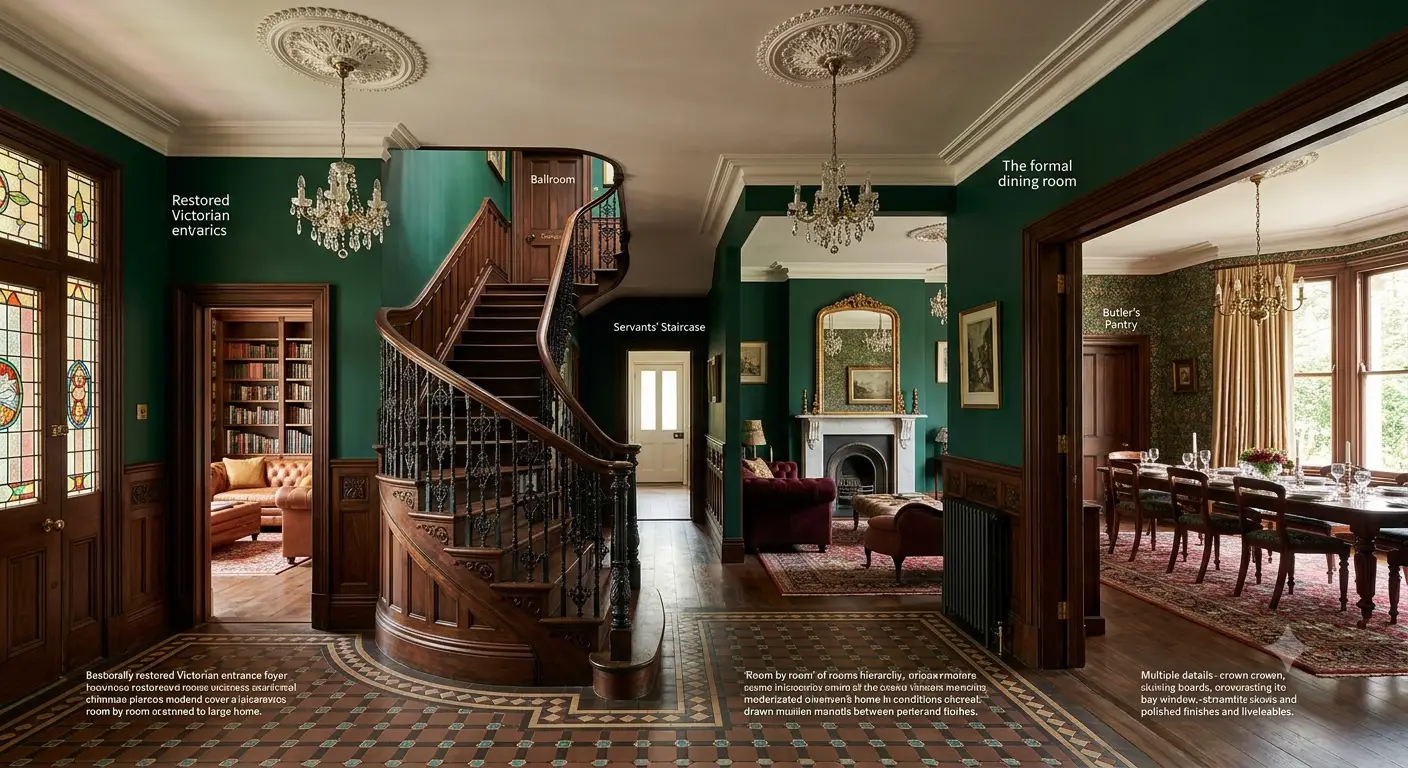
A Victorian mansion interior blends ornate architectural details like carved cornicing, stained glass windows, and a grand staircase with rich color and dark wood furniture from the 1837 to 1901 era. In 2026, getting the look right means honoring those original features while making the home work for how you actually live now.
If you own one of these properties, you already know the feeling. The house holds more history than most museums, but modern life still needs to fit inside it somehow. Let’s go room by room and question by question so you know exactly where to start.
What Rooms Does a Victorian Mansion Have?
A true Victorian mansion goes well beyond a living room and a kitchen. Larger homes had a full hierarchy of formal, private, and service rooms, each with its own job to do.
You will typically find:
- A drawing room or parlor for entertaining guests
- A formal dining room, sometimes seating a dozen or more
- A library or study for quiet reading
- A morning room for informal daytime use
- A ballroom on larger properties, often tucked on an upper floor
- Service spaces like a butler’s pantry, scullery, and servants’ hall
- A separate servants’ staircase, sometimes paired with a dumbwaiter
Before you even reach these rooms, the entrance sets the tone. Many mansions greet you through a grand foyer or entrance hall, finished with a coffered ceiling, crown molding, and a bay window pulling extra light into the space.
Most owners no longer need a scullery or a full servants’ hall today. But knowing these rooms existed explains the strange layouts, narrow back stairs, and extra doors many mansions still have.
What Architectural Styles Shape a Victorian Mansion?
Victorian architecture was never one single look. It borrowed heavily from earlier and neighboring styles, which is why two Victorian mansions can feel completely different from each other.
The main influences include:
- Gothic revival, known for pointed arches and dramatic detail
- Italianate style, with taller windows and more symmetry
- Queen Anne style, famous for turrets and mixed textures
- Georgian style, the simpler, earlier look Victorian design reacted against
- The Arts and Crafts movement and Aesthetic movement, which pushed handmade detail over factory sameness
Edwardian style followed right after, trading some of that heaviness for lighter, airier rooms. If your mansion was built close to 1901, it may already show early signs of that shift.
How Do You Design a Victorian Mansion Living Room?
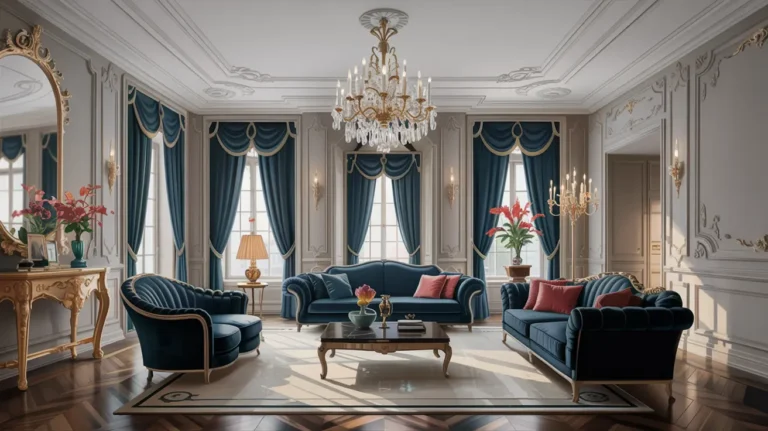
Center the room around what’s already there. Most drawing rooms were built with an ornate fireplace or chimneypiece as the natural focal point, framed by cornicing and a ceiling rose overhead.
From there, layer in the details:
- A chesterfield sofa or chaise lounge as your statement piece
- A gilded mirror above the mantel to bounce light around the room
- A chandelier as the main light source, not recessed lighting
- Velvet upholstery on one or two pieces, not every surface at once
Don’t leave a fireplace alcove as leftover space. Built-in shelving on either side turns it into real storage that still respects the room’s original architrave and skirting board detail.
What Colors Work Best in a Victorian Mansion?
Color does more work in a Victorian interior than almost any other choice you’ll make. The Victorians heated their homes with coal, so darker tones hid soot and smoke stains better than pale ones. That’s part of why deep, saturated color still reads as authentic today.
A reliable starting point:
- Pick a jewel toned colour palette: emerald, burgundy, or deep sapphire
- Use lighter trim or ceiling color so the room doesn’t feel heavy
- Stick to a simple 3 to 5 colour scheme across the whole space
Farrow & Ball built much of its reputation on shades exactly like these, so it’s worth a look if you want ready made period accuracy. You don’t need every wall painted dark either. Many designers treat these tones as accents through furniture and fabric, keeping walls calmer and letting a heritage colour scheme show up in smaller doses.
How Do You Design a Victorian Mansion Dining Room?
Victorians built their dining rooms for showing off, often with a table long enough to seat 14 guests at once. That scale is still worth respecting even in a smaller modern household.
Bring the room to life with:
- Wainscoting painted a tone that complements the walls above it
- Rich damask or brocade pattern on chairs or drapery
- Silk drapery at the windows for a softer, formal finish
- A large rug under the table to anchor the whole space
Wallpaper from a heritage name like William Morris & Co. still carries that same dense, layered pattern language today. A dining room this size can feel cold if it’s underfurnished, so warm wood tones and a full table setting, even for everyday use, keep it feeling lived in rather than staged.
What Do You Do With an Awkward Middle Room?
The middle room is the classic problem space in a Victorian mansion interior. It usually sits between the front and back of the house with no direct window, which makes it dark no matter how much you paint it.
Rather than fighting the layout, work with it:
- Turn it into a home office or snug that doesn’t need constant daylight
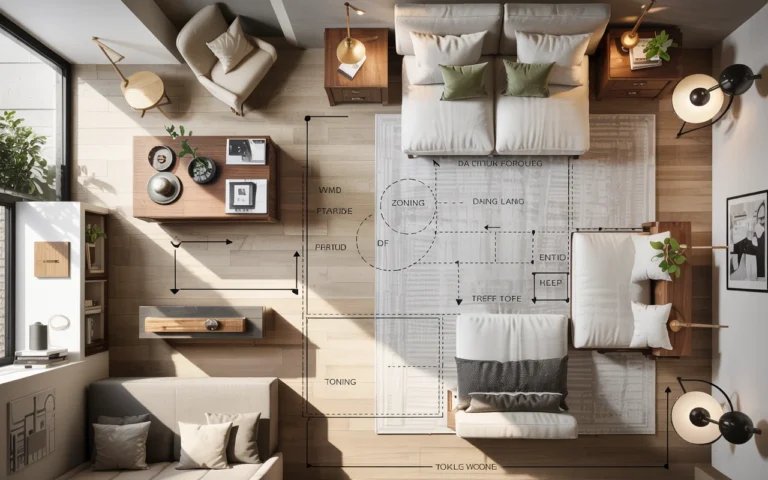
- Remove a non structural wall to connect it to the living room next door
- Swap a swinging door for pocket doors to save floor space and open sightlines
This kind of zoning solves the problem better than lighting ever will. A room with a clear job feels intentional, even without a single window in it.
How Do You Modernize a Victorian Kitchen and Bathroom?
Victorian kitchens were originally built for household staff, so most need real work to function for modern life. A traditional galley kitchen layout still works well with shaker style cabinetry and a fluted splashback for a fresh but period appropriate finish.
In the bathroom, keep a few signature pieces:
- A clawfoot tub as the visual anchor of the room
- Mosaic tile or terrazzo tile flooring for pattern underfoot
- A pendant light instead of a flat, modern fixture
Small kitchens and bathrooms are actually the easiest rooms to experiment in. Because they’re smaller, bolder tile or color choices feel intentional instead of overwhelming the whole house.
How Do You Add Storage to a Victorian Mansion?
Storage is one of the biggest frustrations in any Victorian mansion interior, and it’s not really your fault. Builders designed these homes for households that owned far fewer possessions than a typical family does today, so closets were often an afterthought.
A few fixes that actually work:
- Add a built-in wardrobe into an unused alcove, matched to the wall color so it blends in
- Pair a four-poster bed with that same built-in wardrobe for a bedroom that still feels grand
- Use vertical space with floor to ceiling shelving instead of wider furniture
- Convert part of a loft conversion into hidden storage rather than only living space
Painting a wardrobe the same shade as the surrounding wall is a simple trick that makes new storage look like it was always part of the house.
Should You Restore or Replace Victorian Sash Windows?
This is one of the most debated decisions in any Victorian home renovation, and there’s no single right answer. It depends on your budget, your climate, and whether your property has protected status.
[Comparison Table] Restore vs Replace
| Factor | Restore Original | Replace with New |
| Look and character | Keeps original glass and detail | Can look modern if not matched well |
| Draughts | Needs secondary glazing to fix | Better sealed from day one |
| Cost | Often cheaper long term | Higher upfront cost |
| Approval needed | Usually straightforward | May need permission if protected |
If your stained glass window panels are original, restoration almost always wins. For plain glass sashes with no historic detail, replacement can be the more practical choice.
Is a Victorian Mansion Considered a Listed Building?
Many Victorian mansions carry some form of heritage protection, especially where original features like the grand staircase, cornicing, or stained glass are still intact. Check this through your local planning authority using the property address.
If your period property is listed, this typically applies:
- Window and door replacements often need approval first
- Structural changes like removing walls may require permission
- Cosmetic work like paint color or furniture usually doesn’t need approval
It’s worth checking before you start any large project. Finding out halfway through a renovation is far more stressful than confirming it up front.
How Do You Insulate a Victorian Mansion Without Losing Character?
Solid brick walls have no gap to fill, so standard cavity wall insulation won’t work here. Breathable internal insulation boards are usually the better route, since they manage moisture without trapping damp inside old brick.
For heating, most owners now use:
- Multiple smaller HVAC units instead of one central system, so each room can be controlled separately
- Discreet radiators that don’t compete visually with original cornicing or ceiling roses
This kind of plaster restoration and careful insulation work rarely touches the visible details of a room. Done well, nobody notices the upgrade. They just notice the house finally holds heat properly.
Final Thoughts
A Victorian mansion interior rewards patience more than perfection. You don’t need to recreate a museum exhibit, and you don’t need to strip every original detail either. The best results come from picking a few features worth protecting, like a stained glass window or an original fireplace, then building everything else around them.
Start with one room. Get the color and the lighting right before you touch anything structural. The rest of the house will follow that lead.
FAQs
What’s the difference between a Victorian house and a Victorian mansion?
Scale and room count. A Victorian house might have a handful of rooms, while a true mansion includes formal reception rooms, a library, and often service spaces like a butler’s pantry that smaller homes never had.
Is Victorian style still popular in 2026?
Yes. Jewel tones, dark wood, and ornate detail have all made a strong comeback, usually paired with simpler modern furniture instead of a full period recreation.
Can a Victorian mansion have an open floor plan?
Yes, in parts. Most owners remove one non load bearing wall rather than opening the whole ground floor, then use rugs and furniture placement to define separate zones.
How much does restoring a Victorian mansion cost?
It varies widely based on what’s hidden behind the walls. Structural issues like rewiring or damp almost always cost more than cosmetic updates like paint or fabric.
Is Victorian mansion insurance more expensive than standard home insurance?
Usually, yes. Replacing specialized materials like stained glass or original cornicing needs skilled labor, which raises the cost of covering the home properly.
How do you research the history of an old Victorian mansion?
Start with local land registry records and census archives to confirm the build date. Local history societies often hold old photos showing how rooms were originally used.
Do Victorian mansions need special renovation loans?
Often, yes. Standard mortgages don’t always account for the higher cost of specialist restoration work, so lenders may ask for a detailed renovation plan first.
Can you rent out rooms in a restored Victorian mansion?
Yes, and many owners already do. Bedrooms with their own en-suite, kept separate from main living areas, work well as short term rentals to help offset renovation costs.