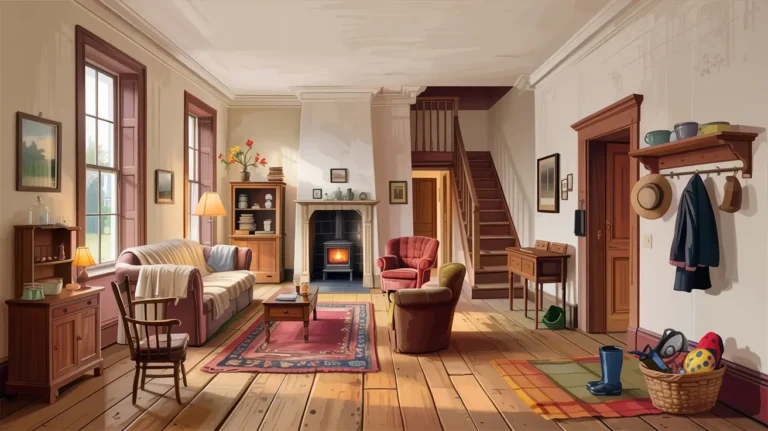

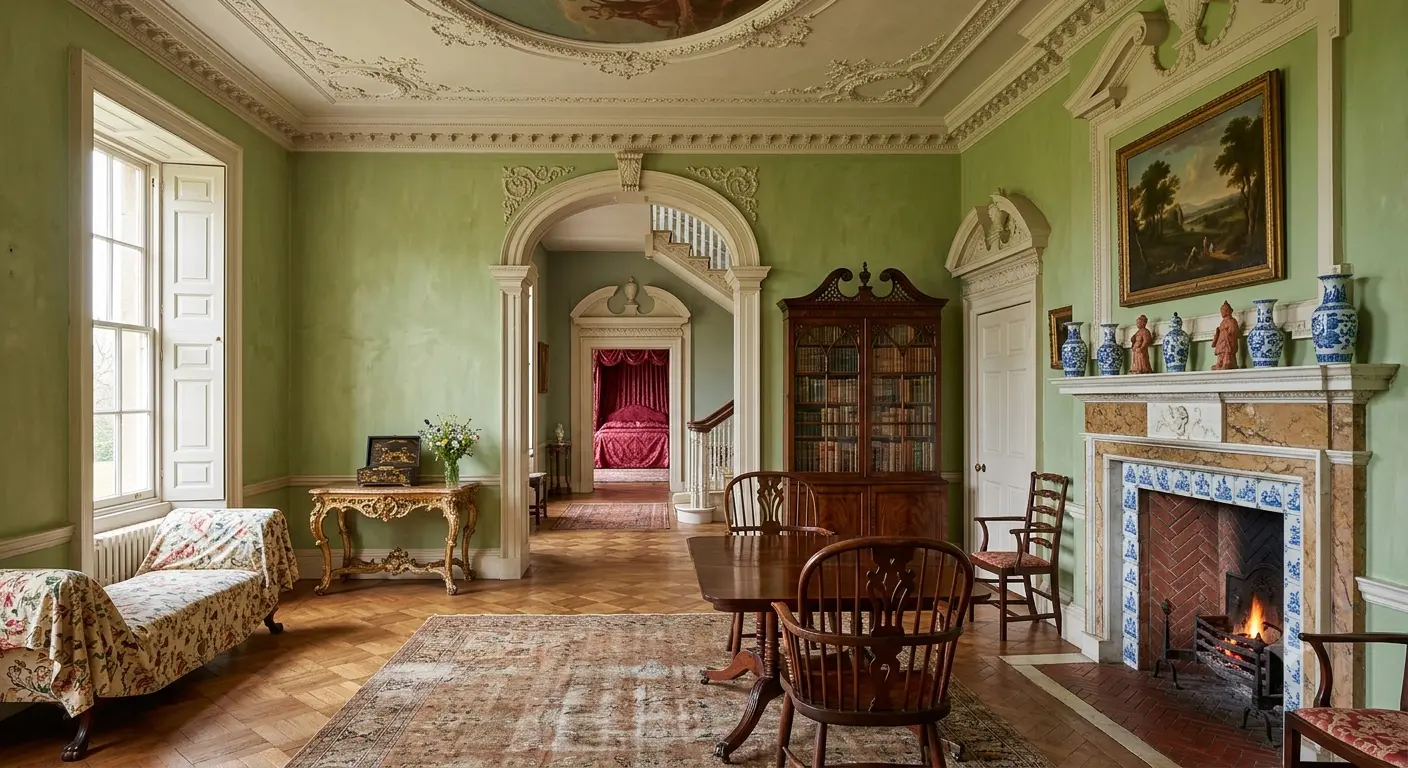
A 1700s house interior featured symmetrical room layouts, ornate plasterwork ceilings, parquet flooring and distemper-painted walls in soft pastel shades. Rooms were formal yet warm, shaped by Georgian interior design principles, Palladian architecture and the booming international trade that brought materials from across the globe. This century moved through Baroque, Rococo and Neoclassical movements, each leaving a visible mark.
Most people searching this topic either own an old home and want to understand what it originally looked like, or they want to recreate the aesthetic in a modern space. The real problem is that the 1700s covers multiple distinct visual styles, and most existing content only covers aristocratic stately homes. This guide covers all of it properly.
What Is 1700s Interior Design Called?
The interior design of the 1700s is most accurately called Georgian interior design, covering the Georgian period from 1714 to 1830. After Queen Anne’s death in 1714 and the accession of King George I, a new era of decorating began. Within that one century you had four very different movements:
- Early 1700s: Baroque style with heavy grandeur, rich fabrics and dramatic formal rooms
- 1720s to 1750s: Palladian revival championed by Richard Boyle (Earl of Burlington) and rooted in the work of Inigo Jones and Andrea Palladio
- Mid-century: French Rococo softening rooms with lighter stucco ornament and delicate curves
- Late 1700s: Neoclassical style defined by Robert Adam drawing directly from ancient Roman sources
Each movement replaced the previous one but rooms from the same decade often mixed all four depending on the household’s tastes and budget.
How Did 1700s Interior Design Change Across the Century?
The shift across this century is dramatic. The Baroque style fell out of favour quickly after 1714 because of its autocratic associations with continental monarchies. The Palladian revival stepped in, rooted in Italian Renaissance architecture. Architects and aristocrats studied the sixteenth-century villas of Andrea Palladio and brought those principles of harmonious proportion and classical symmetry into English country houses.
The Grand Tour became the most powerful design force of the mid-century. Wealthy English patrons travelled France and Italy and returned with Roman sculptures, Italian design ideas and a deep appreciation for ancient architecture. This directly fed the Neoclassical style rooms that Robert Adam built at Lansdowne House and Croome Court in London. The dining room at Kirtlington Park shows this tension perfectly. It combines a Neo-Palladian wall scheme with French Rococo stucco ornament in white and yellow, with an oak floor and mahogany furniture sharing the same space.
What Architectural Features Defined 1700s House Interiors?
The architecture itself tells the whole story. Step into a well-preserved Georgian home and the details speak immediately. Key features you will find include:
- Corinthian, Ionic and Doric columns framing doorways and room screens
- Niches and alcoves purpose-built to hold classical statues, vases and urns
- Arched doorways drawing on Italian Renaissance precedent
- Balustrades with acanthus scroll wood carvings on grand staircases
- Ornate plasterwork on ceilings sometimes featuring illusionistic ceiling paintings
- Sash windows and casement windows designed to flood rooms with natural light
- Classical moldings, picture rails and stucco ornament running across walls
- Open millwork and built-in cabinetry in more modest but still formal spaces
What Is an Enfilade Room Layout in an 18th Century House?
The enfilade room arrangement was one of the defining structural choices in grand 1700s house interiors. Builders aligned all the doors of adjoining rooms in a single straight line so that when you opened each door you could see from one end of the house to the other in one unbroken vista. The point at the far end was usually a state bed draped in sumptuous fabrics, serving as a deliberate visual statement of rank and wealth. The grandeur of the Versailles of Louis XIV inspired this layout throughout English aristocratic homes.
What Did 1700s Fireplaces Look Like?
Fireplaces were the absolute focal point of every room because they provided the only real heat and much of the usable light. Early 1700s examples used herringbone fireplace pattern brickwork inside the firebox and stone hearth surrounds. Delft tile fireplaces with blue and white ceramic tiles from the Netherlands became fashionable in formal reception rooms. Inglenooks, with their deep recessed seating built into the chimney breast, remained common in rural homes and older farmhouses throughout the century.
By the late 1700s, Robert Adam redesigned what a fireplace could look like entirely. His mantel designs used refined classical moldings, stucco ornament and decorative composition that gave rooms the fine-lined delicacy of Wedgwood pottery.
What Colours Were Used in 18th Century Homes?
Pastel Georgian colour schemes dominated 1700s domestic decoration. Pea green, mauve, soft pink, yellow and warm white were the most frequently used shades. These were not timid choices. They were calculated responses to candlelight. Every shade was chosen to glow warmly in the evening and feel fresh and spacious in daylight.
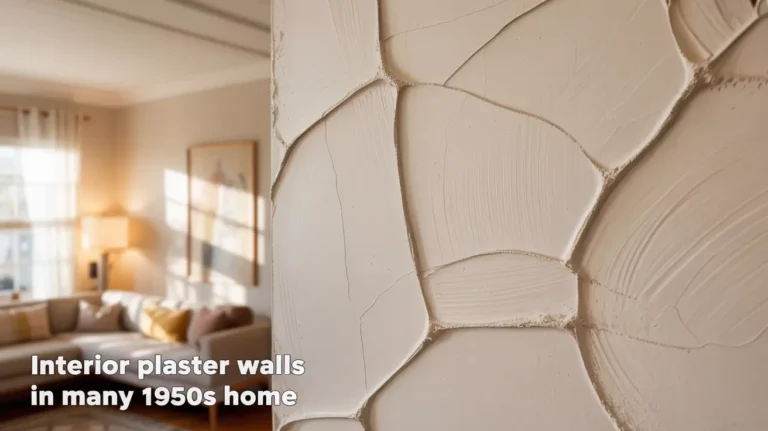
Walls were rarely painted with flat modern finishes. Most 18th century interior design relied on chalk-based distemper built up in layers. This creates a broken-colour surface with real depth that catches light differently throughout the day. Some craftsmen applied a warm red or orange base layer first and built the finished colour on top, exactly as DKT Artworks still does today when restoring period properties using authentic Georgian period reference samples.
What Is Distemper Paint and How Was It Used in 1700s Houses?
Distemper paint is a water-based finish made from chalk pigment and a binder such as hide glue. Chalk-based distemper was the standard wall finish in formal 1700s rooms and it produces a richness and depth that modern emulsion cannot replicate. Limewashed walls appeared in service areas, farmhouses and working-class homes.
If you are restoring a period property, dry-scraping existing wall layers often reveals the original distemper colour underneath. Use that as your reference before re-applying. Specialist studios like DKT Artworks blend pigments by hand against surviving Georgian samples.
What Furniture Was Used in 1700s Houses?
Mahogany arrived from the Caribbean via international trade and quickly replaced dark oak as the dominant furniture wood in wealthier households. Thomas Chippendale (1718 to 1779) was the most influential cabinetmaker of the entire century. His firm supplied furniture for houses including Lansdowne House and published a celebrated book of designs covering Neoclassical style, Chinese and Gothic forms, making quality design accessible well beyond the aristocracy.
Common furniture across different wealth levels included:
- Mahogany furniture including formal dining tables, cabinets and bookcases in wealthy homes
- Windsor chairs used across all social classes in kitchens and informal sitting rooms
- Gate-leg tables providing practical space-efficient dining for middling-class households
- Ladderback armchairs found throughout vernacular English furniture traditions
- Bed canopies over state beds in grand bedchambers draped in sumptuous fabrics
- Primitive furniture and folk art pieces in working-class homes made by local craftsmen
How Did International Trade Shape 1700s House Interiors?
This is the angle almost no competitor covers properly. The interiors of the 1700s looked the way they did largely because of what ships were carrying into British ports every week.
- Mahogany from the Caribbean transformed furniture making and gave rooms a warmer and more refined feel
- Delft tiles from the Netherlands lined fireplace surrounds and entrance hall floors across formal English homes
- Chintz and calico fabrics from India changed how rooms were dressed and beds were hung
- Gobelins tapestries from France incorporating medallion designs by François Boucher hung in the grandest rooms at houses like Croome Court alongside furniture by William Ince and John Mayhew
- Chinese lacquerware, hand-painted wallpapers and blue-and-white porcelain fed the chinoiserie movement through mid-century rooms
Thomas Chippendale responded to chinoiserie demand directly by publishing Chinese-style furniture designs in his pattern book. The Low Countries design influence on early 1700s oak panelling, combined with French Rococo and Italian Renaissance classicism, made 18th century interior design one of the most globally shaped decorating cultures Britain has ever produced.
How Did Wealthy and Ordinary Households Differ in the 1700s?
This distinction is critical and almost entirely ignored by other content on this topic. Grand aristocratic houses displayed enfilade room arrangements, Robert Adam Neoclassical ceilings, Gobelins tapestries and Chippendale mahogany furniture. They hosted visiting scholars returning from the Grand Tour and decorated with Roman statuary.
Middling-class households used vernacular English furniture, Windsor chairs, gate-leg tables and chalk-based distemper on their walls. Working-class homes relied on terracotta floor tiles, reclaimed floorboards of uneven widths, simple stone hearth surrounds and practical folk art rather than commissioned decorative schemes. Both had genuine character. The difference was in the scale of investment, not in the commitment to making rooms feel liveable and well-considered.
How Do You Recreate a 1700s Interior in a Modern Home?
You do not need a period house to apply these principles. Here is what actually produces authentic results:
- Start with chalk-based distemper or a quality lime paint in pea green, soft yellow or warm white
- Add classical moldings and picture rails as affordable architectural details in any room
- Source Windsor chairs, gate-leg tables and ladderback chairs from dealers like Robert Young Antiques
- Use tapestry wall hangings or crewelwork textiles as wall art rather than framed prints
- Lay parquet flooring or reclaimed floorboards and place a simple rug over them
- Restore original casement windows or sash windows where they survive
- Find Delft tiles and terracotta floor tiles through salvage yards or resources like Vintage Tile Shop
The core principle of 18th century domestic decoration was restraint with intention. Every piece earned its place. Nothing filled a room simply to fill it.
Final Thoughts
A 1700s house interior was never a single fixed look. It was a century of layered movement from Baroque grandeur through Palladian precision and Rococo lightness into Robert Adam’s Neoclassical refinement. What united every decade was the commitment to proportion, craftsmanship and the careful management of natural light. Whether you are restoring a period property or applying these ideas in a contemporary space in 2026, the principles transfer cleanly. Start with walls finished in authentic chalk-based distemper, choose furniture with the same deliberate restraint that Thomas Chippendale’s best clients did, and every room will follow with real character.
FAQs
What is the interior of a 1700s house called?
It is called Georgian interior design, covering 1714 to 1830. Within the 1700s you will find Baroque style, Palladian revival, French Rococo and Neoclassical style depending on the decade and the household’s wealth.
What colours were popular in 1700s homes?
Pastel Georgian colour schemes dominated, particularly pea green, mauve, soft pink, white and yellow. These were applied as chalk-based distemper or limewashed walls to reflect candlelight and create a sense of space.
What furniture was common in 1700s houses?
Mahogany furniture, Windsor chairs, gate-leg tables and ladderback armchairs filled most 1700s homes. Thomas Chippendale was the dominant cabinetmaker, producing Neoclassical, Chinese and Gothic designs across a wide range of price points.
What flooring did 1700s homes have?
Parquet flooring in formal rooms, reclaimed floorboards in less formal areas, terracotta floor tiles in kitchens and Delft tiles in entrance halls. The choice depended on the room’s function and the household’s budget.
How did the Grand Tour influence 1700s interior design?
Wealthy English patrons who completed the Grand Tour returned with Roman design ideas and Italian Renaissance influences that fed directly into the Palladian revival and Robert Adam’s Neoclassical style, shaping Britain’s finest 18th century interiors.
Can you recreate a 1700s house interior on a budget?
Yes. Use chalk-based distemper in pastel Georgian shades, add picture rails and classical moldings as low-cost architectural details, and source Windsor chairs and gate-leg tables from salvage yards. Tapestry wall hangings or crewelwork textiles complete the period character affordably.