
Types of candles fall into three main categories: shape and function, wax material, and wick type. The most common styles include pillar, taper, votive, tealight, container, and flameless candles. Each serves a distinct purpose, from mood lighting and aromatherapy to outdoor insect repelling and religious ceremonies. Knowing the difference helps you buy smarter and burn safer.
Once you understand what separates a votive from a tealight or why beeswax costs three times more than paraffin, every candle purchase becomes much easier to make with confidence.
What Are the Main Candle Types by Shape and Functin?
The shape of a candle determines how it burns, where you place it, and how long it lasts.
Pillar Candle A pillar candle is a free-standing cylindrical candle ranging from 3 to 16 inches tall that burns without needing a container or holder. It suits mantel decor, hurricane lamp displays, and table centerpieces. Always place a heat-resistant plate underneath to protect surfaces from heat.
Taper Candle A taper candle is long and slender, standing 12 to 18 inches tall and requiring a candlestick or candelabra to stay upright. Tapers burn for 10 to 12 hours and work best for formal dining, religious ceremonies, and wall sconce displays.
Votive Candle A votive stands roughly 2.5 inches tall and requires a glass holder since it melts fully into whatever container holds it. It burns for 6 to 7 hours and provides warm accent lighting on dinner tables and shelves. White is the most traditional color but colored votives also serve as prayer candles in religious settings.
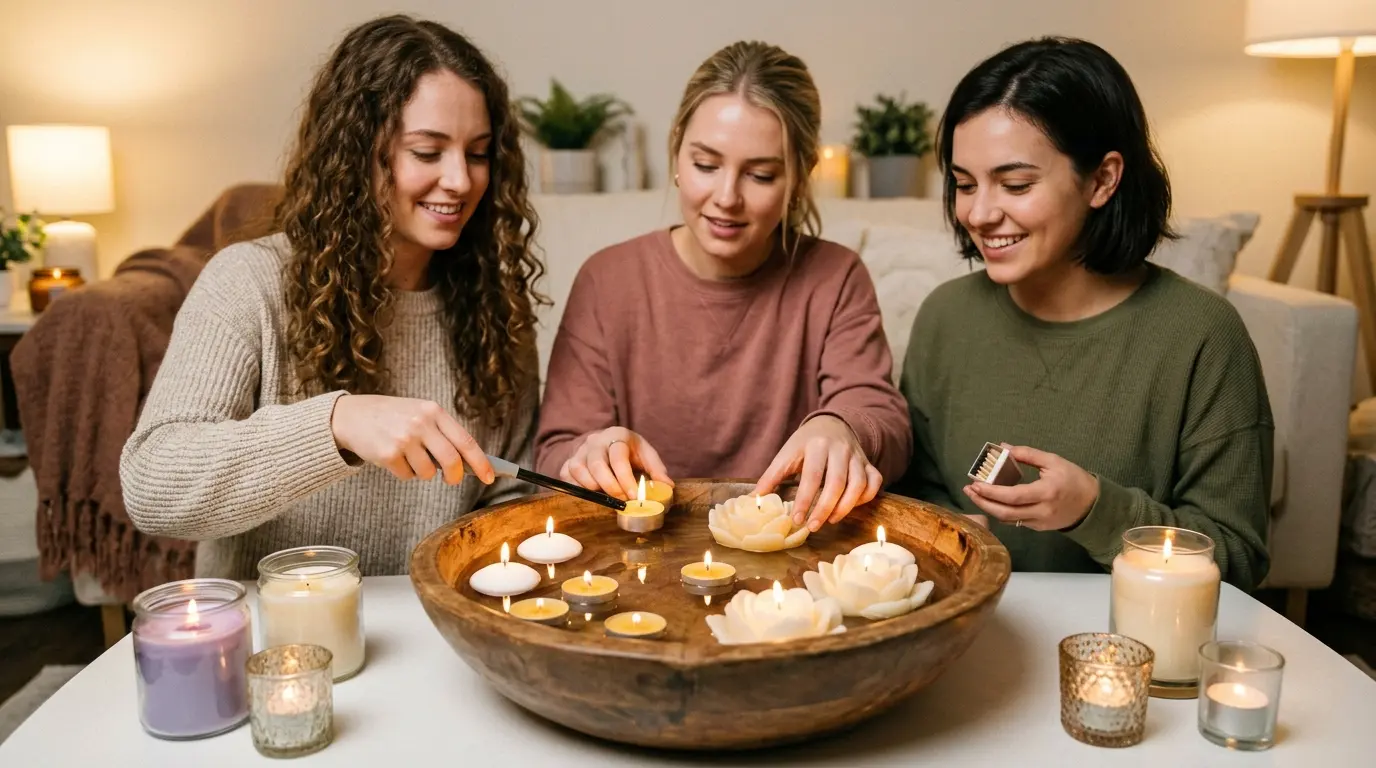
Tealight Candle A tealight is the smallest round candle at 38mm in diameter, arriving pre-packaged in a metal or plastic cup and burning for 2 to 6 hours. Tealights are affordable and ideal for candlescape arrangements, outdoor settings, and water displays.
Container Candle A container candle is wax poured directly into a glass jar, mason jar, ceramic bowl, or metal tin. It requires no additional holder and never drips. Container candles are the most popular of all types of candles globally in 2026 because they combine scent throw, safety, and decorative versatility in one product.
Floating Candle A floating candle has a wide base designed to sit on water and burns from the center outward as water keeps the outer wax cool. Use them in glass bowls for wedding centerpiece displays. They burn for 8 to 10 hours and are typically made from paraffin or palm wax.
Flameless Candle A flameless candle uses a flickering LED light inside real or simulated wax to produce ambient lighting without open flame, soot, or fire risk. Rechargeable versions with remote control operation suit homes with children, pets, and outdoor spaces where fire codes prohibit real flames.
What Are Specialty Canles and When Do You Use Them?
Birthday and novelty candles sit on cakes and come in number shapes, glitter finishes, and sparkling varieties. Sparkler candles produce glittery sparks when lit and cannot be blown out. Trick candles contain a wick coated with magnesium powder that reignites itself after being blown out. Run the wick briefly under water to extinguish it permanently.
Citronella candles contain citronella essential oil derived from lemongrass, acting as a natural insect repellent for outdoor gatherings. Gel candles use a blend of resin and mineral oil instead of wax, creating a transparent appearance that lets embedded flowers or shells remain visible inside the candle body.
Unity candles are large pillar candles used in wedding ceremonies to symbolize two lives joining as one. Aromatherapy candles contain pure essential oils such as lavender, eucalyptus, and peppermint that release therapeutic compounds as the wax pool deepens during burning.
What Are the Different Types of Candle Wax?
Wax controls burn time, scent throw, soot output, and environmental impact more than any other single factor.
Paraffin wax is a petroleum byproduct and the most affordable wax globally. It delivers the strongest hot throw of any wax type and holds candle wax dyes vividly. Its main downsides are higher soot output and greater VOC emissions compared to natural alternatives.
Soy wax is a biodegradable, renewable wax resource sourced from soybeans. It burns 30 to 50 percent longer than paraffin and produces less soot, but delivers a weaker hot throw. Soy performs better in cold throw comparisons before a candle is even lit.
Beeswax is the oldest natural candle material. It emits negative ions that support indoor air quality, carries natural antibacterial properties, and produces virtually no soot. Its burn time exceeds paraffin and soy at the same candle size.
Coconut wax is produced through hydrogenation of coconut oil. It is virtually soot-free, binds fragrance oils well, and delivers hot throw performance close to paraffin with low VOC emissions.
Palm wax creates a distinctive crystalline effect and holds structure well for pillar candles but carries palm oil deforestation concerns. Look for RSPO certification to confirm ethical sourcing before purchasing.
Most candles in 2026 use wax blends rather than a single wax type. A soy-paraffin blend delivers stronger scent throw with a cleaner burn. Blends optimize burn time and fragrance load in ways no single wax achieves alone.
What Are the Different Types of Cadle Wicks?
The wick delivers wax to the flame and directly affects burn quality, soot levels, and scent throw.
- Cotton wicks are the most versatile choice and provide a steady reliable burn across most wax types and candle shapes.
- Wooden wicks produce a soft crackling sound as moisture in the wood vaporizes. They minimize carbon build-up, form a wider wax pool, and improve scent throw in container candles.
- Zinc core and tin core metal wicks stay upright as surrounding wax liquefies and are the standard choice for votives and tall pillar candles. Both are confirmed non-toxic.
- Paper core wicks offer a softer alternative to metal core wicks with similar burn behavior.
Trim every wick to 1/4 inch before each use. A wick that is too long causes mushrooming wick buildup, excess soot, and black carbon deposits on glass jar walls.
What Is Scent Throw and Why Does MyCandle Barely Smell When Burning?
This frustration comes down to one key difference: cold throw versus hot throw.
Cold throw is the scent from an unlit candle. Hot throw is the fragrance released while burning. These two performances depend on different wax properties and fragrance load levels within the wax base.
Paraffin wax leads in hot throw strength. Soy wax and beeswax deliver better cold throw but fill a room more gently when burning. This explains why a candle that smells powerful in the store can disappoint at home once you light it.
Candle fragrance also follows a note hierarchy. Top notes are the first aromas released when lit. Middle notes form the core scent character as the wax pool grows. Base notes are the deepest and most lingering aromas that emerge in the final hours of a burn session.
What Is the First Burn ule and Why Does It Matter?
Candle tunneling happens when wax burns straight down the center, leaving thick unused walls on the sides. The cause is almost always extinguishing the candle too soon on its very first use.
Wax has a burn memory. If the full top surface does not become a liquid wax pool reaching the container edges on the first burn, that boundary sets permanently and every future burn follows the same narrow tunnel path.
To apply the first burn rule:
- Burn the candle on its very first use until the full top surface melts edge to edge.
- This takes 1 to 4 hours depending on candle diameter.
- Keep all sessions under 4 hours maximum to prevent mushrooming wick issues.
If tunneling has already started, wrap the candle in aluminum foil with a small opening at the top and burn until the wax pool reaches the container edge.
Are Scented Candles Safe toBurn Indoors?
The safety level depends on the wax type and fragrance source. Paraffin wax candles with synthetic fragrance oils release VOC emissions during combustion. Beeswax or coconut wax candles scented with pure essential oils carry significantly lower indoor air quality risks.
Follow these safe burning practices with any candle type:
- Burn in a ventilated room with airflow
- Trim the wick to 1/4 inch before every use
- Limit sessions to 4 hours maximum
- Stop burning when 1/2 inch of wax remains to prevent container overheating
- Keep candles at least 12 inches away from curtains and other flammable materials
For homes with allergy sufferers, pets, or young children, flameless candles with LED technology eliminate all of these risks while still producing warm ambient lighting.
What Do Different Candle Colors Mean?
Candle color symbolism appears across decorative, spiritual, and ritual candle traditions globally. Here is what the most common colors represent:
- White: purity, protection, and spiritual clarity
- Green: prosperity, abundance, and good luck
- Red: passion, desire, and active energy
- Pink: love, emotional bonding, and romantic harmony
- Orange: creativity, motivation, and manifestation intentions
- Black: protection and banishing negative energy in ritual candle contexts
- Blue: calm, peace, and emotional healing
In home decor, candle color psychology is simpler. Warm amber tones build a cozy atmosphere while cool whites lean modern and minimal. Matching candle color to your room palette creates a cohesive decorative effect.
Final Thoughts
The types of candles available in 2026 cover every purpose, setting, and safety need. Choose the right shape for your space, the right wax for your health priorities, and the right wick for your candle diameter. Apply the first burn rule without fail and trim wicks before every session. Whether you want a beeswax pillar for a clean burn, a soy container candle for relaxation, or a flameless option for a safer home, the right candle exists for your exact need.
FAQs:Types of Candles
What type of candle burns the longest?
Beeswax candles burn longest due to their high melting point and dense structure. Large luxury pillar candles in premium wax blends can burn up to 800 hours. Soy wax container candles outlast paraffin by 30 to 50 percent at the same candle size.
What is the difference between a votive and a tealight?
A votive is 2.5 inches tall, requires a glass holder, and burns for 6 to 7 hours. A tealight arrives in its own metal cup, measures 38mm across, and burns for 2 to 6 hours. Votives give more sustained light while tealights suit candlescape and decorative displays.
What is the cleanest burning candle?
Beeswax and coconut wax candles are the cleanest options with minimal soot and low VOC emissions. Soy wax candles scented with pure essential oils rank next. Paraffin candles with synthetic dyes and fragrance oils carry the highest indoor air quality risk of any common wax type.
Can unused candles expire or go bad?
Candles do not expire but they degrade. Most retain optimal scent throw for 2 to 5 years when stored correctly. UV exposure and heat weaken fragrance load and fade candle wax dyes fastest. Store in a cool dry place away from direct sunlight.
What candle is best for relaxation?
Aromatherapy candles with lavender or eucalyptus essential oils in a soy wax or beeswax base work best. Wood wick candles add a soft crackling sound that deepens the cozy restful atmosphere and supports a genuine hygge experience at home.
Are flameless candles worth buying?
Yes, especially for homes with children, pets, or outdoor use. Rechargeable flameless candles with LED flickering technology produce a realistic warm glow, eliminate all fire hazard, and last through multiple events before needing a recharge.
What candle works best as a dining table centerpiece?
Floating candles in a glass bowl deliver the strongest visual impact. Pillar candles in varying heights create elegant candlescape arrangements. Always choose unscented candles at the dining table so fragrance does not compete with food aromas.