
A gypsum ceiling is a secondary ceiling hung below your main roof using calcium sulphate boards and a metal frame. Most homeowners pay between $1.50 and $6.00 per square foot for one. People go with gypsum because it looks polished, handles fire better than most materials and hides all the ugly wiring in one shot.
So What Is Gypsum, and How Does It Become a Ceiling?
If you have ever heard someone say drywall or plasterboard, they were talking about the same thing. Gypsum starts as a natural mineral called calcium sulphate dihydrate. Factories heat it up, grind it down and press it into rigid flat boards. Those boards ship out in sizes like 4×6 feet, 4×8 feet and 4×10 feet. Thickness usually runs 9mm, 12mm or 15mm.
Here is the basic idea. Your contractor builds a grid out of galvanized iron channels and cross tees, then hangs that grid from the concrete slab above. The gypsum boards get screwed onto the grid. A joint compound seals every seam and screw head. After sanding and a couple coats of paint, the whole thing looks like one smooth, continuous surface.
That gap between the real roof and the false ceiling is not wasted space. It swallows up electrical wires, AC ducts and plumbing lines. The same gap acts like a thermal buffer too. Heat from the roof does not hit you as directly, and cool air stays trapped below longer.
What Makes Gypsum a Better Pick Than Wood, PVC or Metal?
Fire safety is the big one. The core of a gypsum board is non-combustible. When flames reach it, water that is chemically locked inside the board turns to steam and pushes back against the heat. A single layer can buy you up to four hours of fire resistance. That is a lot of time to get out or call for help.
Noise is another headache gypsum handles well. If you live in an apartment and the family upstairs sounds like they are rearranging furniture at midnight, acoustic gypsum boards take the edge off. They absorb sound before it reaches your ears. Bedrooms and home offices are where people notice the biggest difference.
Thermal insulation rounds out the practical side. The trapped air layer between ceilings slows down heat transfer. Your AC does not have to work as hard in summer. Your heater keeps up more easily in winter. Over a year, those savings on electricity add up quietly.
And then there is the way it looks. Gypsum gives you a factory-grade finish that takes paint, wallpaper or texture coating without any drama. Match it to whatever wall color or style you already have going on. It just blends in.
Gypsum Ceiling Design Types Worth Considering
Not every design belongs in every room. Your ceiling height, the size of the space and your budget all shape what actually works. Here are the options people end up choosing most often.
Flat Gypsum Ceiling
Nothing fancy here, and that is the point. One clean layer of gypsum board across the entire ceiling. No drops, no ledges. If your rooms have 8 or 9 foot ceilings, this is the safest bet because anything layered would make things feel tight. Pair it with a few recessed LED lights and the room still feels open and current.
Tray Ceiling
Picture a shallow box pushed up into the ceiling. The center sits higher and the edges step down to create a border or frame. Cove lighting tucked inside that step throws a warm glow across the ceiling without any visible bulb in sight. Master bedrooms and living rooms eat this up. A tray ceiling adds depth without eating much headroom.
Layered or Multi-Tier Ceiling
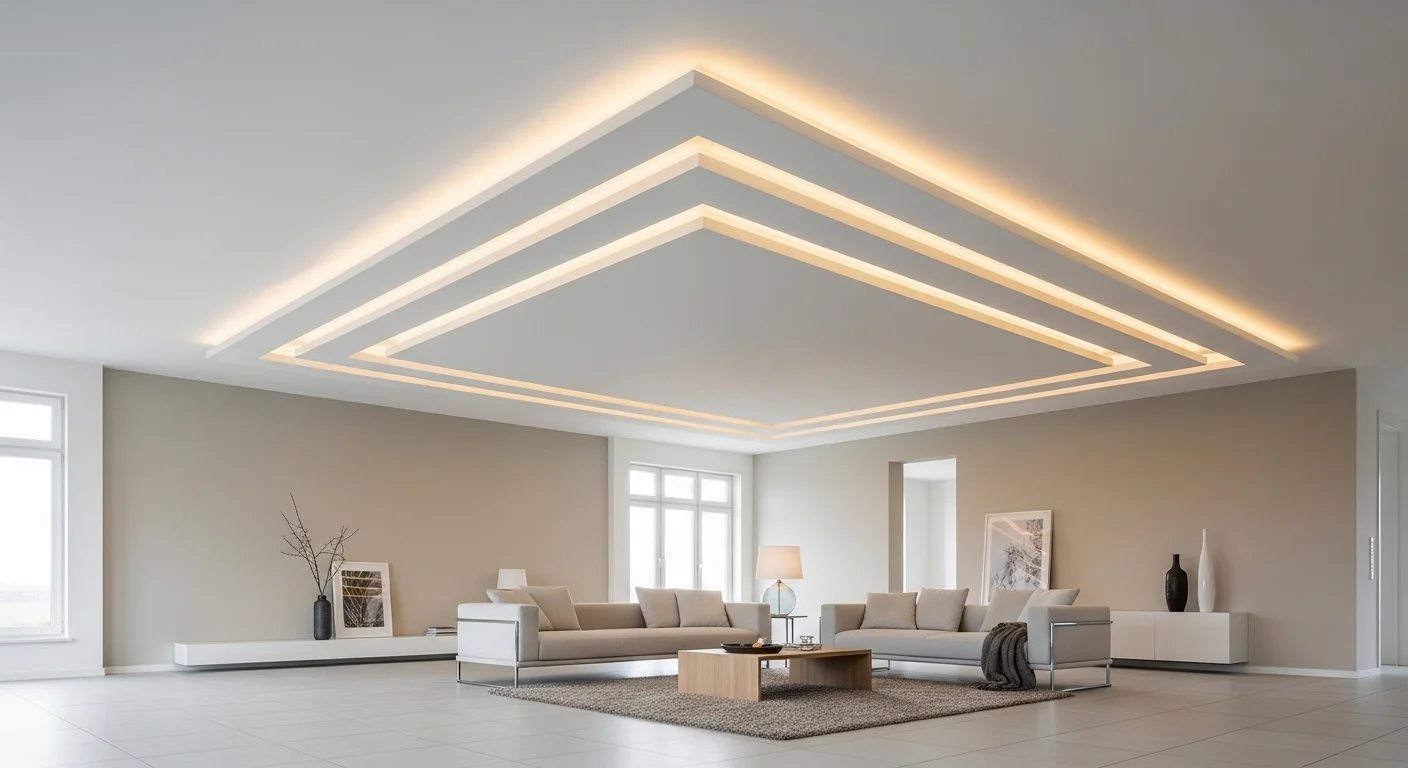
This one stacks two or three levels of gypsum panels at different heights. Slip LED strip lights between the layers and the whole ceiling starts to look like it is floating. Fair warning though. You need at least 10 feet of original height. Anything less and it starts to feel like the room is closing in on you.
Coffered Ceiling
A grid of recessed squares or rectangles gives the ceiling a structured, classic feel. Coffered designs look right at home in formal dining rooms and libraries. If you lean toward traditional interiors, this is one of the few ceiling styles that actually matches that vibe without feeling outdated.
Geometric Patterns
Circles, angular cutouts, asymmetric shapes. Geometric patterns bring a modern edge without overwhelming the space. One bold shape placed above your dining table or seating area draws the eye up and gives the room a focal point. Keep the rest of the ceiling flat to let that single element do the talking.
Gypsum and Wood Mix
This has been trending hard. Wooden planks or rafters running alongside smooth white gypsum panels create a contrast that feels warm and modern at the same time. The wood brings texture and the gypsum keeps things clean. Living rooms and bedrooms work best for this pairing.
Picking the Right Ceiling Design for Each Room
A kitchen is not a bedroom. A bathroom is not a living room. Each space has its own set of problems. Picking the right board and design from the start saves you from headaches later.
Bedrooms
You want calm in here. A simple flat ceiling or a single-step tray design with soft cove lighting does the job. Off-white or warm white paint keeps the mood relaxed. Street noise keeping you up at night? Acoustic gypsum boards cut that problem down significantly.
Living Room and Hall
This is the room people actually see. A layered ceiling with recessed spotlights and hidden LED strips gives the space some character without screaming for attention. Planning to keep your ceiling fan? Map out the drop levels early so the fan blade clears the gypsum comfortably.
Kitchen
Steam, grease and heat are constant in kitchens. Standard gypsum absorbs moisture and can grow mold over time. Spend a little extra on moisture-resistant gypsum boards and you avoid that mess entirely. Stick to a flat ceiling with flush-mount lights. Easy to wipe, easy to maintain.
Bathroom
Most contractors will tell you to skip the false ceiling in bathrooms. If you still want one, water-resistant boards are non-negotiable. Good ventilation matters too. A plain design with recessed waterproof LED downlights keeps things practical.
Home Office
You need even lighting and quiet. Acoustic gypsum boards block outside noise. Evenly spaced recessed panel lights spread the illumination and reduce eye strain. Keep the ceiling design flat and boring on purpose. Your brain will thank you during long work days.
Gypsum vs POP vs PVC: An Honest Side-by-Side
People always ask whether gypsum board, plaster of Paris or PVC panels is the right call. The truth is, each one does something better than the others. Here is how they stack up.
| Feature | Gypsum | POP | PVC |
| Cost/sq ft | $1.50 to $5 | $1 to $3.50 | $0.80 to $2.50 |
| Install Time | 1 to 3 days | 2 to 4 weeks | 1 to 2 days |
| Fire Safety | High (4 hrs) | Moderate | Low |
| Handles Moisture | Moderate* | Poor | Excellent |
| Blocks Sound | Good | Good | Poor |
| Design Options | Moderate | Excellent | Limited |
| Lifespan | 20+ years | 10 to 15 years | 10 to 15 years |
| Finish | Smooth, clean | Needs skilled labor | Visible panel lines |
*Swap in moisture-resistant boards for wet areas like kitchens and bathrooms.
Gypsum takes the lead on fire resistance, clean installation and finish quality. POP is cheaper and you can mold it into curves that gypsum cannot do on its own. PVC handles water like a champ but does nothing for noise or fire.
A smart middle ground: use gypsum for most of the ceiling and POP only for the decorative borders or cornices. You get a quality finish across the main surface and creative flair on the edges.
Real Cost of a Gypsum Ceiling (Broken Down)
Budget is almost always the first question. So here is what each piece actually costs.
| What You Are Paying For | How Much |
| Standard gypsum boards | $10 to $20 per sheet (4×8 ft) |
| Fire or moisture-resistant boards | $15 to $30 per sheet |
| Metal framework (channels + tees) | $0.30 to $0.80 per sq ft |
| Labor to install | $1.15 to $3.50 per sq ft |
| Taping, mudding and sanding | $0.15 to $0.40 per sq ft |
| Primer and two coats of paint | $0.50 to $1.50 per sq ft |
| Lighting (per fixture) | $50 to $300 each |
| Full 10×10 ft room (basic design) | Roughly $150 to $650 |
Those numbers climb when you go for multi-tier designs or custom lighting setups. But a simple flat ceiling in a 100 square foot room? You can get that done under $300 in most cities without cutting corners.
How Gypsum Ceilings Get Installed (The Actual Steps)
Understanding the process helps you hold your contractor accountable. You do not need to become an expert, but knowing the basics means you can spot lazy shortcuts.
- Your installer shoots a laser level line around the room to mark the ceiling height.
- L-shaped perimeter channels get screwed into the walls along that line.
- C-shaped main channels span the room, hanging from the slab above with threaded rods or wire clips.
- Shorter cross channels snap into the main channels every couple of feet, forming the grid.
- Gypsum boards go up and get fastened to the grid with drywall screws.
- Every seam and screw head gets covered with joint compound.
- Once dry, workers sand everything smooth and roll on a coat of primer.
- Two coats of ceiling paint finish the job.
Start to finish, a normal room takes one to three days. Because gypsum boards arrive pre-made from the factory, there is no wet mixing like with POP. That means almost no dust and no week-long drying period.
Problems You Will Probably Run Into (and How to Fix Them)
Gypsum is great, but nothing is bulletproof. Here are the issues that come up most and what to do about each one.
Hairline Cracks along Seams
Buildings settle. Walls shift slightly over the years. That movement shows up as thin cracks where two boards meet. The fix is simple: scrape out the old filler, press in fresh joint tape and apply two thin coats of compound. Sand it smooth after each coat dries. One thick coat cracks again, so do not rush it.
Sagging in the Middle
When the metal framework does not have enough hanging points, boards start to bow downward over time. The rule of thumb: no more than four feet between support rods. Wider rooms should use 12mm or 15mm thick boards instead of the thinner 9mm option.
Water Stains and Mold
A leaky roof or a dripping AC drain is gypsum’s worst enemy. Water warps the board and mold follows fast. If the stain is small, cut the damaged piece out and patch it. If you live somewhere humid or the ceiling is near a kitchen or bathroom, use moisture-resistant boards from day one.
Yellow Rings or Brown Spots
These almost always mean a water leak somewhere above. Find the leak and fix it first. Then coat the stain with a stain-blocking primer and repaint. If you skip the primer, the stain bleeds right through fresh paint within weeks.
Lighting That Actually Changes How Your Ceiling Looks
The ceiling itself is half the story. Lighting is the other half. A simple flat gypsum ceiling with the right lights can look better than an expensive layered design with bad fixtures.
Recessed downlights sit inside the ceiling and throw light straight down. Clean look, no clutter, works in every room. Cove lighting hides LED strips behind a stepped edge so light washes across the ceiling surface. The result is a warm ambient glow with no visible source. Bedrooms and living rooms feel completely different with this one change.
Thinking about hanging a pendant light or chandelier? Do not attach it to the gypsum board directly. The board cannot hold that weight. Your installer should bolt a wooden block or metal plate into the concrete slab first. The gypsum just wraps around it. The slab carries the load.
Back-lit panels are a newer trend. A section of translucent material sits in the gypsum frame with LEDs behind it. The panel glows evenly and makes a great centerpiece above a dining table or in an entertainment room.
Keeping Your Gypsum Ceiling in Good Shape for Years
Good news: gypsum ceilings are low maintenance. A few habits go a long way.
Run a soft dry cloth or a vacuum brush over the surface once a month to knock off dust. Do not use a wet mop. Water weakens gypsum over time, even the resistant kind. A barely damp sponge with mild soap handles scuffs and marks just fine.
Plan on repainting every three to five years. It keeps the surface bright and covers the small wear marks that build up naturally. If you spot a hairline crack, patch it right away. Small cracks spread if you ignore them.
Once a year, pop a ceiling tile and peek above the false ceiling. Check for water stains on the slab, loose wires or any sign of pests. Catching a drip early costs you $20 in sealant. Catching it late costs you a whole new section of ceiling.
Questions Homeowners Ask the Most
How many years does a gypsum ceiling last?
Around 20 years if the installation was done right and you keep an eye on leaks. The boards themselves hold up well. It is usually the joints that need attention over time.
Is gypsum safe to have inside the house?
Yes. It is a natural mineral and completely non-toxic. Installed gypsum does not off-gas or release particles. Even during installation, it produces far less dust than POP.
Will a false ceiling make my room feel shorter?
You lose about 4 to 8 inches of visible height. Rooms with 9.5 feet or more handle that drop without feeling cramped. If your ceilings are already low, go with a flat single-layer design and skip the multi-tier options.
Can gypsum hold a ceiling fan or heavy chandelier?
The board itself cannot. But your installer can anchor a support bracket into the concrete slab above. The gypsum board then sits around the fixture while the slab carries the actual weight.
What is the cheapest false ceiling material?
PVC panels come in the lowest at $0.80 to $2.50 per square foot. POP falls in the middle. Gypsum costs more upfront but lasts longer, looks cleaner and handles fire far better.
Is gypsum okay for a bathroom ceiling?
Only if you use moisture-resistant or water-resistant boards. Standard gypsum and bathroom steam do not get along. Pair the right board with good ventilation and it works fine.