
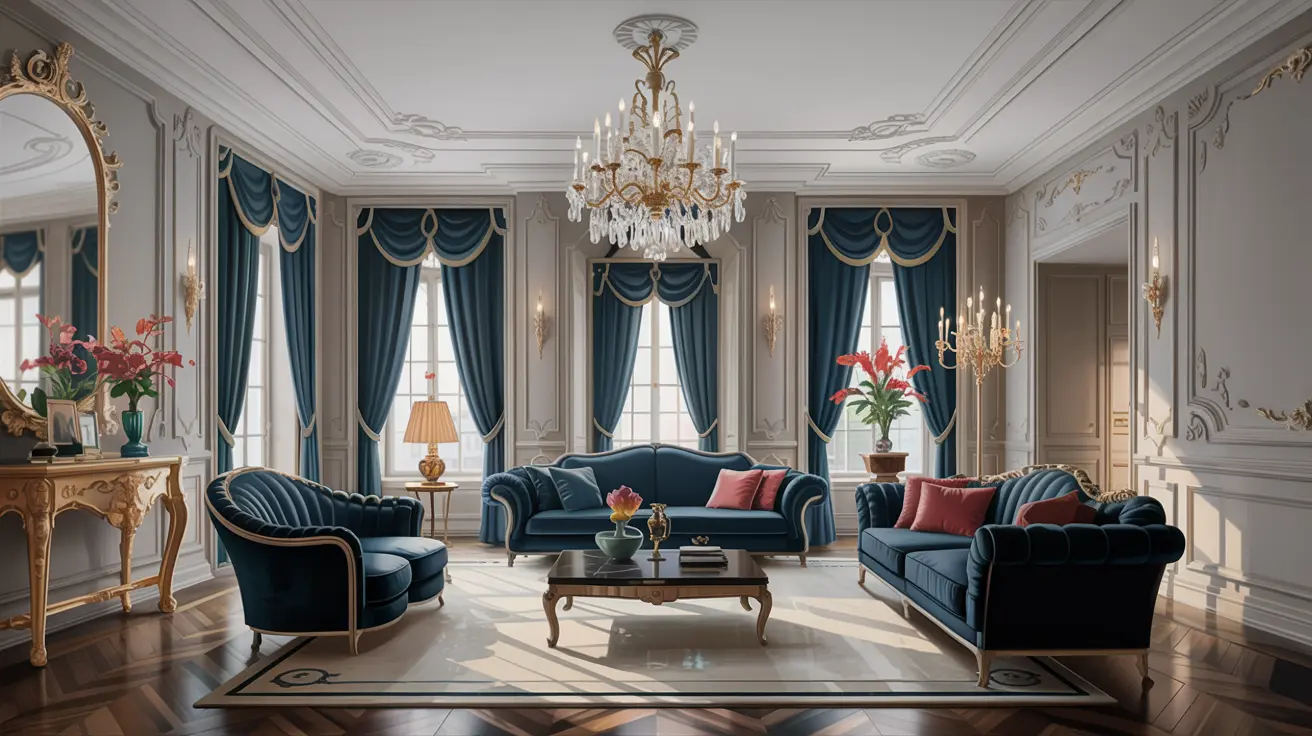
French palaces look like something from another world. High ceilings. Shiny marble floors. Gold running along every edge. Huge mirrors and crystal chandeliers catching the light. That look comes from French Baroque interior design, a style that grew in 17th-century France during the time of Louis XIV and the Palace of Versailles.
You do not need a palace to borrow this style. With a bit of care, you can take the best parts of French Baroque and bring them into a normal, modern home without making it feel heavy or fake.
What French Baroque Style Really Is
French Baroque rooms feel bold, rich and very organized. Nothing looks random. The walls, ceiling, floor and furniture all work together as one big picture.
During the reign of Louis XIV, interiors were used to show power. Versailles became the model. Long galleries lined with marble, tall windows, painted ceilings and gold details made visitors feel small and impressed at the same time.
Today we can treat this style as a toolbox. We do not copy everything. We pick a few strong ideas and use them in a way that suits real life.
Room Shape, Ceilings and Windows
French Baroque starts with the bones of the room. Ceilings are high and often shaped with coves, beams or molded frames. Windows are tall and usually lined up in a row, which makes the room feel longer and brighter.
In grand houses, several rooms often connect in a straight line, so you can see through open doors from one room into the next. This simple trick makes the whole home feel larger and more formal.
Walls are rarely left bare. They may have panels, pilasters, carved frames and deep cornices. Ceilings often carry painted scenes surrounded by plaster and gold. All these layers make the space feel dramatic and rich.
At home, you can echo this without rebuilding everything. Choose one “main” wall in each room, usually where the fireplace, TV or bed sits. Let that wall lead the design. Add simple rectangular mouldings to break up big flat areas. A slightly deeper cornice or ceiling trim can hint at grander architecture without a huge cost.
Colours and Materials
French Baroque loves strong colour. Deep red, dark green, royal blue and purple often sit beside warm cream, stone tones and plenty of gold.
These colours appear in wall paint, fabrics and painted details. Gold shows up on mouldings, mirror frames and carved furniture. Many historic rooms also use different colours of marble on floors, columns and wall panels.
For a modern home, keep things simple. Pick:
- One rich colour,
- One light base colour,
- One metal finish.
For example, deep blue, warm ivory and brushed brass. Use the rich colour for a feature wall, curtains or a rug. Keep most walls and the ceiling in the light colour so the room still feels open. Use the metal on handles, lamps, small tables and frames.
A stone or stone-look surface on a coffee table, console or dining table can also bring in that palace feel in a quiet way.
Furniture, Lights and Decor
Baroque furniture is bold and sculptural. Large wardrobes, carved sideboards, long dining tables and tall beds are common in historic examples. Chair legs and arms often curve or twist. Nothing is very slim or flat.
Lighting is just as important. Crystal chandeliers, ornate wall lights and metal candle holders hang over tables and fill hallways. These pieces catch light and send it around the room, especially when they sit near mirrors and shiny stone.
Decoration tends to be large scale. Big paintings, tapestries and tall mirrors fill most of the wall space. They are framed in carved, often gilded wood.
You do not need a full set of period furniture. In most rooms, one or two pieces are enough to set the tone:
- A carved console in the hall,
- A strong headboard in the bedroom,
- A large framed mirror in the living room.
Place these “hero” pieces first. Then add simpler, comfortable furniture around them.
Patterns and Symbols
French Baroque uses a lot of repeated shapes. Acanthus leaves, shells and curling scrolls appear on mouldings, furniture and metalwork. Ceiling and wall paintings often show angels, small cherub figures and scenes from myths or history.
In French royal homes you also see crowns, coats of arms and the fleur-de-lis symbol. They remind visitors where they are and who is in charge.
At home, use these ideas in a light way. For example:
- A mirror with leaf or shell details at the top,
- A cushion with a simple classical border,
- A framed print of a historic scene,
- A small bust on a console.
A few clear touches will say more than a room covered in pattern.
French Baroque, Italian Baroque and Rococo
Baroque style started in Italy and later spread to France. Italian Baroque, especially in churches, can be very intense. It often uses strong contrasts of light and shadow, curved walls and heavy sculpture.
French Baroque kept the drama but added more order and symmetry. Palaces and townhouses follow clear lines and balanced plans. Versailles is a good example of this calmer but still grand approach.
Later, a lighter style called Rococo appeared. Rococo favours small, intimate rooms, pastel colours and playful curves. It uses shells and soft, irregular shapes rather than big straight axes.
Knowing the difference helps you aim your design. Choose French Baroque if you want strong, formal, ceremonial spaces. Choose more Rococo touches if you prefer light, romantic, playful rooms.
How to Use French Baroque Ideas at Home
Start with the layout. Pick one main focus in each room: a fireplace, TV wall, window, bed or dining table. Place major furniture so the room feels balanced around this point. For example, a sofa facing the main wall, with two similar chairs on either side.
Next, plan your colours. Decide on your deep colour, your light base and your metal. Keep repeating this trio from room to room so the home feels connected.
Then bring in one or two statement furniture pieces. After that, add textiles:
- Velvet or heavy cotton cushions,
- A patterned throw,
- Lined curtains in a rich shade.
Use patterns with leaves, borders and gentle scrolls. Save busy designs for small areas.
Finish with lights and mirrors. A chandelier or decorative pendant in the main room will set the mood. Table lamps and wall lights with warm shades will soften the space. A large mirror, placed to reflect light and your best feature, will make everything feel deeper and brighter.
Room Ideas
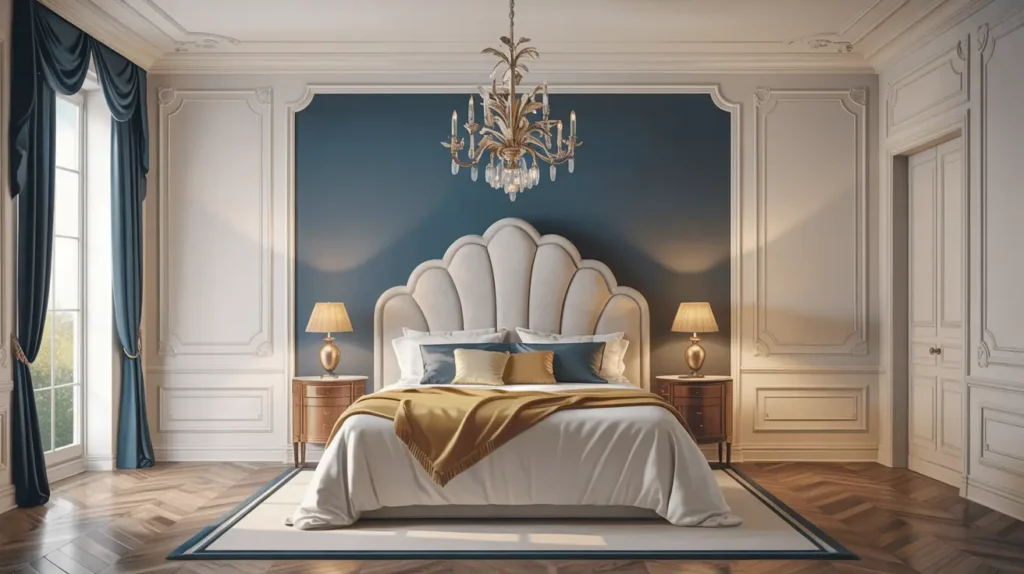
Living room
Centre the layout on one wall. Use a rug to hold the seating area together. One large mirror or painting above a fireplace or console will work better than many tiny pieces spread around.
Dining room
Let the table be the star. Hang a light over the centre. Use chairs with a bit of height or curve. A sideboard with a pair of lamps and a large framed piece above it adds depth and gives you space for serving dishes or candles.
Bedroom
Treat the bed like a focal point. Choose a tall headboard and place it on the main wall. Add matching tables and lamps on both sides. Use rich colour in cushions, throws and curtains, but keep some surfaces light so the room still feels calm.
Small flat
In a small home, keep it focused. One large mirror, one special light and one carved piece may be enough. Let the rest of the furniture stay simple and comfortable.
Easy and Affordable Ways to Try the Look
You can test this style without major work. Paint is the fastest tool. A deep coloured wall behind a sofa or bed, framed with simple trim, changes a room right away. Light moulding strips can suggest panels on plain walls.
Changing hardware is another quick win. Swap plain knobs and pulls for brass or antique style ones. Add metal picture frames, trays and candle holders in the same finish.
Textiles give a lot of impact for the price. Velvet cushions, lined curtains or a patterned throw can all add richness. Many fabric makers offer designs inspired by older patterns that work well on small items.
Second-hand shops and online marketplaces are good places to find mirrors and lights. A frame can be repainted in a soft gold. A simple chandelier can replace a plain ceiling light and instantly lift a space.
Mistakes to Avoid
Doing too much is the easiest way to spoil this style. If every wall, chair and table is covered in pattern and gold, the room will feel noisy. Choose a few strong elements and keep the rest calmer. Limit how many colours, patterns and metals you use at once.
Watch the size of furniture. Very bulky pieces in a small room feel heavy. Very small art in a tall room looks weak. Try to match piece size to the space.
Mixing too many different historic looks can also confuse the eye. Baroque, Rococo, Victorian and rustic country all send different signals. Pick French Baroque as your base, then add only a few touches from other styles.
Finally, never forget comfort. You still need clear walkways, good seating and soft light. When a room looks grand but also feels good to use every day, the style really works.
Bringing Grand Style Down to Your Scale
French Baroque interior design is about shape, light and detail working together. It was born in palaces, but its ideas can guide much smaller homes.
If you focus on a clear main wall, a balanced layout, one rich colour, one metal and a few strong pieces, you can bring a touch of that grand, gilded world into a home that still feels warm, relaxed and truly yours.