
A wooden ceiling can make a room feel warmer fast. It adds texture where paint feels flat. It can also hide cracks and old drywall seams. Done right, it looks built in. Done wrong, it can warp, sag, or make the room feel dark.
What a wooden ceiling means in plain terms
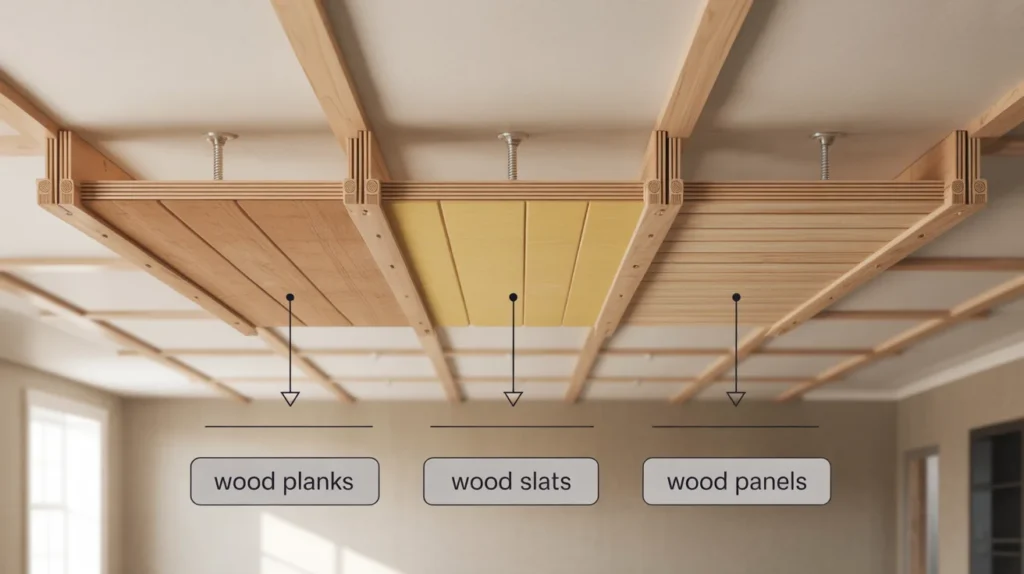
A wooden ceiling is a ceiling finished with wood boards, slats, panels, or beams. Some are solid boards. Others are veneer panels over an engineered core. Many installs use furring strips or direct fastening into joists. The best choice depends on the room and the look.
Why people choose wood for the ceiling
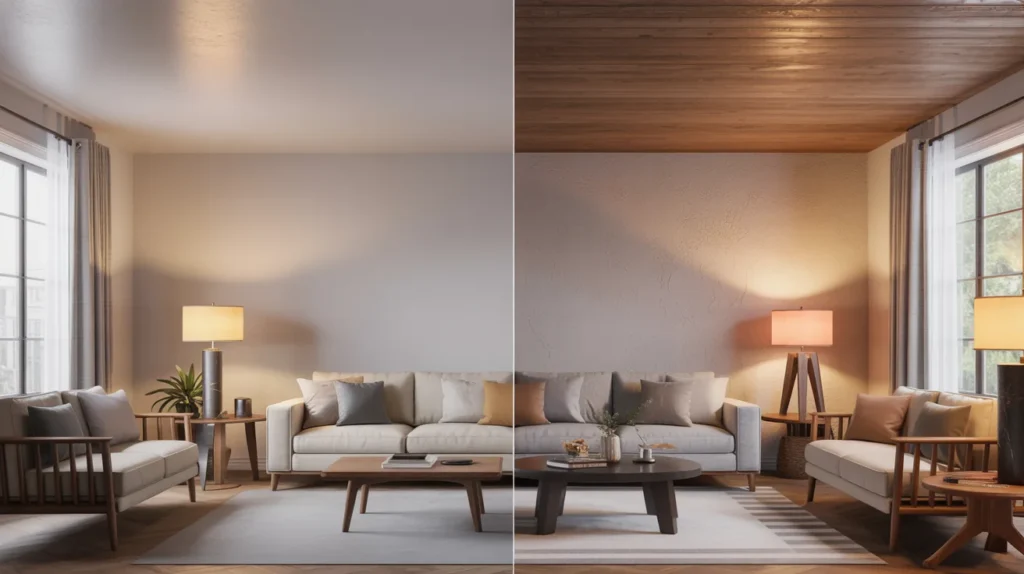
Wood adds depth without adding furniture. It can balance a room with lots of white walls. It works with modern, rustic, coastal, and classic spaces. It also covers rough ceilings without a full tear out. Many people want a softer vibe than drywall. Light changes too. A warm stain can make evenings feel cozy. A whitewashed finish can keep things bright.
Quick pick guide for the right ceiling style
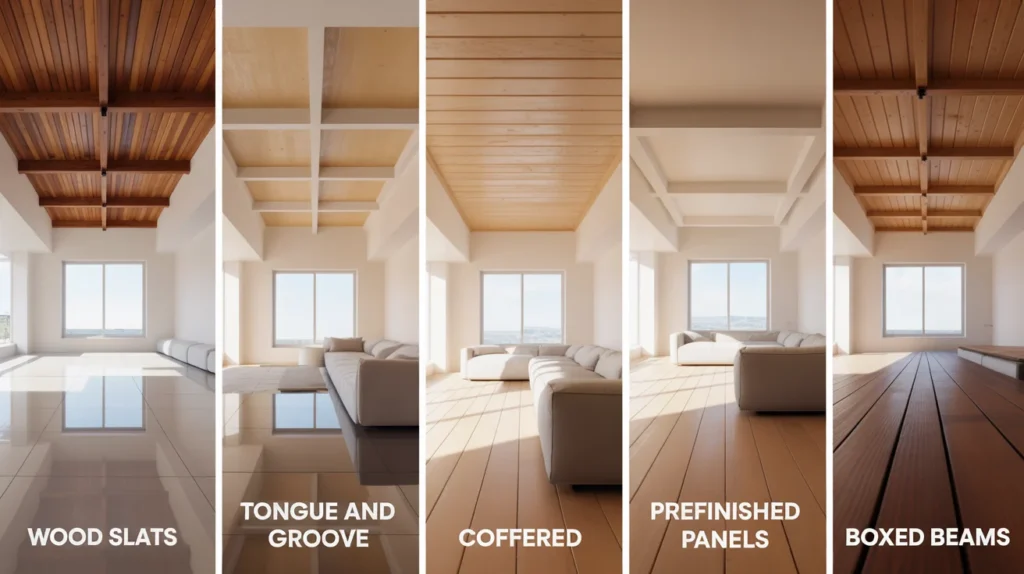
- For a clean modern look, go with wood slats or linear panels.
- For a cabin feel, use tongue and groove planks.
- For a classic dining room, choose a coffered layout.
- For a fast upgrade, use prefinished panels.
- For drama, add beams or boxed beams.
Popular wooden ceiling styles and where they look best
Tongue and groove planks
These boards lock together edge to edge. The seams look neat. This style fits living rooms, bedrooms, and covered patios. It also works on vaulted ceilings. Pine and cedar are common here.
Shiplap boards
Shiplap has a stepped edge that creates a shadow line. It looks clean and casual. Painted shiplap keeps the ceiling light. Stained shiplap feels more rustic.
Beadboard
Beadboard uses narrow grooves that repeat across the ceiling. It suits kitchens, bathrooms, and cottage spaces. It also works in hallways because it adds rhythm.
Wood slat ceiling
Slats create lines and a modern feel. They can also help with echo when built as acoustic panels. Slats look great in offices, media rooms, and living rooms. Keep slat spacing even for a calm look.
Coffered ceiling
Coffered ceilings use a grid of beams and panels. They add structure and a high end look. This style works best with taller ceilings. It can feel heavy in low rooms.
Exposed beams and boxed beams
Real beams are structural. Boxed beams are decorative shells. Both add depth and character. They work in living rooms and kitchens. They also look great over islands.
Choosing materials and what actually lasts
Solid wood
Solid boards feel authentic and can last decades. They can expand and shrink with humidity. That movement is normal. Good spacing and proper acclimation reduce problems.
Engineered wood and veneer
Engineered cores resist movement better than solid boards. Veneer gives a real wood face with more stability. This is a smart pick for many homes. It also reduces cost in some cases.
MDF and fiber panels
MDF can work in dry rooms. It can swell with moisture. Avoid it in damp spaces. If you use it, seal all sides well.
Best wood species for ceilings
Pine is affordable and easy to work with. Knotty pine adds rustic character. Cedar handles humidity better and smells great. Oak and walnut look rich but cost more. Choose based on budget and how bold you want the grain.
The biggest problems people face and how to avoid them
Problem 1: Warping and gaps
Wood moves with moisture changes. That can create gaps or slight cupping. Let boards acclimate in the room for several days. Keep HVAC running like normal. Seal all sides when possible. Use the right fastening pattern.
Problem 2: A ceiling that looks too dark
Dark wood can absorb light. Rooms can feel smaller. Use a lighter stain or a whitewashed finish. Add layered lighting. Choose a thinner profile with less visual weight. Slats in a lighter tone can keep the space open.
Problem 3: Moisture damage in kitchens and baths
Steam and humidity can cause swelling. Mold can form if air stays trapped. Improve ventilation first. Use a strong exhaust fan in kitchens and baths. Pick moisture stable materials. Seal seams and edges. Avoid wood directly over showers.
Problem 4: Too much echo
Hard surfaces bounce sound. Wood can amplify that in large rooms. Add soft textiles like rugs and curtains. Use acoustic slat panels with felt backing. Add insulation above the ceiling if accessible. Even one large rug can help a lot.
Problem 5: Uneven ceiling lines
A slightly wavy ceiling makes gaps and crooked seams. Use furring strips to create a flat plane. Check level and snap chalk lines. Start from the most visible wall.
Planning steps that save time and money
Measure ceiling area and add a waste factor. Ten percent extra is common for cuts and defects. Complex layouts need more. Find joist direction before you start. Use a stud finder and mark joist lines. Plan where lights, vents, and speakers will land. Decide plank direction based on room shape. Boards along the long dimension can feel wider. Order samples before buying full bundles. Look at them in morning and night light.
Installation methods that work for most homes
Direct fastening into joists
This is common for tongue and groove boards. Fasten through the tongue so nails hide. Use the right nail length for grip. Keep spacing consistent.
Furring strips first
Furring strips create a flat base. They also allow space for wiring. This helps on uneven ceilings. It also helps when joists run the wrong way for plank direction.
Clip systems and panel systems
Some slat and plank products use clips. This can speed work and hide fasteners. Read spacing rules and load limits. Clip systems still need a flat base.
Adhesive only installs
Avoid adhesive only installs in most cases. Heat and humidity can weaken bonds. Use mechanical fasteners when possible. Adhesive can assist but should not carry the full load.
Lighting and vents on a wood ceiling
Plan lighting early. It is harder after boards go up. Use recessed lights rated for ceiling installs. Follow clearance rules for heat. For fans, use a proper fan rated box. Do not hang a fan from thin paneling. Cutouts must be clean and sealed when needed. If the ceiling hides ductwork, keep vents aligned and balanced. A bad vent layout can trap moisture.
Safety and code basics that protect your home
Wood is a finish material. Electrical and fire rules still apply. Use fixtures rated for the install type. Keep safe distance from heat sources. Follow local code for spacing and wiring. If you are unsure, bring an electrician for the rough plan. For multi unit buildings, check fire rating needs. Some spaces require specific assemblies. If you want extra peace of mind, ask about fire retardant coatings.
Cost factors that change the total price
Costs vary by region and material. Material choice changes cost the most. Solid hardwood costs more than pine. Prefinished boards can cost more up front. They can save time and finishing labor. Ceiling height matters too. Tall ceilings need lifts or scaffolding. Layout complexity adds time. Coffers and beams take longer than planks. For budgeting, get at least two quotes. Ask what is included.
Finishes that look great and stay easy to clean
Finishes affect tone, glare, and maintenance. Stain shows grain and adds warmth. Clear coats protect from dust and light moisture. Water based polyurethane stays clearer over time. Whitewash keeps grain visible and brightens the room. Paint can look crisp and clean. Painted beadboard is a classic choice. In kitchens, pick finishes that wipe clean.
Trim details that make the ceiling look built in
Edges matter. Trim hides gaps and makes the ceiling feel intentional. Use crown molding when the style fits. Use simple edge trim for modern rooms. Match trim color to the ceiling for a seamless look. Match trim to walls for a framed look.
Cleaning and maintenance
Dust is the main issue. Use a microfiber duster or a soft brush attachment. Avoid soaking wood. Spot clean with a damp cloth and dry right away. Control humidity in the home. Stable indoor air helps the ceiling stay stable. Fix roof leaks fast. Small leaks can stain wood quickly.
FAQs people ask before installing a wood ceiling
What are wood ceiling planks called
Common names include tongue and groove planks, shiplap, and ceiling paneling. Slat systems are also popular.
Is a wood ceiling a good idea in a bathroom
It can work with good ventilation and the right finish. Avoid direct steam zones. Seal edges and use a strong exhaust fan.
Can I install wood on a popcorn ceiling
It depends on the condition and local rules. Many people remove loose texture first. A flat base is important for a clean finish.
Will a wooden ceiling make my room smaller
Dark tones can make a room feel lower. Light finishes and good lighting keep it open. Slats can also feel airy.
How long does a wood ceiling last
With stable indoor conditions and proper fastening, it can last for decades. Maintenance is mostly dusting.
Final thoughts
A ceiling upgrade is worth it when the plan is clear. Choose the style based on ceiling height and room use. Pick materials that match the humidity level in that space. Prep and layout decide how professional the result looks. When you take time on those steps, the finish looks expensive.