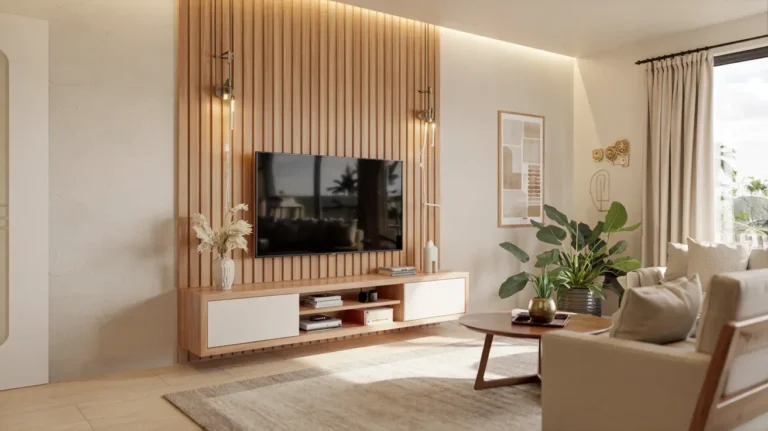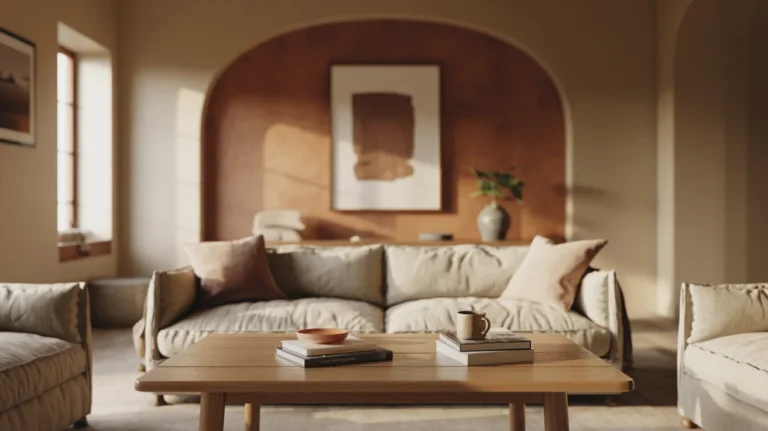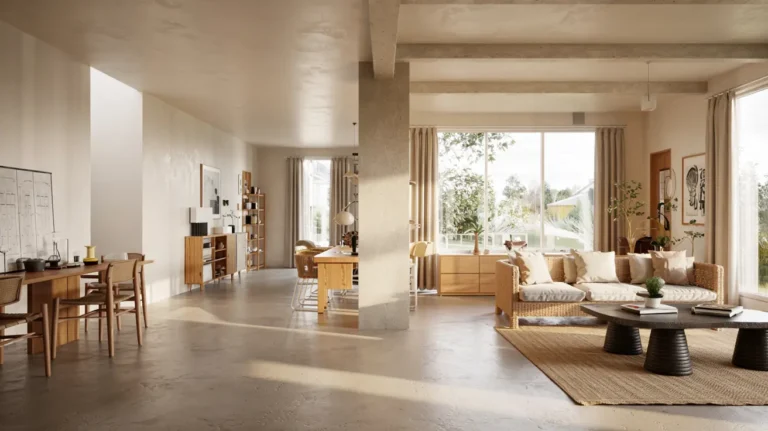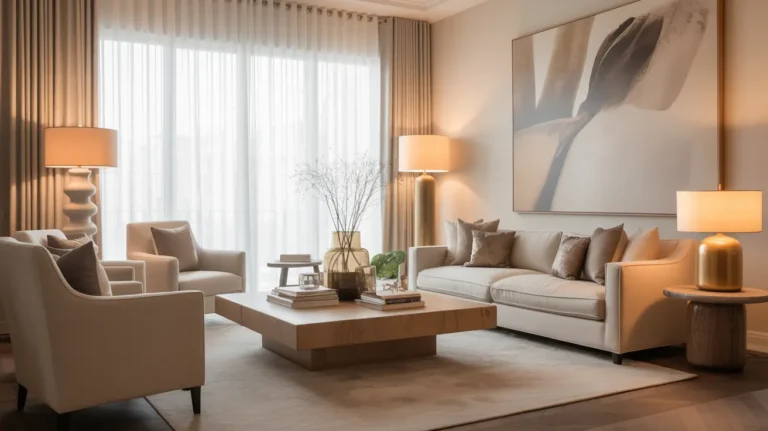

A room can look beautiful in photos and still feel wrong in daily life. You bump into furniture. You fight with doors. The sofa faces nothing important. The real issue is usually the layout, not the styling. That is where space planning in interior design comes in. It turns an empty shell into a working, comfortable room that supports your way of life.
What Space Planning in Interior Design Actually Means
Space planning in interior design is the careful arrangement of a room’s use. You study the size and shape. You look at the people and their routines. You decide where each activity happens and how people move between them. You then choose furniture sizes that match the footprint instead of forcing big pieces into tight corners. When this plan is clear, even simple furniture feels considered, and the room starts to feel calm.
Start With the Room Before You Think About Furniture
Stand in the doorway and really look at the room. Notice the shape, the height, and any unusual features. Find the natural focal points, such as a fireplace, a large window, or a built-in niche. These features often deserve to remain visible and serve as strong anchors for a layout. Then measure every wall with care. Draw a simple outline from above and mark doors, windows, radiators, and any fixed storage. This sketch becomes your base map. Every good decision grows from this small drawing.
Understand the People and Their Real Needs
No layout works if it ignores the people who live there. List who uses the room each day, and how many people use it at once. Note whether there are children, pets, guests, or older family members. Think about what happens there. In a living room, that might be movies, reading, games, and relaxed evenings. In an open-plan area that might be for cooking, homework, and casual dinners. In a bedroom that might be a sleep area, a dressing area, and a small work spot. Also, write down three problems that annoy you today. Maybe there is never enough seating. Maybe coats and bags pile near the door. Maybe toys cover every surface. Your future layout should fix these points one by one.
Turn Activities into Clear, Logical Zones
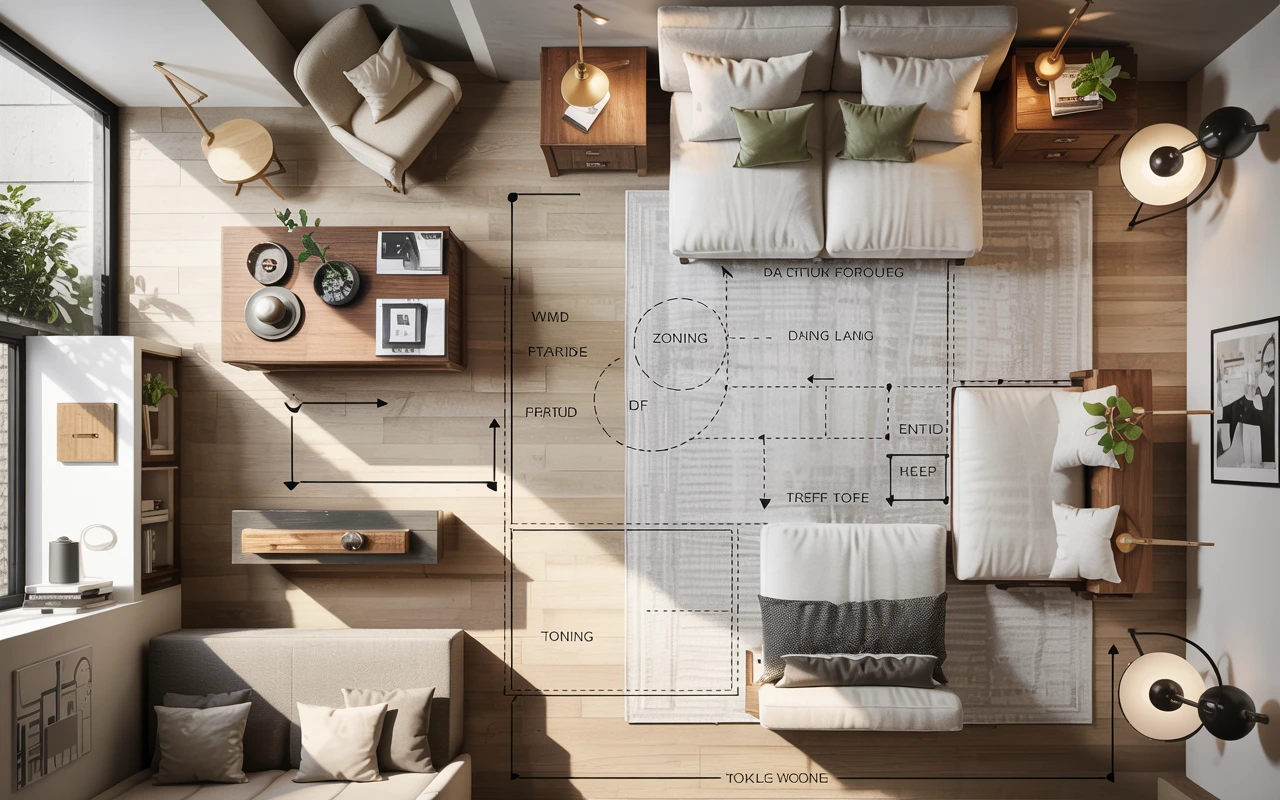
Once you know the main activities, you can group them into zones. A zone is a part of the room with one main job. In a living room, you might have a seating zone, a media zone, and a reading corner near a window. In a kitchen and dining space, you might have a cooking zone, a prep zone, and a dining zone. Look at your base map and draw soft shapes for these areas. Place them where they make sense. Cooking and dining belong close together. A reading chair works near light and away from a loud screen. A small desk belongs in a place where people can focus. This rough “bubble plan” already tells you which areas should sit close and which should stay apart.
Draw a Scaled Plan So You Avoid Costly Mistakes
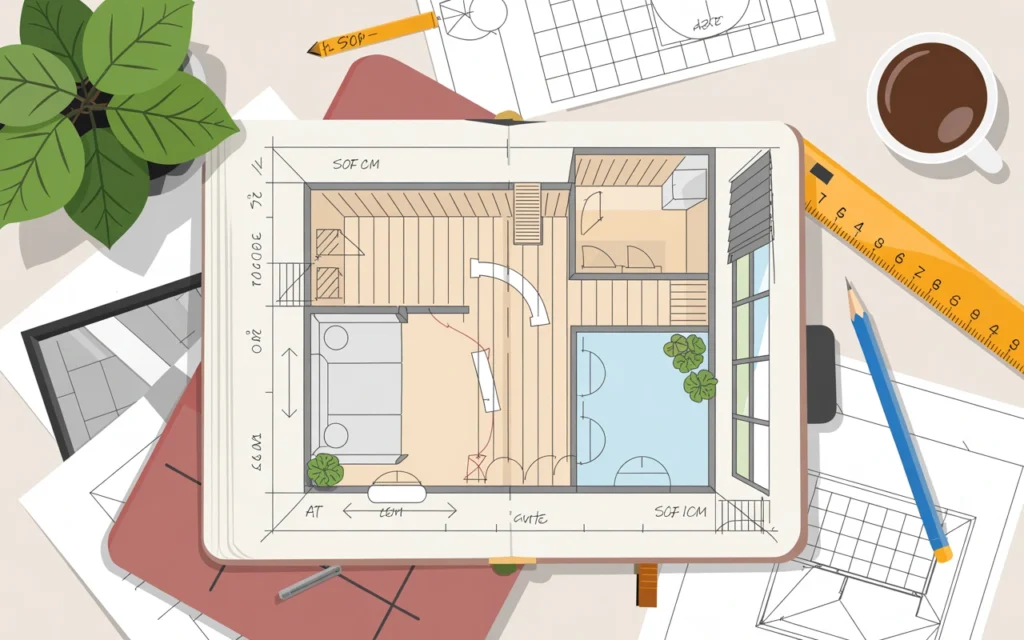
Now you turn ideas into numbers. Take graph paper or a simple planner and choose a scale. For example, one square can equal ten centimeters or half a foot. Redraw the room using this scale, including doors and windows with their true size. Then measure your key furniture. If you do not own it yet, choose realistic target sizes that suit the room type. Draw each piece as a rectangle at the same scale. Now move these blocks around on the plan. You will quickly see which combinations work and which pieces are simply too large. This step is where many expensive mistakes are prevented.
Place the Anchor Piece First and Protect Circulation
Every room has one anchor piece that sets the tone. In a living room, it is usually the sofa or sectional. In a bedroom, it is the bed. In a dining area, the table is. Place this anchor first on your scaled plan. Align it with the main focal point and the main activity. A sofa should face the view, the fireplace, or the media wall. A bed should sit against the best solid wall in the room. Once the anchor is well seated, add other pieces around it, not scattered randomly. Then draw how people will move through the room. Mark the route from the door to the main seat, from the sofa to the kitchen, from the bed to the wardrobe, and to the bathroom. These paths should be simple and clear. Leave a comfortable walking space, not tight gaps that force people to turn sideways. When the circulation is clean, the room feels easy to decorate before you even start.
Get Scale, Proportion, and Visual Weight Working Together
A layout can be technically correct and still feel wrong if the scale is off. Look at each piece and ask whether it suits the room. An oversized sectional can swallow a small living room. A king bed in a tight bedroom can leave no room for storage or walking. Choose furniture that matches the room’s true size. Proportion is about how pieces relate to each other. A coffee table that is roughly two-thirds the length of the sofa usually feels balanced. A rug that touches all main seats helps the group feel united. Visual weight is about how heavy something looks. Dark, tall pieces feel heavier than light, low ones. If one wall has all the storage and the other walls are bare, the room can feel lopsided. Spread tall or dark items so the space feels stable, then leave some empty floor and wall area so the eye can rest.
Use Light, Storage, and Decor to Support the Layout
Once the interior layout is complete, light and decor should follow suit. Think about general light for the whole room, then focused light for reading, cooking, and work. Use a softer light to create an evening mood. Place lamps and fixtures where people actually sit and move, not just in the center of the ceiling. Plan storage close to the zones that need it. Keep daily items within easy reach and use closed storage where clutter tends to build. Choose rugs that anchor each zone, not tiny pieces that float alone. Hang art where it can be seen from the main seats. Keep decor simple and intentional. When every layer supports the plan, the room starts to feel both relaxed and organized.
Handle Small, Awkward, and Multi-Use Spaces with Care
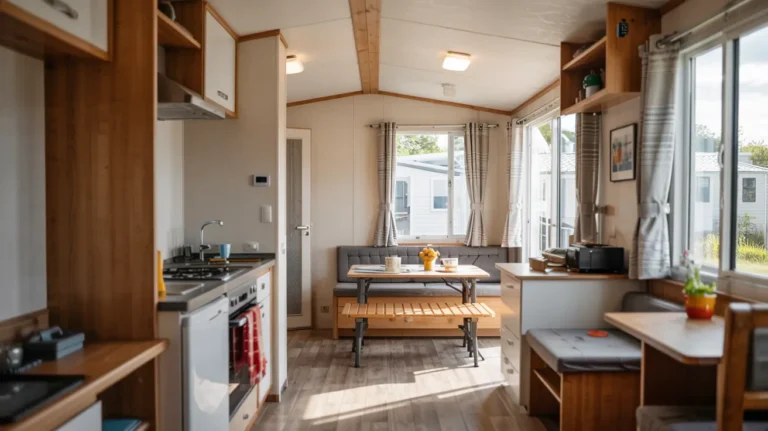
Small and awkward rooms need space planning the most. In a narrow room, keep the main storage or seating along one long wall and leave the other side as a clear route. Choose slim sofas, shallow shelves, and neat consoles to avoid a cramped feel. Turn bays or niches into focused spots, such as reading corners or compact dining areas. In rooms that serve multiple roles, choose pieces that double as, like daybeds, sofa beds, fold-away desks, and storage benches. Group items by function so the room can quickly switch from work mode to guest mode. Built-in furniture can be a strong solution where nothing standard fits, but it makes the most sense where you plan to stay for years.
Keep Comfort, Safety, and Access at the Heart of the Plan
Good space planning in interior design is not just about a tidy drawing. It affects comfort, stress, and safety every day. Clear routes reduce trips and bumps. Sensible seating positions help conversations and rest. Enough storage keeps clutter off the floor and off your mind. If anyone in the home uses a stroller, stick, or wheelchair, keep main routes wide and simple. Avoid sharp corners in paths and mark level changes with clear light and contrast. These choices do not limit beauty. They make the room more welcoming for everyone who uses it.
Bring Your Layout Together and Refine Over Time
A strong interior layout does not arrive by luck. It comes from a clear process and small, thoughtful tests. You measure the room and mark fixed features. You study who uses the space and how they use it. You turn activities into zones, then into a scaled plan. You place the anchor piece first, protect circulation, and adjust furniture size to the room. You balance scale and visual weight, then add light, storage, and decor that support the plan. You do not need to reach perfection at once. Start with one room, one drawing, and one honest test. Live with the new layout, note what feels better, and then refine. Over time, every room in your home can feel intentional, comfortable, and ready for real life.