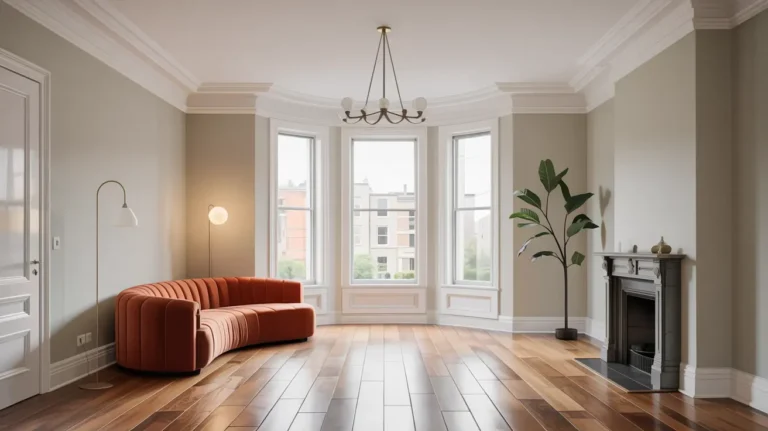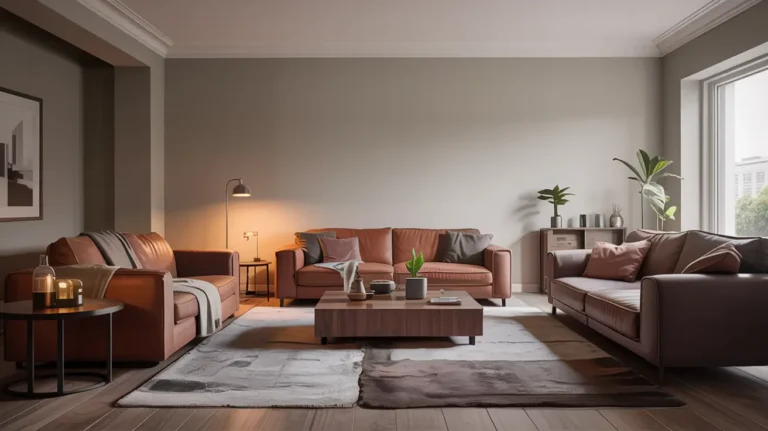

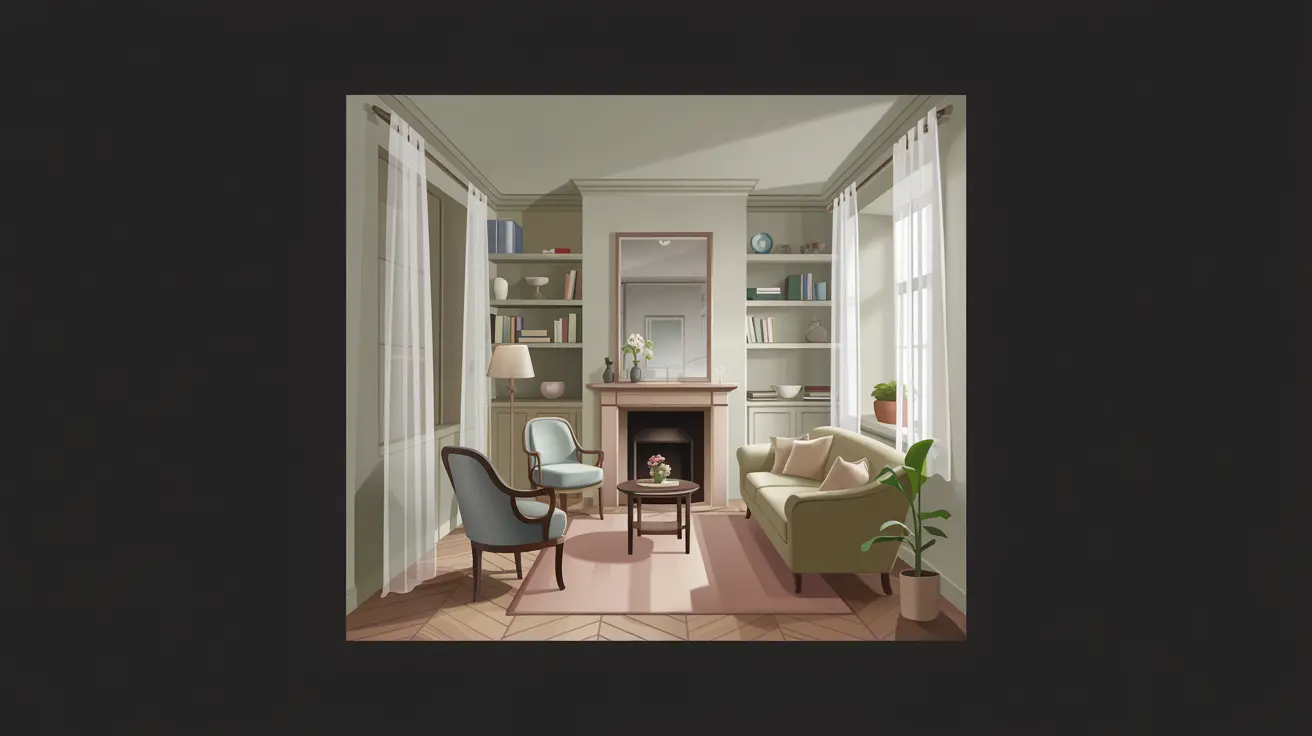
A small drawing room interior can feel crowded very fast. The sofa takes over the floor. Corners stay dark. Surfaces fill with things that do not have a home. Yet small living spaces often sit at the heart of modern apartments and compact Indian homes. Interior designers repeat the same point. When you respect the room’s size and plan it with care, a small drawing room can look refined, bright and welcoming.
Understand Your Small Drawing Room Before You Change It
Good design starts with a clear look at the space. Stand in the room at different times of day. Notice where natural light enters and where shadows collect. Look at the main door, the window wall and any niches or beams. Ask how many people sit here most days and what they do. Some families talk and relax. Others focus on television. Many use the same room to welcome guests during festivals or family visits. Professionals use this same exercise when they design compact living rooms, because function guides every later choice.
When you understand how the room behaves, decisions become easier. You can see which wall wants the main sofa. You can see where a television makes sense. You can also sense which corners are free for storage and which paths must stay clear so people can move easily.
Plan the Layout First, Then Think About Decor
In a small drawing room, layout matters more than cushions or art. Start with the largest pieces, usually the sofa and television unit. A slim three seater against one wall often works better than a deep bulky couch. In many compact rooms, an L shaped sofa tucked into a corner frees up floor space in the centre. Designers often suggest low backed sofas with narrow arms so you gain seating without heavy frames.
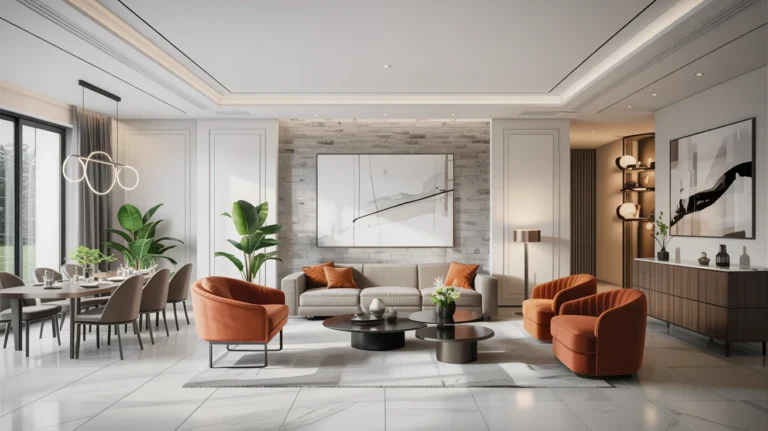
Place the main seating near the natural focal point. Sometimes this is a window. Sometimes it is a television wall or a feature niche. In long narrow rooms, placing the sofa along a long wall with a slim media unit on the opposite side prevents a corridor feel. In almost square rooms, an L shaped sofa and one round centre table create a soft arrangement that leaves paths around the furniture. Aim for at least one clear route from door to window so nobody has to squeeze past corners.
Use Smart Furniture and Storage to Reduce Visual Weight
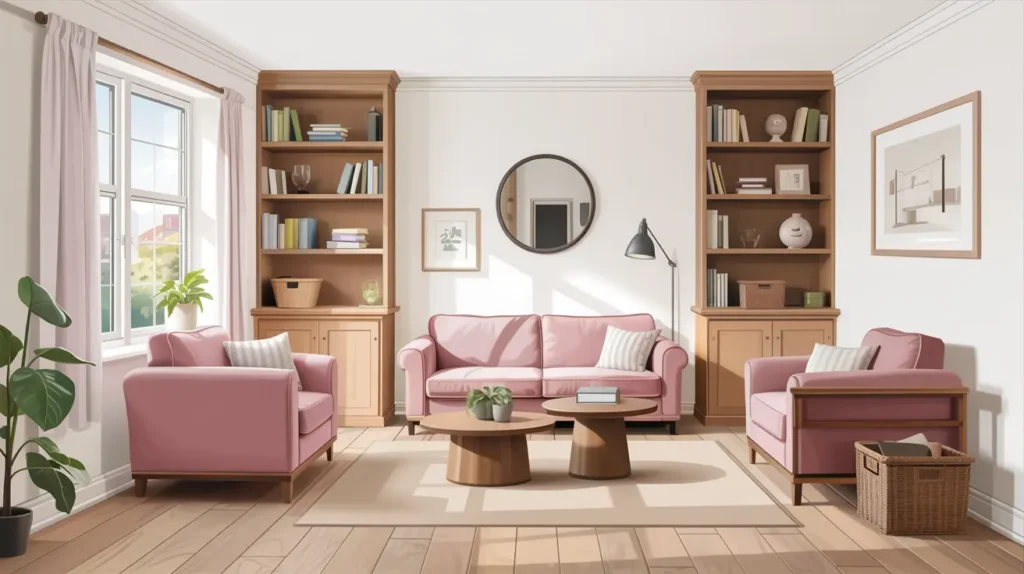
Small drawing rooms struggle when furniture is oversized and storage is missing. Multi functional pieces solve both issues at once. A storage ottoman can hold toys, throws or magazines and still act as a seat or footrest. A nested coffee table offers more surface when guests arrive and hides under itself later. A wall mounted TV unit and floating shelves keep the floor visible and make the room feel lighter. Built in storage along a single wall can hide books, remotes and daily clutter behind simple doors.
Scale should match the room. Overstuffed recliners and very deep sofas rarely suit compact spaces. Sofas with visible legs let you see more floor, which tricks the eye into reading the room as larger. Interior experts also like slim side tables and light stools that can travel between corners. These pieces increase flexibility without adding bulk.
Choose Colours, Light and Materials That Open the Space
Colour and light change how a drawing room feels before you move any furniture. Many small room guides suggest a light, neutral base on walls and major furniture. Soft white, warm beige, pale grey or gentle pastels bounce light and calm the room. Deeper colours still have a place. Use them in one accent wall, a rug, cushions or artwork instead of covering every surface.
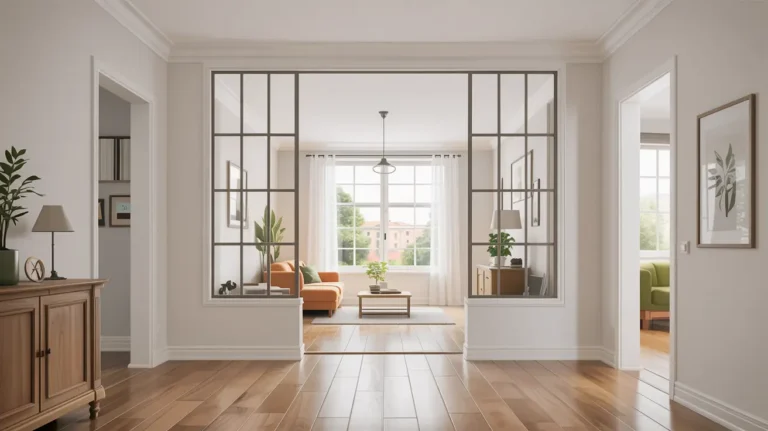
Natural light should travel as far as possible. Use sheer curtains or layered sheers with a simple blackout lining when needed. Avoid heavy dark drapes that cover the top of the window and steal light. If the room has only one small window, support it with layered artificial lighting. Relying on a single ceiling tube or downlight makes the space flat and harsh. A mix of ceiling lighting, a floor lamp and a table lamp lets you light corners and create a warmer mood in the evenings.
Materials play a quiet role. Light toned wood, veneer panels and pale laminates keep the room feeling open. Natural textiles like cotton, linen and jute add texture without weight. A single rug large enough to sit under the front legs of the sofa and chairs ties the seating group together. Several small rugs tend to chop the floor and make the room look busy. CenturyPly and other interior brands often show how reflective finishes, mirrors and light woods together can stretch a compact space visually.
Bring Local Personality into a Small Drawing Room without Clutter
A drawing room often reflects family culture, especially in Indian homes. You may want traditional pieces and colour, yet need the room to stay calm. Low seating along a wall with a diwan or gaddas and large cushions can host many people but uses less depth than armchairs. In some homes, a slim wooden swing near a window becomes both a design feature and a flexible extra seat.
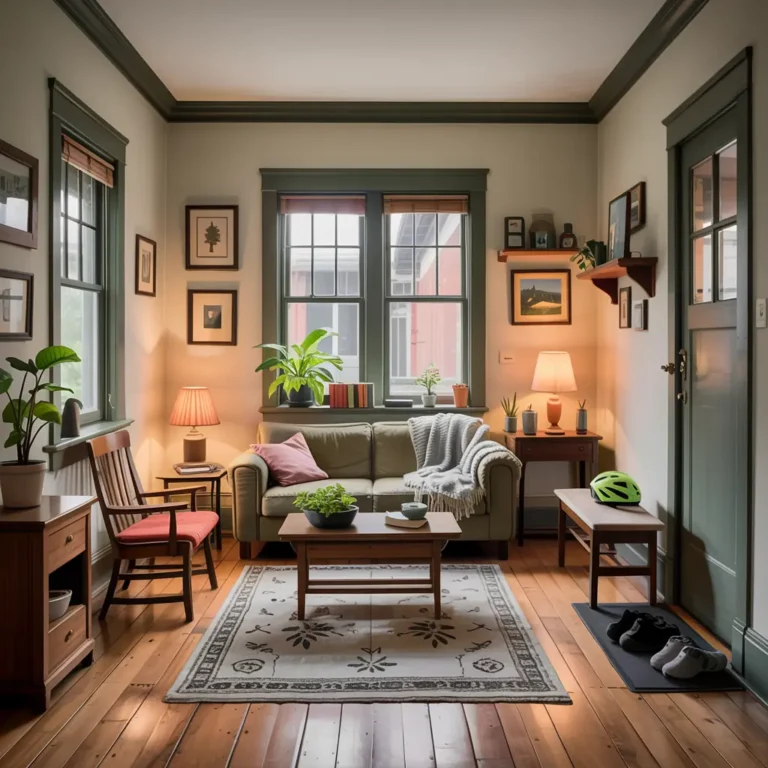
Use textiles and decor with intention. One handwoven rug, a few rich cushions and a single striking wall hanging often say more than many small objects. Brass lamps, carved frames or a traditional wall plate arrangement bring heritage touches. Keep surfaces like the centre table and side tables mostly clear so the room reads as tidy. Plants in simple pots can soften corners and add life without visual clutter when used in small number.
Design One Room for Television, Guests and Daily Life
Most small drawing rooms have to perform several roles. The same space may host movie nights, festival gatherings and quiet reading. Set a clear main priority first. If television is central, place the TV at eye level when seated, on a slim unit that also hides cables and devices. Arrange the main sofa facing this wall, then add light stools or poufs that can pivot between the screen and conversation.
If hosting guests is more important than daily viewing, focus on face to face seating. A three seater sofa with two light armchairs angled towards it creates a social circle. Keep some seating movable. A bench along a wall, small ottomans or floor cushions can slide into the centre when visitors arrive. For families with young children, leave one corner open as a play area. A large lidded basket or trunk can hold toys and clear the floor quickly when you need a more formal look.
Avoid Common Mistakes That Make Small Drawing Rooms Feel Smaller
Many small rooms suffer from the same repeat mistakes. One is pushing every piece of furniture flat against the walls. This can make the centre feel empty and the perimeter feel crowded, like a waiting room. When space allows, pull the sofa slightly away from the wall and let a rug define the seating island. Another mistake is using many tiny decor items everywhere. Dozens of photo frames, small vases and trinkets create noise. Fewer, larger pieces feel calmer and more intentional.
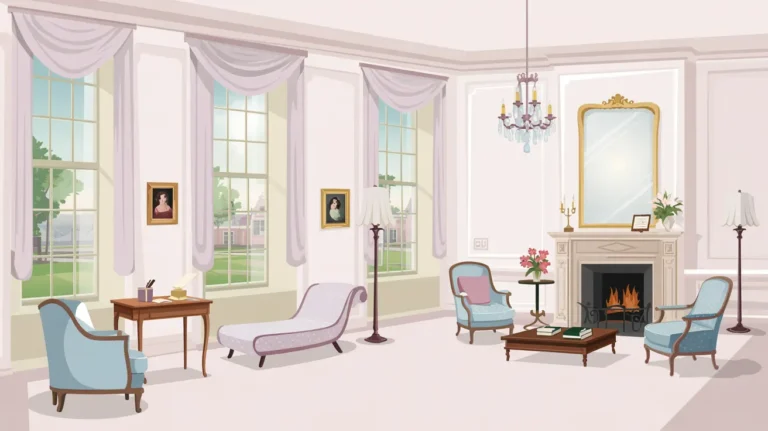
Colour and light mistakes show up often too. Painting all four walls in a very dark shade can make the room feel like it is closing in. Using only a single overhead light creates harsh shadows and makes corners disappear. Designers also warn against ignoring vertical space. Curtains hung just above the window can make ceilings look low. Full height curtains, taller shelves and art placed a little higher draw the eye upward and give the sense of more height, which helps compact rooms breathe.
A Simple Sequence to Upgrade Your Small Drawing Room
If the room feels stuck, you do not need to renovate everything at once. Start with decluttering. Remove pieces you rarely use and clear surfaces. Many homes find that taking away just one armchair or side table already improves movement. Next, work on layout. Try new positions for the sofa and central table until you find a plan with a clear path and comfortable sightlines.
Third, improve light and colour. Swap heavy curtains for sheers, add at least one floor or table lamp, and consider a lighter paint tone for walls. Fourth, invest in one or two multi functional furniture items and a better storage unit so the room can stay organised. This step by step order mirrors the way many interior studios handle compact living rooms for their clients. It builds visible change while keeping budget under control.
Bringing It All Together
A small drawing room does not have to feel like a compromise. Size sets limits, but good planning can still create a calm, bright, and welcoming space. When you start with layout, choose furniture with the right scale, manage storage, and use color and light with care, the room begins to work hard for daily life and for guests.
Add a few personal touches that reflect your style and culture, but keep the overall picture simple and ordered. In time, your compact drawing room can become the most inviting space in the home, not the one you apologize for.