
Low light plants indoor rooms can feel calm and stylish. They can also feel empty without greenery. The problem is simple. Many plants sold as easy still need strong window light. That is why they fade in hallways, bedrooms, and deep living rooms. The good news is that some indoor plants suit shade and still look high-end. When you pick the right plant and style it well, the space feels finished, not cluttered.
What Low Light Looks Like Inside a Home
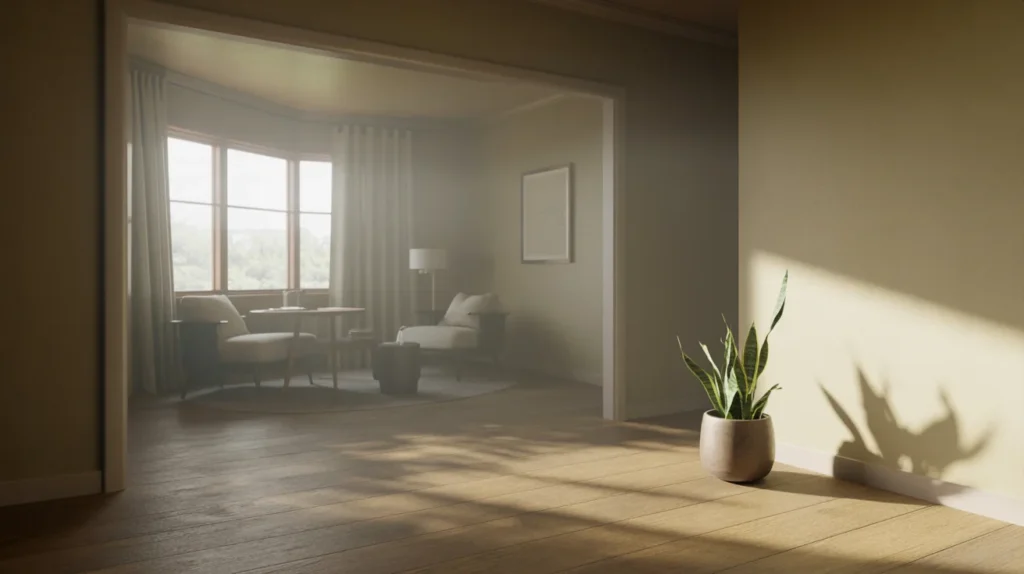
Low light usually means no direct sun on leaves. It often shows up in north-facing rooms, behind sheer curtains, and in corners far from windows. You can still decorate with plants in these areas. You just need plants that stay stable with softer light and slower growth. This is helpful for design too, because a plant that grows slowly keeps its shape longer and needs less trimming.
Start With the Room Not the Plant
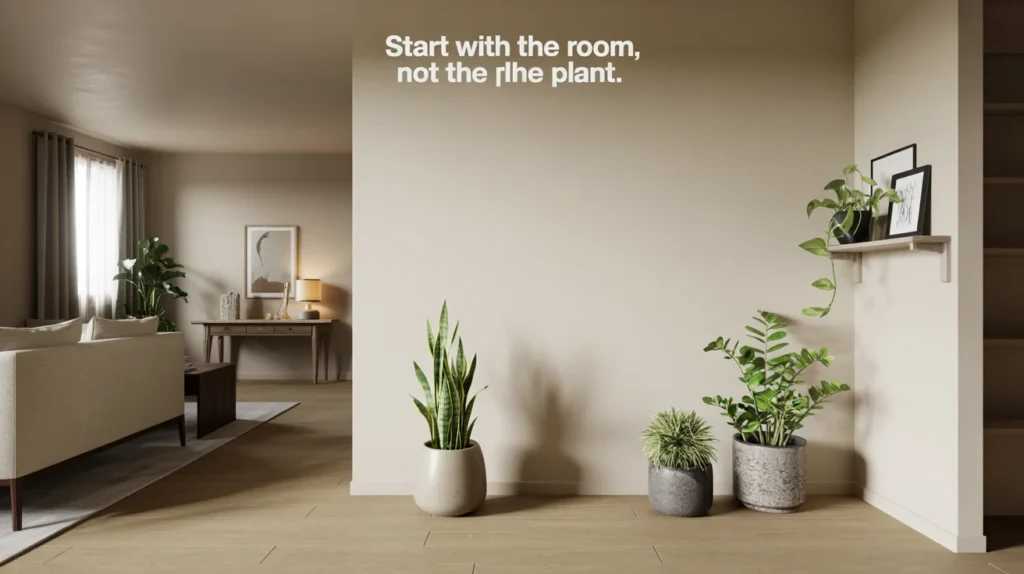
A plant should match the function and mood of the space. A bedroom needs calm forms and clean lines. A living room can handle taller shapes and bolder leaves. A hallway needs slim profiles so it does not block flow. When you pick plants this way, they look intentional, like furniture. They also stop feeling like random objects placed to fill a gap.
The Best Low Light Plants for Interior Design Styling
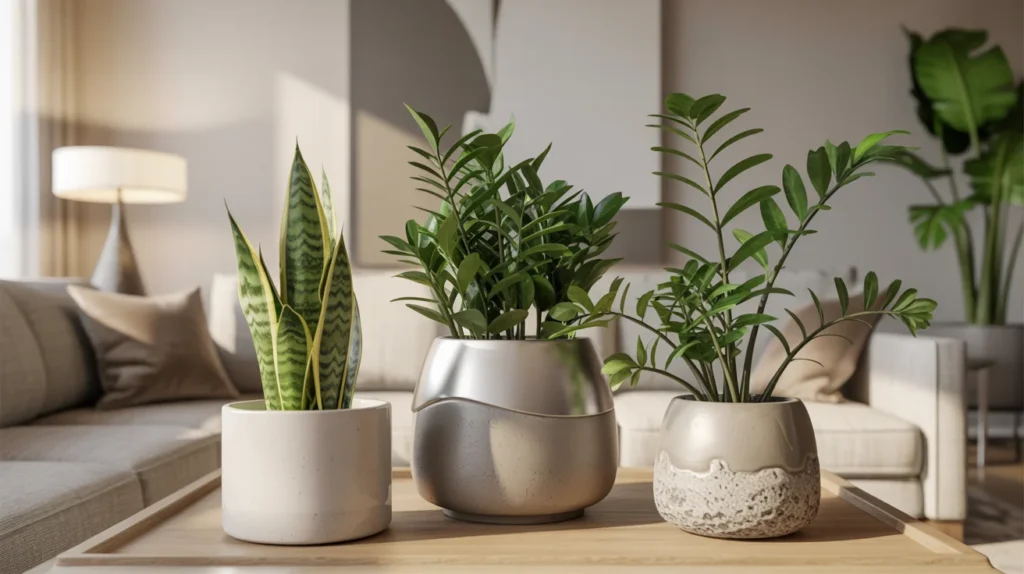
These plants are popular because they look good and they handle shade. They also pair well with common design styles like modern, minimalist, Japandi, boho, and classic.
ZZ Plant for Modern and Minimal Spaces
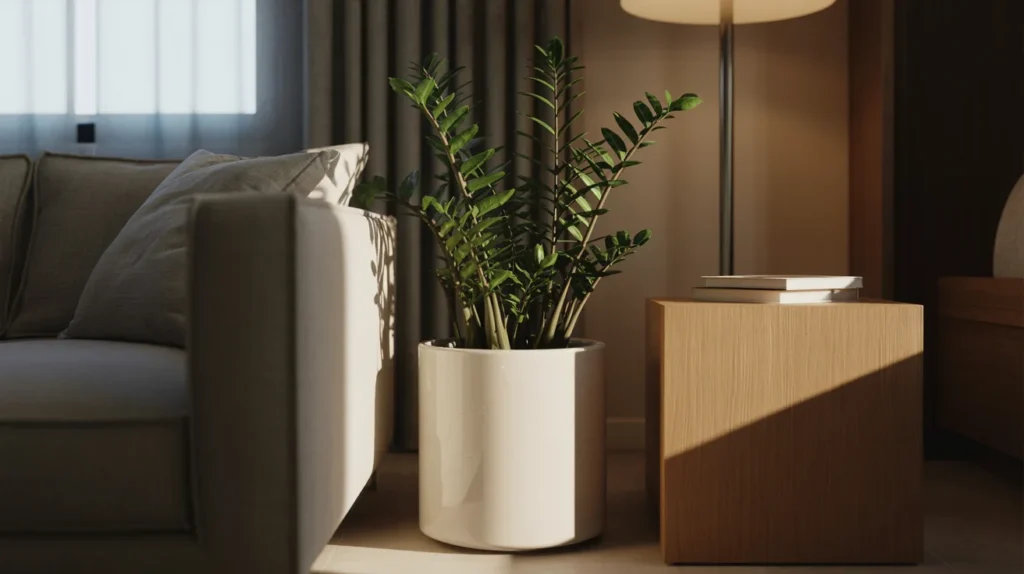
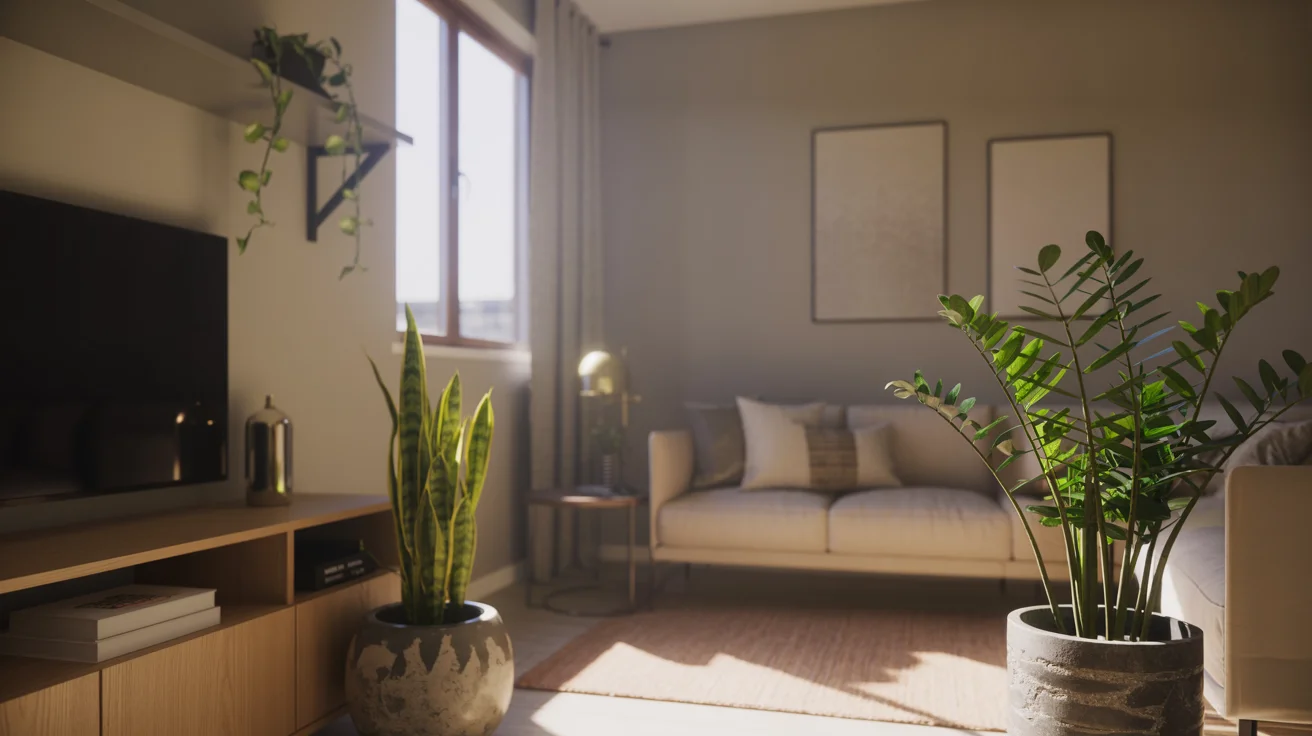
The ZZ plant has thick, glossy leaves that look polished. It works in modern homes because it has a clean silhouette. Place it in a matte ceramic pot or a simple cylinder planter. It looks best on the floor beside a sofa, in a reading corner, or near a media console. Keep the look sharp by hiding the nursery pot inside a heavier decorative planter.
Snake Plant for Tall Lines and Tight Corners
Snake plants give height without taking much floor space. That makes them perfect for corners, entryways, and the side of a console table. Their upright form fits minimalist and contemporary rooms. Choose a neutral planter if the room is calm. Choose a textured pot if the room feels flat. Snake plants also work well in pairs on both sides of a doorway for symmetry.
Pothos for Shelves, Ledges, and Soft Layers
Pothos is the easiest way to add movement. It trails naturally and softens hard lines. Use it on floating shelves, bookcases, and wall ledges. It looks great in a simple hanging planter near a window, even if the light is not strong. If the room leans modern, pick a clean white or black pot. If it leans boho, use woven baskets, but keep the shape neat.
Chinese Evergreen for Color Without Loud Patterns
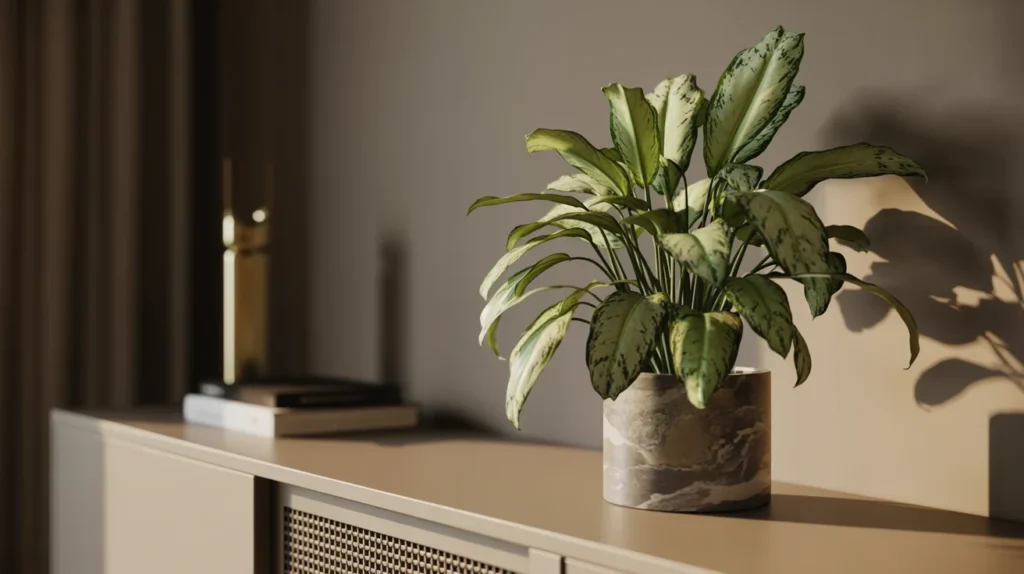
Chinese evergreen adds gentle color and pattern. It can bring life to beige rooms without making them feel busy. It looks good on a sideboard, a credenza, or a desk. Choose a pot that matches hardware finishes, like matte black, brass, or warm stone. This small detail makes it look like part of the design plan.
Peace Lily for Calm, Classic, and Spa-Like Rooms
Peace lilies feel soft and calm. They fit classic living rooms and spa style bathrooms with windows. The leaves arch nicely, which breaks up straight furniture lines. Use a pot with a smooth finish for a clean look. If the plant blooms, it adds a subtle accent without looking like a flower arrangement.
Cast Iron Plant for Hallways and Dim Corners
Cast iron plant is a design secret for darker spaces. It has long leaves that stay neat. It works well in hallways, stair landings, and corners where nothing else thrives. Use a tall planter to lift the leaves into the visual line of the room. This makes the corner feel styled, not forgotten.
Philodendron for Warm, Cozy, Lived-In Interiors
Heartleaf philodendron looks a bit softer than pothos. It suits cozy homes, wood tones, and warm palettes. Style it in a rounded pot to match its leaf shape. Place it on a side table, a low shelf, or a kitchen counter that gets indirect light. It also pairs well with framed art and table lamps.
Parlor Palm for Soft Texture in Bedrooms and Offices
Parlor palm adds a gentle, airy texture. It is great when a room feels too hard or too sharp. It fits bedrooms, offices, and quiet sitting areas. Use a pot with a wider base so it feels grounded. Pair it with linen curtains and warm lighting for a calm, layered look.
How to Style Low Light Plants Like a Designer
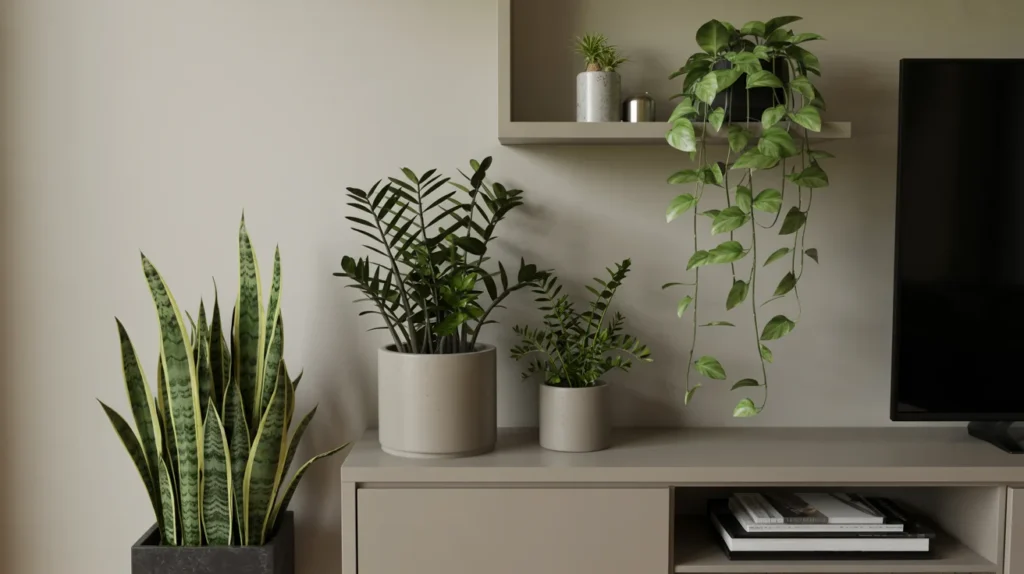
Plants look best when they follow the same rules as decor. Scale, balance, and repetition make the difference. Use one larger floor plant to anchor a corner. Add a medium plant on a console or cabinet to fill negative space. Then add a trailing plant on a shelf for movement. This three level approach creates depth and makes the room feel finished.
Best Plant Placements by Room
Living Room Corners That Feel Empty
A single tall plant can solve an empty corner better than extra decor. A snake plant or ZZ plant works well beside a sofa or armchair. Add a plant stand if the corner is very dim. Keep the planter simple so it does not compete with furniture.
Entryway and Hallway Styling
Hallways need slim plants. Snake plant and cast iron plant are safer choices. Use one planter that matches the home’s main finish, like black metal, warm stone, or light oak. A clean runner and a mirror beside the plant can make the space feel bigger.
Bedroom Corners That Need Softness
Bedrooms look best with calm greens. A parlor palm or peace lily works well near a dresser or beside a chair. Avoid too many small pots in bedrooms, because they feel messy fast. One medium plant with a clean planter looks more intentional.
Home Office and Desk Areas
Office plants should look neat and stay low effort. Chinese evergreen, pothos, and snake plant fit well. Place one plant near a monitor to soften the tech feel. Keep the pot neutral so the desk stays clean and professional.
Bathroom With a Window
If the bathroom has a window, peace lily and parlor palm can work. They match spa style design and soften tile and mirrors. Use a water resistant planter and a saucer that does not stain surfaces.
The Most Common Problem in Low Light Homes: Overwatering
Low light makes plants drink slower. Soil stays wet longer. That is why many indoor plants die in dark rooms. People water on a weekly schedule and roots sit in moisture. The fix is simple. Water less and improve drainage. A pot with drainage holes matters more than any fancy fertilizer.
A Simple Care Routine That Keeps Plants Looking Styled
Check soil before watering. For ZZ and snake plants, wait until the pot is mostly dry. For pothos and philodendron, let the top layer dry first. For peace lily, water when it starts to droop slightly. Wipe dusty leaves every couple of weeks. Clean leaves reflect more light and look better in photos. Rotate the pot once a week so the plant grows evenly and keeps a balanced shape.
Signs the Plant Is Too Dark for the Spot
If stems stretch and leaves space out, the plant is reaching for light. If new leaves get smaller, light is low. If the plant never grows, it may be too far from the window. Move it closer by a few feet. If the room has no usable light, add a small LED grow light with a timer. Place it so it looks like a normal lamp. This keeps the room design clean while helping the plant.
How to Make Low Light Spaces Feel Brighter Without Changing the Room
A plant can look better without getting more sun. Clean the window glass. Use sheer curtains instead of heavy ones if privacy allows. Place plants near light colored walls. Add a mirror across from the window to bounce light. Use lighter planters in dark rooms to lift the visual mood. In modern spaces, a white or stone pot can brighten the corner even when the light is low.
Pet Safety in Styled Homes
Many popular low-light plants can irritate pets if chewed. Homes with cats that nibble leaves should place plants higher or choose safer options after checking a trusted source. A plant that stays out of reach also stays looking better. It avoids torn leaves and messy soil.
A Quick Interior Design Checklist Before Buying a Plant
Pick the spot first. Measure the height you need. Choose a plant that matches that scale. Match the planter finish to the room’s metals or wood tones. Avoid too many different pot colors in one open space. Repeating one or two finishes makes the home look curated. Bring the plant home and keep it in its nursery pot inside a decorative planter. This makes watering easier and protects floors.
Conclusion
Low light does not mean you must skip indoor plants. It just means you need the right plants and the right styling. Choose shapes that match your room and planters that match your finishes. Water less than you think. Keep leaves clean and rotate the pot. With that routine, even dim corners can look designed and alive.