
Kitchen lighting design can make a good kitchen feel annoying. You know it when you see it. The counter looks dark. The sink feels like a shadow zone. The room looks bright in one corner and dull in another. A real home needs lighting that works at 7am and at 10pm. The goal is simple. You should see clearly when you cook, and relax when you are done.
Start with the spots where you actually work
Forget the fancy fixtures for a minute. Think about where you stand most. Most people prep on one main counter. Most people wash at the sink. Most people cook at the stove. Those areas need the best light because your hands work there.
Do a quick test tonight. Turn on your current lights. Stand at the sink. Then stand at your prep counter. If your body throws a shadow on the surface, that is the problem. Your plan should remove that shadow.
Don’t rely on one ceiling light
One bright light in the middle never feels right. It leaves corners darker. It also makes faces look harsh. It can even make the kitchen feel flat.
Instead, think of kitchen light like this. You need general light to move around. You need direct light on work surfaces. You also need a softer option for evenings.
General light that feels even
General light should spread across the room. It should not create bright spots and dark gaps. Recessed lights can work well when spaced properly. Flush and semi-flush ceiling lights also work in many homes.
If you only have one fixture now, the easiest improvement is adding more even coverage. When the whole room is evenly bright, everything else becomes easier.
Counter light that fixes the shadow problem
Most kitchen frustration comes from shadows on counters. This is why under-cabinet lighting is so loved. It shines right onto the counter. It does not sit behind your head. It makes chopping safer and easier.
If you have upper cabinets, use LED strips under them. They look smooth and light the counter evenly. If you have open shelves, add a focused light above the prep stretch. The goal is simple. The light should land on the counter, not behind you.
Sink lighting that stops the “dark sink” feeling
The sink area gets dark because you stand in front of the light. Many kitchens put a ceiling light behind the sink line. That creates a shadow right in the basin.
Place a recessed light slightly in front of the sink edge. A small pendant can also work. Just keep it sized for the space. The sink should feel clear, not dramatic.
Stove and cooktop lighting that feels clean
Range hood lights help, but some are weak. Some also look too cool. If your hood light feels dim, add a ceiling light near the cooktop.
Placement matters. Put it slightly in front of where you stand. That keeps your body from blocking the light. Cooking should feel bright, not gloomy.
Island lighting that is not just for show
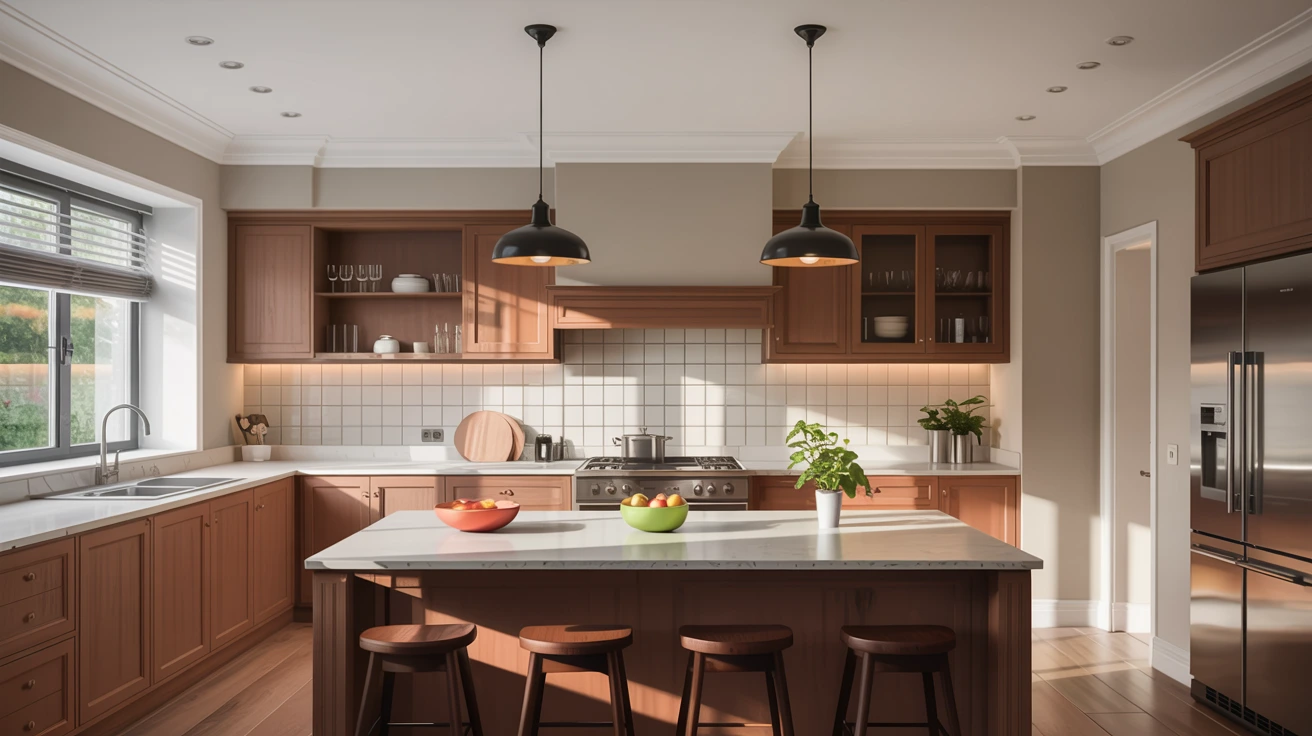
Island pendants often look great and work poorly. People buy them for style. Then they chop in their own shadow.
If you prep on the island, you need real brightness there. Choose pendants that push light down. Pick shades that are not too closed. If you still feel dim, add a couple recessed lights nearby. That way the island looks good and works well.
Pantry lighting that makes shelves usable
A pantry can feel like a cave. One weak bulb near the door does not reach the back shelves.
Use a small ceiling fixture or a bright recessed light. If shelves are deep, stronger output helps. You should be able to see labels without using your phone flashlight.
Pick one light color and stick to it
Mixed bulb colors ruin kitchens. One side looks warm. Another looks blue. It makes cabinets look different from one wall to the next.
Most homes feel best with warm white light. Many people like 2700K to 3000K for kitchens. It feels comfortable at night. If you want a cleaner look, you can go a bit cooler. Just keep the whole kitchen consistent.
Make food and finishes look real
Some lights make food look dull. Tomatoes look brown. Greens look gray. That is usually poor color quality.
Look for bulbs with strong color rendering. Your kitchen will look more natural right away. This matters even more if you have warm wood or colorful tile.
Control glare before it annoys you
Glare happens on shiny counters and glossy cabinets. It also happens with exposed bulbs.
If glare bothers you, use diffused shades. Frosted glass helps a lot. Softer lenses also help in recessed fixtures. Place lights so reflections do not hit your eyes when you stand at the counter.
Use dimmers so the kitchen fits your day
A kitchen does not need to feel like a workspace all night. Dimmers change the whole mood.
Keep it simple. Bright mode for cooking and cleaning. Soft mode for evenings. If you use smart controls, you can save these settings. If you do not, a normal dimmer still works great.
If you get flicker, it is usually a compatibility issue. Try a dimmer made for LEDs.
Quick fixes for common problems
If your counter is dark, add under-cabinet lighting. If the sink feels shadowy, move the ceiling light forward. If the kitchen feels patchy, match your bulb color across all fixtures. If the island looks pretty but feels dim, add brighter downlight support. If the kitchen feels harsh at night, add dimmers and a softer accent option.
A simple planning checklist
Make sure every main work spot has direct light. Make sure the room has even general light. Keep bulb color consistent across the kitchen. Add a dimmer for comfort. Check glare on shiny surfaces. Test everything at night before you call it done.
FAQs
Do I really need under-cabinet lighting
If you prep on your counters, yes. It solves the shadow issue better than ceiling light.
What light color works best in kitchens
Most homes feel good around 2700K to 3000K. The bigger rule is consistency.
Why does my sink area look dark
Your body blocks the light. Move the light in front of the sink line.
Are pendants enough for an island
Only if they are bright enough for prep. Many need support lighting.
Why does my kitchen look different in each corner
You likely mixed bulb colors or have uneven coverage. Match bulbs and spread light evenly.