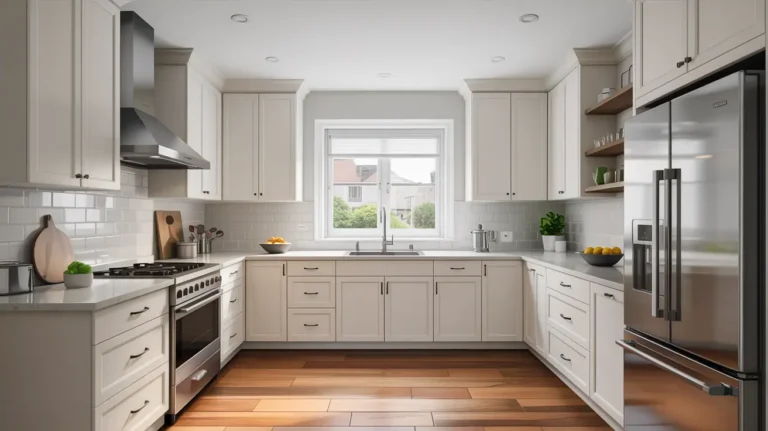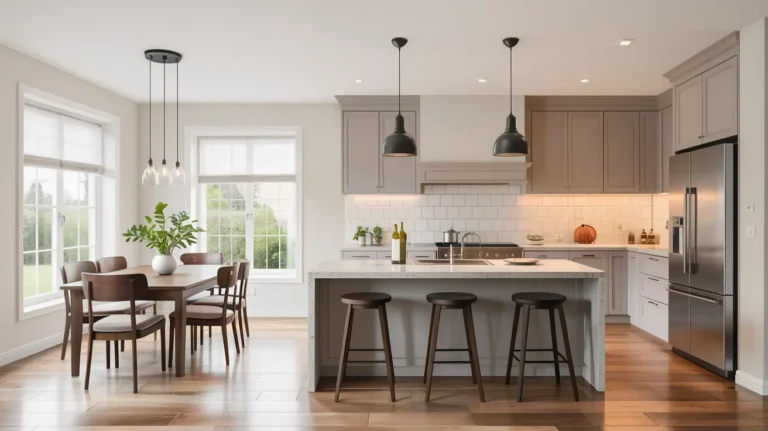

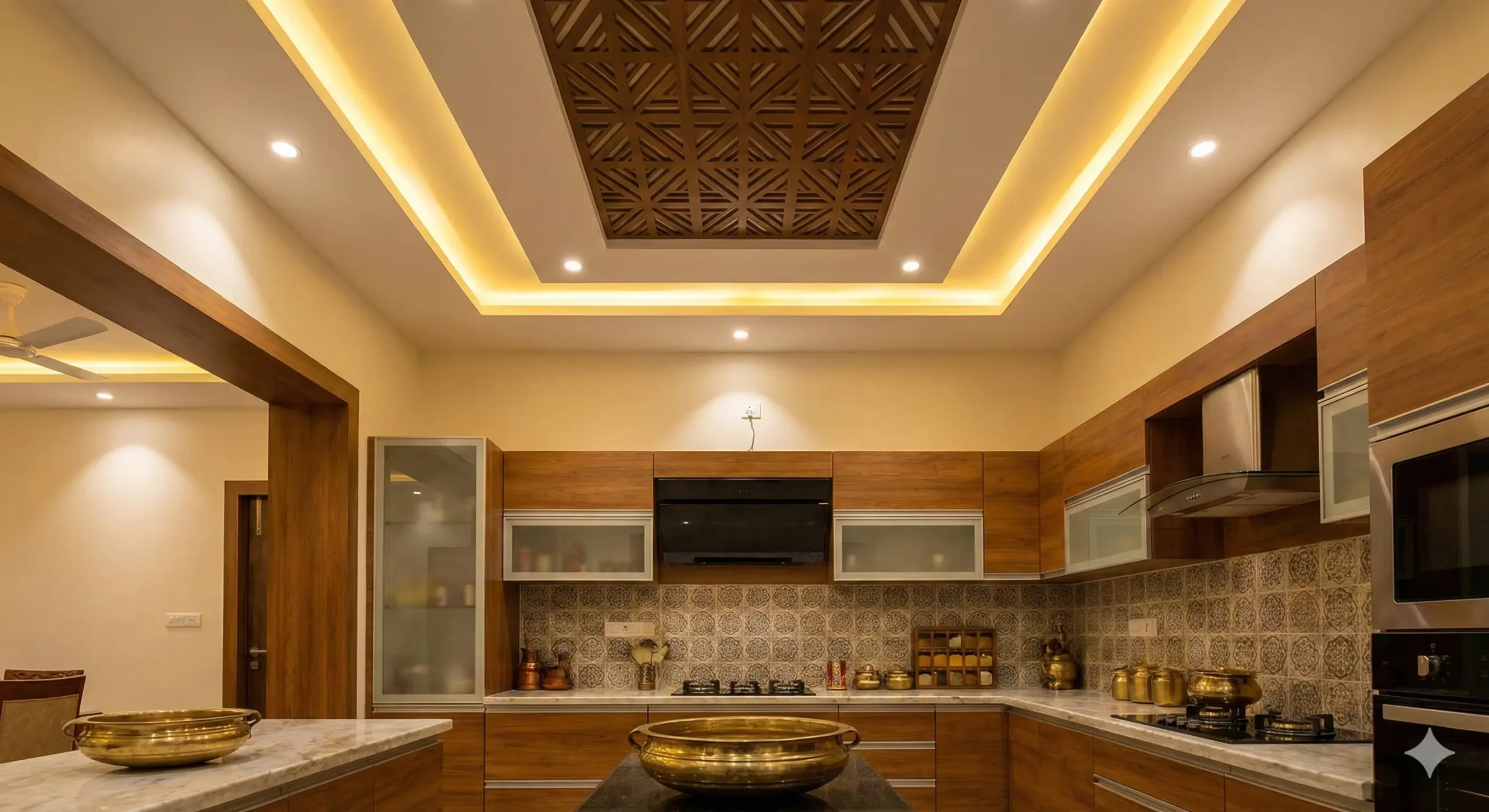
The best kitchen false ceiling design combines functionality with style while addressing heat, moisture, and lighting needs. For Indian kitchens, PVC panels and gypsum boards work best because they resist humidity and handle cooking fumes well. A well planned ceiling transforms your cooking space into a beautiful, comfortable area.
Your kitchen ceiling does more than cover wires and pipes. It controls temperature, improves lighting, and adds personality to your home. Whether you have a compact cooking space or a large modular kitchen, the right ceiling design makes a real difference.
This guide covers everything you need to know about kitchen ceilings. You will learn about materials, costs, designs, and maintenance. We also address common problems that Indian homeowners face with their kitchen ceilings.
What Is a Kitchen False Ceiling
A false ceiling is a secondary ceiling installed below your main structural ceiling. It hangs from a metal framework attached to the original roof. The gap between both ceilings serves multiple purposes.
This space hides electrical wiring, plumbing pipes, and air conditioning ducts. It also creates room for recessed lighting and exhaust systems. Most false ceilings sit about four to six inches below the original ceiling.
Unlike other rooms, kitchen ceilings need special attention. The cooking environment produces heat, smoke, grease, and moisture daily. Your ceiling material must handle these conditions without damage or discoloration.
Suspended ceilings in kitchens also help with temperature control. The trapped air between both ceiling layers acts as insulation. This keeps your cooking area cooler during summer months.
Why Your Kitchen Needs a False Ceiling
Many homeowners wonder if a kitchen ceiling is worth the investment. The benefits go far beyond looks.
Temperature Control and Thermal Insulation
Indian kitchens get extremely hot, especially during summer. Cooking generates significant heat that rises and gets trapped near the ceiling. A false ceiling creates an air gap that provides thermal insulation and keeps the space cooler.
The layer of trapped air acts as a barrier between the hot roof and your kitchen. This reduces the overall temperature by several degrees. Your kitchen becomes more comfortable for long cooking sessions.
Better Lighting Options
Traditional tube lights create harsh, uneven lighting in kitchens. A false ceiling allows you to install multiple lighting fixtures at strategic points. You can place task lighting above the cooking area and softer lights elsewhere.
Cove lighting around the ceiling edges creates a warm ambiance. Recessed lights provide focused illumination without hanging fixtures. This combination makes your kitchen both functional and inviting.
Concealing Wires and Pipes
Modern kitchens have numerous electrical connections for appliances. Chimneys, exhaust fans, and lighting all need wiring. A false ceiling hides these connections and gives your kitchen a clean, finished look.
The ceiling also covers exposed concrete, water pipes, and AC ducts. You get easy access to these systems through removable panels when needed.
Noise Reduction
Certain ceiling materials absorb sound and reduce kitchen noise. This matters if your kitchen opens into the living area. The clatter of utensils and appliance sounds get muffled instead of echoing throughout your home.
Protection from Moisture and Damage
Kitchens produce steam from cooking, especially when using pressure cookers. This moisture can damage regular ceilings over time. Proper moisture resistant ceiling materials prevent this problem and last longer.
Types of False Ceiling Materials for Kitchen
Choosing the right material is the most important decision for your kitchen ceiling. Each option has specific strengths and limitations.
Gypsum Board Ceiling
Gypsum is the most popular choice for kitchen ceilings in India. These prefabricated boards attach to a metal grid system. The material offers excellent fire resistance and a smooth, premium finish.
Gypsum ceilings work well for large kitchens with adequate ventilation. They allow flexible designs and can be painted any color. The boards come in standard sizes and are relatively easy to install.
However, gypsum has moderate moisture resistance. It may not suit kitchens with poor ventilation or heavy cooking. The material can absorb humidity over time if not properly sealed.
POP (Plaster of Paris) Ceiling
Plaster of Paris has been used for decades in Indian homes. Workers mix the powder with water and apply it over a wire mesh framework. Once dry, it creates a smooth, seamless surface.
POP allows highly intricate designs and custom shapes. Skilled craftsmen can create ornate patterns, curves, and decorative elements. The material provides good heat insulation and can be repaired easily.
The downside is that POP requires experienced workmanship. It generates dust during installation and takes longer to complete. POP also has limited moisture resistance compared to other options.
PVC Ceiling Panels
PVC panels are gaining popularity for Indian kitchens. This synthetic material is lightweight, affordable, and extremely moisture resistant. The panels come prefabricated in various colors and textures.
PVC ceilings excel in humid environments. They do not absorb water, resist mold growth, and clean easily. Grease and cooking stains wipe off without much effort. Installation is quick and does not create dust.
The material is termite proof and UV resistant. It suits small kitchens, bathrooms, and balconies perfectly. However, PVC offers limited design flexibility compared to gypsum or POP.
Some homeowners worry about PVC safety near cooking areas. Quality PVC panels have fire retardant properties and do not release toxic fumes under normal kitchen temperatures.
Best for: Small kitchens, humid climates, budget conscious homeowners.
Wooden Ceiling
Wood paneling adds warmth and natural beauty to kitchens. You can use solid wood, plywood, or engineered wood panels. The material creates a rustic, cozy atmosphere that many people love.
Wooden ceilings suit traditional and farmhouse style kitchens. They provide good sound insulation and last for decades with proper care. Exposed beams and planks create stunning visual effects.
Wood is not ideal for all kitchens. It absorbs moisture and can warp in humid conditions. The material requires regular maintenance and treatment against termites. Wood also costs significantly more than other options.
Best for: Luxury kitchens with good ventilation and separate cooking zones.
Metal Ceiling
Metal panels made from aluminum or steel offer a modern, industrial look. They are extremely durable, fire resistant, and completely waterproof. Metal ceilings handle harsh conditions without any damage.
These ceilings suit contemporary and commercial kitchen designs. They are easy to clean and maintain. The reflective surface can make your kitchen appear brighter and larger.
Metal panels can feel cold and industrial for some tastes. They may also reflect sound instead of absorbing it. The cost is higher than gypsum or PVC options.
Best for: Modern kitchens, commercial spaces, industrial style interiors.
Mineral Fiber Tiles
Mineral fiber ceilings use tiles made from natural and synthetic fibers. These tiles fit into a metal grid system and can be easily replaced. The material excels at acoustic control and sound absorption.
Mineral fiber works well for open kitchens connected to living areas. It reduces noise transfer and creates a quieter environment. The tiles come in various textures and patterns.
This option is more common in commercial settings but works for residential kitchens too. The tiles may need replacement over time due to moisture exposure.
Best for: Open plan kitchens needing noise reduction.
Material Comparison at a Glance
| Material | Cost Per Sq Ft | Fire Safety | Moisture Resistance | Maintenance | Lifespan |
|---|---|---|---|---|---|
| Gypsum | Rs 75 to 120 | Excellent | Moderate | Medium | 15 to 20 years |
| POP | Rs 75 to 100 | Good | Low | Medium | 10 to 15 years |
| PVC | Rs 40 to 100 | Good | Excellent | Low | 10 to 15 years |
| Wood | Rs 850 to 1400 | Poor | Poor | High | 20 plus years |
| Metal | Rs 90 to 150 | Excellent | Excellent | Low | 25 plus years |
| Mineral Fiber | Rs 80 to 130 | Good | Moderate | Medium | 10 to 15 years |
Kitchen False Ceiling Designs by Kitchen Type
Your ceiling design should match your kitchen layout and size. Different kitchen configurations need different approaches.
Small Kitchen Ceiling Design
Small kitchens benefit from simple, minimalist ceiling designs. Complex patterns can make limited spaces feel cramped and cluttered. Keep the design clean with subtle details.
Use light colors like white or cream to create an illusion of space. Recessed lighting works better than hanging fixtures that reduce headroom. A single layer ceiling without multiple levels maintains openness.
PVC or gypsum in light shades suits compact kitchens perfectly. Avoid dark colors or heavy wooden elements. The goal is to make your small kitchen feel larger and airier.
Consider cove lighting along the edges to add depth without overwhelming the space. This indirect lighting technique makes ceilings appear higher than they actually are.
Modular Kitchen Ceiling Ideas
Modular kitchens have sleek cabinets and modern appliances that deserve a matching ceiling. Contemporary designs with clean lines complement these spaces well. The ceiling should enhance the modular look without competing for attention.
A combination of recessed lights and pendant fixtures over the cooking area works beautifully. You can create different lighting zones for various kitchen activities. The ceiling can define areas without physical barriers.
Gypsum with cove lighting suits most modular kitchen designs. You can add a slightly dropped section above the cooking zone for visual interest. This also helps with chimney integration and exhaust placement.
L Shaped Kitchen Ceiling Design
L shaped kitchens have two connected walls that form a corner work area. Your ceiling design can emphasize this configuration or create visual unity across the space.
Consider different ceiling treatments for each arm of the L. One section might have task lighting while the other uses ambient illumination. This creates functional zones within the same kitchen.
A tray ceiling design works well for L shaped layouts. The raised center draws the eye and adds architectural interest. Keep lighting balanced across both sections for a cohesive look.
U Shaped Kitchen Ceiling Design
U shaped kitchens wrap around three walls and often feel enclosed. Your ceiling design should counteract this by adding height and brightness. Light colors and strategic lighting open up the space visually.
Place bright task lighting above the main work areas on each wall. Add softer ambient lighting in the center to balance the overall illumination. This prevents dark corners and shadows.
A simple, single level ceiling often works best for U shaped layouts. Complex multi level designs can make these kitchens feel even more boxed in. Focus on functionality over decorative elements.
Open Kitchen Ceiling Design
Open kitchens connect directly to living or dining areas. Your ceiling design must complement both spaces while defining the kitchen zone subtly. The transition should feel natural and seamless.
Consider extending the living room ceiling design into the kitchen area. Use subtle changes in color or lighting to mark the kitchen boundary. A slightly dropped ceiling section above the cooking area achieves this effectively.
Open kitchens benefit from acoustic ceiling options that reduce noise transfer. The clatter of cooking should not disturb conversations in the adjacent living space. Mineral fiber or acoustic gypsum panels help with this.
Kitchen Island Ceiling Design
Kitchens with islands need special ceiling attention above the central workstation. This area deserves focused lighting and visual emphasis. A dedicated ceiling element above the island creates a stunning focal point.
Pendant lights hanging above the island are popular and practical. Your ceiling design should accommodate these fixtures beautifully. A slightly lowered section or tray detail frames the island area.
The island ceiling can feature different materials or colors for contrast. Wood panels above a white kitchen island create striking visual interest. Ensure adequate task lighting for food preparation on the island surface.
Lighting Ideas for Kitchen False Ceiling
Lighting transforms your kitchen ceiling from functional to fabulous. The right combination creates atmosphere while providing practical illumination for cooking tasks.
Recessed Lighting
Recessed lights sit flush with the ceiling surface and provide clean, modern illumination. They work well for general lighting throughout the kitchen. Space them evenly to avoid dark patches.
Place recessed lights above key work areas like the sink, stove, and counters. Use LED bulbs for energy efficiency and cooler operation. Dimmable options let you adjust brightness for different activities.
Cove Lighting
Cove lighting hides LED strips in a recessed ledge around the ceiling edge. The light bounces off walls and ceiling to create soft, indirect illumination. This technique adds depth and makes ceilings appear taller.
Cove lights work best as accent or ambient lighting. They create a warm glow that complements task lighting. Use warm white LEDs for a cozy feel or cool white for modern kitchens.
Pendant Lights
Pendant fixtures hang down from the ceiling and serve as decorative elements. They work best above islands, breakfast counters, or dining areas within the kitchen. Choose styles that match your overall kitchen design.
Pendants provide focused task lighting where you need it most. A row of matching pendants above an island creates visual rhythm. Ensure they hang at the right height to avoid blocking sightlines.
Track Lighting
Track lighting mounts on a ceiling rail and allows adjustable spotlight positioning. You can direct individual lights toward specific areas as needed. This flexibility suits kitchens with changing task locations.
Track lights work well for highlighting open shelving or display areas. They suit industrial and modern kitchen styles. The visible track becomes a design element in contemporary spaces.
LED Strip Lights
LED strips offer versatile lighting options for creative ceiling designs. They can be installed inside coves, along edges, or in geometric patterns. The strips come in various colors and can change with remote control.
Under cabinet lighting using LED strips brightens work surfaces effectively. When connected to your ceiling design, they create a cohesive lighting scheme throughout the kitchen.
Lighting Layout Tips
Plan your kitchen lighting in three layers for best results. Start with general ambient lighting that illuminates the entire space evenly. Add task lighting above work areas where you need focused brightness.
Finally, include accent lighting for visual interest and atmosphere. This layered approach gives you flexibility for different activities and moods. Use separate switches or dimmers for each lighting type.
Consider the color temperature of your bulbs carefully. Warm white works well for traditional and cozy kitchens. Cool white suits modern spaces and provides better visibility for detailed tasks.
Kitchen False Ceiling Cost Guide
Understanding costs helps you budget properly and avoid surprises. Several factors influence the final price of your kitchen ceiling project.
Cost Factors to Consider
The material type is the biggest cost factor. PVC is most affordable while wood costs the most. Your choice depends on budget and requirements.
Design complexity affects labor costs significantly. Simple flat ceilings cost less than multi level designs with curves and patterns. Intricate POP work requires skilled craftsmen and takes more time.
Kitchen size determines the total material needed. Measure your ceiling area in square feet before getting quotes. Remember to account for any alcoves or irregular shapes.
Lighting fixtures add to the overall budget. Recessed lights, cove lighting, and pendant fixtures each have different costs. Factor in wiring and electrical work as well.
Labour charges vary by city and contractor skill level. Metropolitan areas have higher rates than smaller towns. Experienced craftsmen charge more but deliver better quality.
Material Wise Cost Breakdown
Gypsum ceiling costs between Rs 75 and Rs 120 per square foot including installation. Premium brands and complex designs push toward the higher end. Basic flat designs stay at the lower end.
POP ceiling ranges from Rs 75 to Rs 100 per square foot with installation. Decorative moldings and intricate patterns increase the cost. Simple finishes stay affordable.
PVC ceiling is most budget friendly at Rs 40 to Rs 100 per square foot. Higher quality panels with wood grain or textured finishes cost more. Basic white panels are cheapest.
Wooden ceiling costs between Rs 850 and Rs 1400 per square foot depending on wood type. Teak and other premium woods sit at the top. Plywood and MDF options cost less.
Metal ceiling ranges from Rs 90 to Rs 150 per square foot. Aluminum panels cost less than steel or copper options. Custom finishes add to the price.
City Wise Price Variations
Prices vary across Indian cities based on labor costs and material availability. Here is a general comparison for gypsum ceilings with basic designs.
| City | Material Cost | Labour Cost | Total Per Sq Ft |
|---|---|---|---|
| Mumbai | Rs 50 to 70 | Rs 35 to 50 | Rs 85 to 120 |
| Delhi | Rs 45 to 65 | Rs 30 to 45 | Rs 75 to 110 |
| Bangalore | Rs 50 to 70 | Rs 35 to 50 | Rs 85 to 120 |
| Chennai | Rs 45 to 60 | Rs 25 to 40 | Rs 70 to 100 |
| Kolkata | Rs 40 to 55 | Rs 20 to 35 | Rs 60 to 90 |
| Hyderabad | Rs 45 to 60 | Rs 25 to 40 | Rs 70 to 100 |
Sample Cost Calculation
For a 100 square foot kitchen with gypsum ceiling and basic lighting:
Material and installation: Rs 80 per sq ft times 100 equals Rs 8000 Cove lighting: Rs 150 per running foot times 40 feet equals Rs 6000 Recessed lights: Rs 400 times 6 fixtures equals Rs 2400 Electrical work: Rs 2000 approximately Painting and finishing: Rs 1500 approximately
Total estimated cost: Rs 19900
This is a basic estimate. Your actual costs may vary based on design choices, material quality, and local rates. Always get multiple quotes before finalizing a contractor.
Hidden Costs to Watch
Get clarity on these potential additional charges before starting work.
GST at 18 percent applies to material and service charges. Some quotes exclude this, so confirm if prices include GST.
Electrical rewiring may be needed if your existing wiring cannot support new fixtures. This adds to the budget.
Painting the ceiling after installation is sometimes charged separately. Clarify if finishing is included in the quote.
Scaffolding or special access equipment may be required for high ceilings. This adds to labor costs.
Design charges from interior designers are separate from installation costs. Factor this in if using professional design services.
How to Choose the Right Material for Your Kitchen
The best material depends on your specific kitchen conditions and requirements. Consider these factors before deciding.
By Kitchen Size
Small kitchens benefit from lightweight materials that do not reduce headroom significantly. PVC and thin gypsum boards work best. Avoid heavy wooden panels or multi layer designs.
Large kitchens can handle any material including wood and decorative POP. You have more flexibility with design complexity. The ceiling can become a significant design element.
By Cooking Style
Heavy Indian cooking with tadka, frying, and spices produces significant heat and smoke. Choose materials that handle these conditions well. PVC and metal resist grease and clean easily.
Light cooking with minimal frying allows more material options. Gypsum and POP work fine with adequate ventilation. Ensure a good chimney to reduce smoke exposure.
By Ventilation Quality
Well ventilated kitchens with chimneys and exhaust fans can use any material. Moisture and smoke get removed before damaging the ceiling. Gypsum and POP perform well in these conditions.
Poorly ventilated kitchens need moisture resistant materials. PVC and metal are your safest choices. Avoid POP and wood that absorb humidity and deteriorate faster.
By Climate and Humidity
Humid coastal areas need waterproof ceiling options. PVC and metal resist moisture damage completely. Gypsum may work with proper water resistant treatment.
Dry inland regions allow more material flexibility. All options work reasonably well. Focus on heat resistance and design preferences.
By Budget
Tight budgets should consider PVC panels for the best value. You get moisture resistance and decent looks at the lowest cost. Focus on functionality over aesthetics.
Moderate budgets can afford gypsum or POP with nice designs. These materials offer the best balance of cost, looks, and performance.
Generous budgets can explore wood, metal, or premium gypsum designs. Focus on aesthetics and long term durability. Quality installation matters more than material cost at this level.
Material Selection Checklist
Answer these questions to narrow down your options:
Does your kitchen have good ventilation and a chimney? How much cooking heat and smoke does your kitchen produce? What is your climate like in terms of humidity? How much maintenance are you willing to do? What is your total budget including installation? How long do you want the ceiling to last? What design style matches your kitchen?
Your answers will point toward the right material for your specific situation.
Installation Process and Timeline
Understanding the installation process helps you prepare and plan accordingly. Here is what to expect.
Before Installation
Clear your kitchen of movable items and appliances. Cover fixed elements like cabinets and counters with protective sheets. The installation creates some dust regardless of material.
Finalize your lighting plan before work begins. Mark positions for recessed lights, electrical outlets, and fixture connections. Changes after installation are difficult and costly.
Complete any electrical upgrades needed for new lighting. Ensure adequate circuits and switches are in place. The ceiling contractor may not handle electrical work.
Installation Steps
Step 1: Workers install the metal framework attached to your main ceiling. This grid system supports the ceiling panels. Proper leveling at this stage is crucial.
Step 2: Electrical wiring runs through the framework. Positions for lights and fixtures get marked and prepared. Junction boxes get installed at fixture locations.
Step 3: Ceiling panels or boards attach to the framework. Gypsum boards get screwed in place. PVC panels clip onto the frame. POP gets applied and shaped.
Step 4: Workers cut openings for lights, fans, and vents. Fixtures get installed in their designated positions. Connections get made to existing electrical systems.
Step 5: Joints between panels get finished with tape and compound. The entire surface gets sanded smooth. Multiple finishing coats ensure seamless appearance.
Step 6: The ceiling gets painted or receives final finishing. Light fixtures get tested. Final cleanup completes the project.
Timeline Expectations
| Material | Small Kitchen | Large Kitchen |
|---|---|---|
| PVC | 1 to 2 days | 2 to 3 days |
| Gypsum | 2 to 3 days | 4 to 5 days |
| POP | 4 to 5 days | 7 to 10 days |
| Wood | 3 to 4 days | 5 to 7 days |
| Metal | 2 to 3 days | 3 to 5 days |
These timelines include finishing but exclude painting in most cases. POP takes longest because it needs drying time between coats.
Tips for Smooth Installation
Get everything in writing including materials, design, timeline, and total cost. Avoid verbal agreements that lead to misunderstandings later.
Verify the contractor has experience with kitchen ceilings specifically. Kitchen installations have different requirements than bedroom or living room ceilings.
Stay available during installation to make decisions and approve work. Small issues caught early prevent bigger problems later.
Inspect the framework before panels go up. Checking level and stability at this stage prevents future sagging or cracking.
Maintenance Tips for Kitchen False Ceiling
Proper maintenance extends your ceiling life and keeps it looking fresh. Different materials need different care approaches.
Regular Cleaning Routine
Dust your ceiling monthly using a soft broom or microfiber cloth. Regular dusting prevents buildup that becomes harder to remove later. Focus on areas above the stove where grease accumulates faster.
For deeper cleaning, mix mild dish soap with warm water. Dampen a soft cloth and wipe the ceiling gently. Work in sections and rinse your cloth frequently. Dry with a clean towel to prevent water spots.
Material Specific Care
Gypsum and POP ceilings need dry cleaning methods mostly. Excessive water can damage these materials. Use a dry cloth or vacuum with soft brush attachment for regular cleaning.
For stains on gypsum, use a barely damp cloth with mild soap. Do not saturate the surface. Stubborn stains may need repainting that section.
PVC ceilings are easiest to maintain. They handle water and cleaning solutions well. Mix water and vinegar for effective grease removal. Wipe dry after cleaning.
Wooden ceilings need special wood cleaners and occasional polishing. Avoid water based cleaning that can damage the finish. Check for termite signs during regular inspections.
Metal ceilings clean easily with any household cleaner. They resist staining and can be wiped down thoroughly. Check for rust spots in humid environments.
Dealing with Grease Buildup
Kitchen ceilings above cooking areas accumulate grease over time. This yellowing is normal and manageable with proper cleaning.
For mild grease, dish soap and warm water work effectively. Apply with a soft sponge and wipe in circular motions. Rinse thoroughly to remove soap residue.
For stubborn grease, use a degreaser spray designed for kitchen surfaces. Test on a small hidden area first to check for discoloration. Follow product instructions carefully.
A powerful chimney reduces grease accumulation significantly. Ensure your exhaust system works efficiently. Clean chimney filters monthly for best performance.
When to Repaint
Gypsum and POP ceilings may need repainting every three to five years. Watch for yellowing, stains, or dull appearance. Fresh paint restores the ceiling look completely.
Use washable kitchen paint for better durability. These paints resist moisture and clean more easily. Choose matte or eggshell finishes that hide imperfections.
Common Problems and How to Fix Them
Even well installed ceilings can develop issues over time. Knowing common problems helps you address them quickly.
Sagging Ceiling
Problem: The ceiling droops or hangs lower in certain areas.
Causes: Moisture damage, poor installation, or overloaded framework. Steam from cooking without proper ventilation is a common culprit.
Solution: Identify and fix the moisture source first. Replace damaged panels with the same material. For minor sagging, reinforcing the framework may help. Severe sagging needs professional repair.
Prevention: Ensure proper ventilation and chimney function. Use moisture resistant materials in problem kitchens. Choose experienced installers who secure framework properly.
Cracks Appearing
Problem: Hairline cracks or larger fissures develop on the ceiling surface.
Causes: Building settlement, temperature changes, or poor joint finishing. Inadequate drying time during POP installation also causes cracking.
Solution: Fill small cracks with joint compound and sand smooth. Larger cracks may need professional repair. Repaint the affected area after fixing.
Prevention: Allow proper drying time during installation. Use quality joint tape at panel seams. Ensure building structure is stable before installation.
Water Stains and Damage
Problem: Yellow or brown stains appear on the ceiling surface. In severe cases, panels become soft or fall.
Causes: Roof leaks, plumbing issues, or condensation from AC units. Bathroom above the kitchen can also cause water damage.
Solution: Fix the water source immediately before addressing the ceiling. Replace damaged panels completely. Dry the area thoroughly before installing new panels.
Prevention: Check for leaks regularly. Use waterproof materials in high risk areas. Ensure proper sealing around pipes and ducts that pass through the ceiling.
Mold Growth
Problem: Black or green spots appear on the ceiling surface. Musty smell in the kitchen.
Causes: High humidity, poor ventilation, and water damage create conditions for mold growth.
Solution: Clean mild mold with vinegar and water solution. Severe mold needs professional remediation. Replace affected panels if mold has penetrated the material.
Prevention: Improve ventilation with better exhaust systems. Use mold resistant materials and paints. Address moisture issues promptly before mold develops.
Pest Infestation
Problem: Termites, rodents, or insects damage the ceiling structure.
Causes: Wooden materials attract termites. Gaps in installation allow pest entry. Food residue in the kitchen attracts insects.
Solution: Get professional pest control treatment. Replace damaged materials with pest resistant options like PVC or metal.
Prevention: Treat wooden ceilings with termite resistant solutions. Seal all gaps during installation. Maintain cleanliness in the kitchen.
Lighting Problems
Problem: Lights flicker, burn out quickly, or create hot spots on the ceiling.
Causes: Poor quality fixtures, incorrect wattage, or inadequate heat dissipation.
Solution: Replace fixtures with quality LED options that generate less heat. Ensure proper ventilation around recessed lights. Check electrical connections for loose wiring.
Prevention: Use fixtures rated for enclosed or insulated spaces. Choose LED bulbs that run cooler than traditional options. Plan adequate spacing between lights.
Yellowing Over Time
Problem: White ceilings turn yellow or dingy over time.
Causes: Cooking fumes, smoke exposure, and aging of paint or materials.
Solution: Deep clean to remove surface yellowing. Repaint with quality ceiling paint. Consider upgrading to PVC in heavily used cooking areas.
Prevention: Use powerful chimney exhaust to remove cooking fumes. Clean regularly before discoloration sets in. Use washable paint finishes.
Integrating Chimney with False Ceiling
One common concern for Indian homeowners is how to incorporate kitchen chimneys with false ceiling designs. Here is what you need to know.
Planning for Chimney Placement
Decide your chimney position before finalizing the ceiling design. The chimney duct needs a clear path to the exterior. Your ceiling design must accommodate this pathway.
Most chimneys mount on walls above the cooking range. The duct can run through the false ceiling to an exterior vent. This keeps the installation hidden and maintains clean aesthetics.
Ceiling Design Around Chimney
Create a boxed section or dropped ceiling area above the cooking zone. This section hides the chimney duct while providing visual separation. The rest of the kitchen can have a different ceiling treatment.
Ensure adequate clearance between the chimney and ceiling materials. Heat rises from the chimney and surrounding area. Keep combustible materials at safe distances.
Ventilation Considerations
The false ceiling should not block natural ventilation paths. Include ventilation grilles if your design creates enclosed areas. Hot air needs somewhere to escape.
Consider the chimney capacity relative to your cooking habits. Heavy Indian cooking needs powerful extraction. Undersized chimneys let smoke and grease reach the ceiling.
Frequently Asked Questions
Is false ceiling necessary for kitchen?
A false ceiling is not mandatory but highly recommended for Indian kitchens. It provides thermal insulation, conceals wiring, and improves lighting. The benefits outweigh the costs for most homeowners.
Which is the best material for kitchen false ceiling?
PVC is best for small, humid kitchens with heavy cooking. Gypsum suits larger, well ventilated kitchens wanting premium looks. Choose based on your specific kitchen conditions and budget.
What is the minimum height required for false ceiling?
You need at least 8.5 to 9 feet from floor to ceiling for a false ceiling installation. The false ceiling typically sits 4 to 6 inches below the main ceiling, leaving adequate headroom.
How much does kitchen false ceiling cost?
Costs range from Rs 40 to Rs 150 per square foot depending on material. A 100 square foot kitchen with basic gypsum ceiling and lighting costs approximately Rs 15000 to Rs 25000 total.
Can I install false ceiling in small kitchen?
Yes, false ceilings work well in small kitchens when designed properly. Use light colors, simple designs, and recessed lighting to maintain openness. Avoid dark colors and complex multi level patterns.
Is PVC ceiling safe for kitchen?
Quality PVC panels with fire retardant properties are safe for kitchen use. They handle normal cooking temperatures without problems. Choose reputable brands that meet safety standards.
How do I clean grease from kitchen false ceiling?
Mix dish soap with warm water and wipe gently with a soft cloth. For stubborn grease, use kitchen degreaser spray. PVC ceilings clean most easily while gypsum needs gentler treatment.
Does false ceiling reduce heat in kitchen?
Yes, the air gap between the false ceiling and main ceiling provides thermal insulation. This keeps your kitchen cooler during summer. The effect is noticeable in kitchens below hot roofs.
Which is better for kitchen POP or gypsum?
Gypsum is generally better for kitchens because of superior moisture resistance and consistent quality. POP allows more intricate designs but performs worse in humid conditions.
How long does kitchen false ceiling last?
Most kitchen ceilings last 10 to 20 years with proper maintenance. PVC and metal ceilings last longest. Gypsum and POP need more care but provide 15 plus years of service.
Conclusion
A well designed kitchen false ceiling combines practical benefits with visual appeal. Choose your material based on cooking style, ventilation quality, and budget. PVC works best for humid, heavy use kitchens while gypsum suits premium, well ventilated spaces. Plan your lighting layout carefully to create functional and atmospheric illumination. Regular maintenance keeps your ceiling looking fresh for years. Consider professional installation for best results, especially with complex designs.