
Many homes have one or two rooms that always feel gloomy. The middle room in a terrace house can sit between two brighter spaces and never see direct sun. A narrow hallway or stairwell can feel like a tunnel. Some bathrooms sit on internal walls and rely only on artificial light. In small homes these spaces drag down the whole layout.
Interior windows between rooms solve this problem in a simple way. They sit inside the house, not on the outside wall. They open a portion of a solid wall and replace it with glass. Light and views move between rooms while each space keeps its own role. When done well, these internal openings change how a home feels without a huge remodel.
What Interior Windows Between Rooms Actually Are
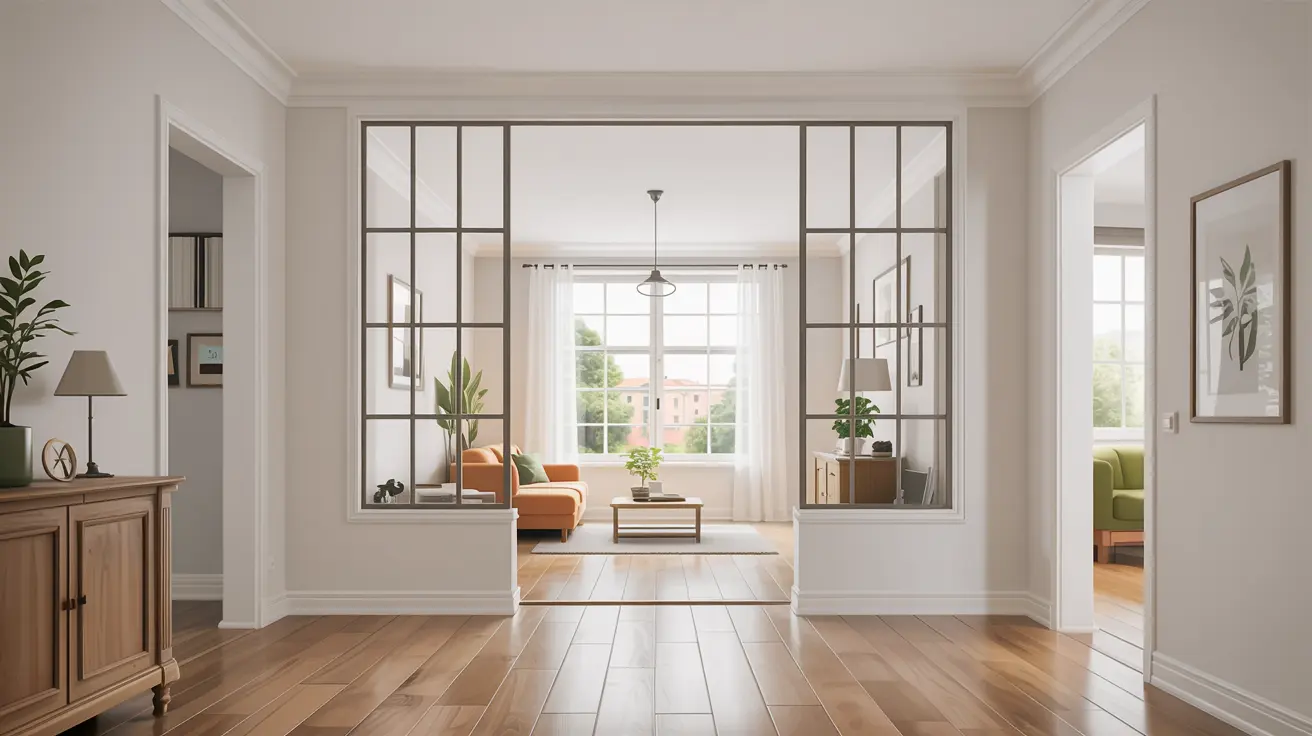
An interior window is a glazed opening inside the home. It sits in a wall that divides two rooms. Some are simple cut outs with glass. Others are full height glazed partitions that stretch from floor to ceiling. Some sit high near the ceiling like a transom above a door.
Designers often call these features internal windows, interior glazing, or glass partitions. In older buildings you may also see interior transom windows. These sit above doors to pull light and air across small rooms. Today the idea has returned in many modern renovations. Internal glazing brings borrowed light and soft separation to tight floor plans.
Why Homeowners Use Interior Windows Between Rooms
Most people do not start with a design trend. They start with a problem. The first problem is lack of light. Many homes have central rooms that never meet an outside wall. No matter which bulbs you install, the room still feels flat. An interior window between the dark room and a bright neighbour lets daylight reach deeper into the plan. The dark room stops feeling like a cave and starts feeling like part of the home.
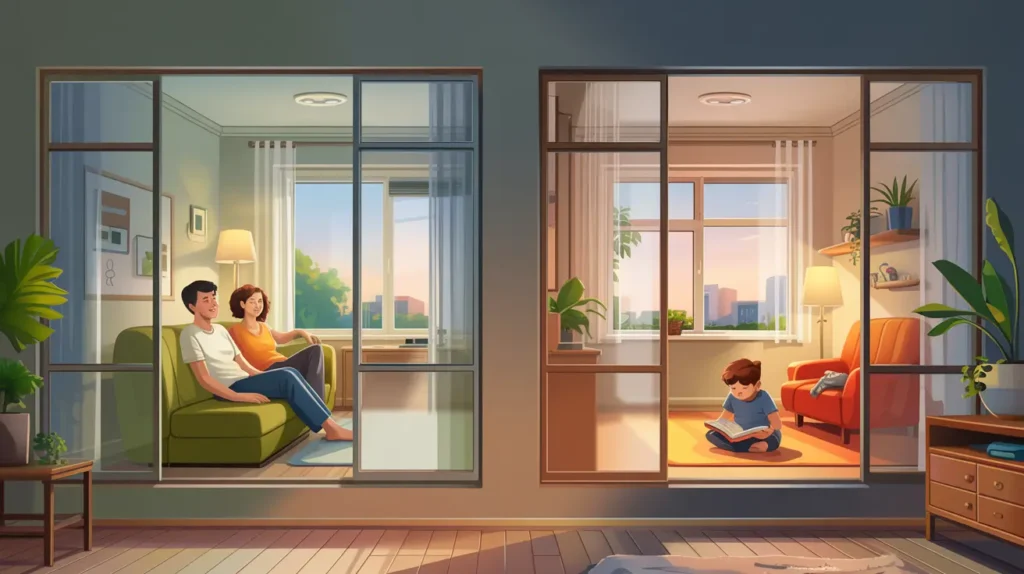
The second problem is the balance between open plan and privacy. Full open plan gives great light and flow, but it also spreads noise and cooking smells. A solid wall solves noise but blocks light and sightlines. Interior glazing offers a middle path. A glass partition between kitchen and living room keeps spaces defined. At the same time, it shares light and contact between people in both rooms.
A third problem is how small homes feel. When every room is boxed in, the home feels tighter than its actual size. Interior windows extend views across several spaces. Your eye passes through glass to the next room and sometimes to a window beyond. The footprint has not changed, but the sense of space has grown.
Types of Interior Windows You Can Use
Interior windows between rooms come in several forms. Each has its own look and level of privacy.
Crittall style windows use slim metal grids in a dark finish. They give a strong graphic line and work well in lofts and modern spaces. Many designers now use similar black framed glazing even in classic homes. The contrast between delicate frames and traditional plaster can look sharp and current.
Simple glass cut outs sit inside a standard stud wall. They can be square, rectangular, or arched. Some have no opening parts and act like fixed picture windows. Others use small casements that open to share air as well as light. In kitchens these openings often act like serving hatches between cooking and dining zones.
Interior transom windows sit high in a wall or above a door. They are common in older homes and are now used again in compact apartments. A transom can pull daylight from a bright living room into a small study or bedroom. It can also help warm air and cooler air move more freely between spaces.
Frosted and reeded glass panels bring light while hiding detail. These suit bathrooms, bedrooms, and home offices where privacy matters. Glass block can play a similar role in some designs. It softens shapes and spreads light without showing a sharp view through to the next room.
Where to Place Interior Windows Between Rooms
The best location starts with your problem rooms. Stand in your darkest space at different times of day and note where light appears next door.
Many people start between the living room and the kitchen. Older homes often have a separate kitchen that feels cut off from family life. Opening a section of that wall and inserting a glazed window lets the cook see and speak with others. At the same time, the glass keeps noise and some smells under control.
Narrow hallways and stairwells are another strong candidate. These spaces often sit in the centre of the plan. A tall internal window to a bright sitting room or dining room can transform them. The stair starts to feel like part of the home, not just a route from one floor to another.
Bathrooms with no external window cause daily frustration. If a bathroom shares a wall with a laundry, bedroom, or hallway, a high interior window can help. Use frosted or patterned glass so shapes blur and privacy remains safe. In many cases, this is easier than adding a skylight or light well.
Home offices that open off living rooms also benefit from internal glazing. A clear interior window lets a parent working at a desk keep an eye on children. It also means the office gains borrowed light from the main room. When calls need more privacy, small curtains or simple blinds on the glass can close off the view.
How to Plan Interior Windows for Light, Privacy and Sound
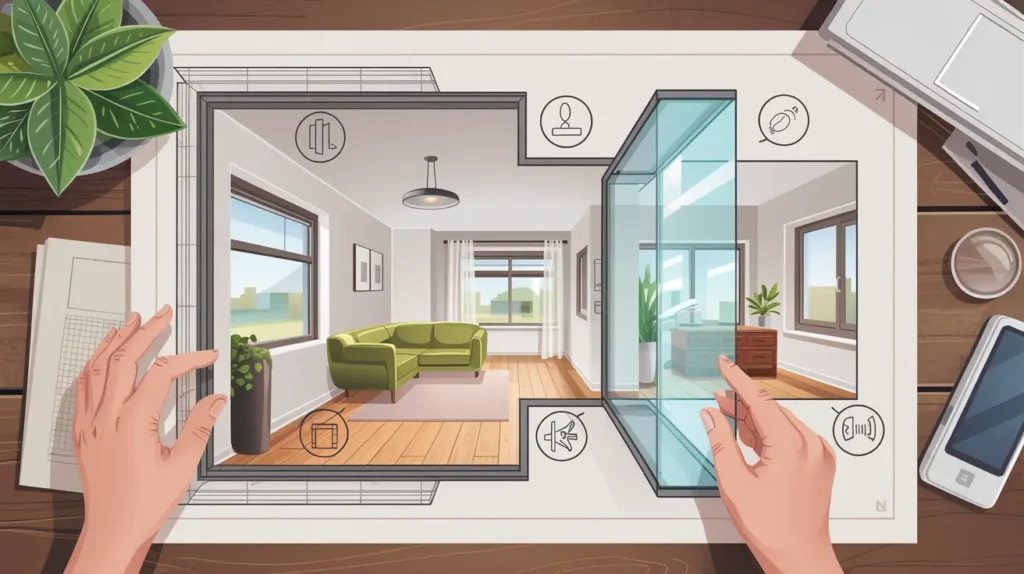
Planning matters as much as style. Start with the question of height. A window at eye level lets you see between rooms and share views. A high level band shares light but hides most of the room beyond. For a bathroom or bedroom, a higher strip is often enough. For a kitchen and living room, a lower opening feels more social.
Glass type shapes both privacy and sound. Clear glass works best when you want full visual contact. Frosted, reeded, or patterned glass gives a softer view. It lets you know that someone is present, without showing every detail. Thick laminated glass or double glazing can improve sound control if one space is noisy.
Think about frames and how they link to your home. Timber frames can match internal doors and trim. Slim metal or aluminum frames give a sharper, more modern feel. Frame thickness matters too. Fine frames create a light, elegant grid. Thick frames stand out more and can suit strong industrial or cottage styles.
Structural and Safety Points You Cannot Ignore
You cannot cut a window into any wall without thought. Some walls carry the weight of the floor or roof above. These are load bearing walls. If you want an interior window in such a wall, you need a proper beam or lintel. This requires advice from a structural engineer or a qualified builder. They will check spans, materials, and support points before any opening is made.
Safety glass is also a key point. Interior windows near doors, near the floor, or close to baths and showers should use toughened or laminated glass. This glass is built to handle knocks without breaking into sharp shards. In some cases building rules require safety glass at certain heights or in certain locations. It is wise to confirm local code with your contractor or local authority before work starts.
Moisture and fire are further details to check. Bathrooms and laundries create steam. Frames and seals need to handle this without swelling or mould. Some walls between rooms must meet fire separation standards. A fully glazed opening may not be allowed in these cases, but a small transom with rated glass might. Early planning avoids expensive changes later.
What Affects the Cost of Interior Windows
Costs vary by size, frame, glass, and structure. A small fixed pane in a non load bearing stud wall will sit at the lower end. A full height steel framed partition with custom glass in a structural wall will cost more.
Glass choice affects price too. Clear toughened glass is a common base. Laminated panes, double glazing, and special patterned glass will add to the total. Custom shapes, arches, and complex grids also increase cost and time.
If the wall is structural, allow for engineering and extra framing. The opening needs support above and solid fixings around. Finishing details like plaster, trim, and paint add further hours. For this reason, many owners choose to add interior windows as part of a wider renovation. Combining work lets trades handle structural changes, wiring, and finishes in one schedule.
Mistakes Homeowners Often Make With Interior Windows
The most common mistake is giving up the only good wall for storage. In a small kitchen, every cabinet matters. If you place a large interior window on the one wall that can hold tall units, you may regret the loss. The same applies to radiators and shelving in living rooms and bedrooms. Always check what you need to store before you cut space away.
Another mistake is weak privacy planning. A clear interior window behind a toilet or in direct line with a bed is rarely a good idea. Sightlines matter. Stand in each room and imagine the view through the glass from several positions. High windows, frosted glass, or partial openings can adjust the balance.
Scale and style can also go wrong. A tiny window floating in a large blank wall looks lost. A huge grid of dark metal in a soft, traditional cottage can feel harsh if nothing else in the room relates to it. Let other elements in the room support the glazing. This might be through matching door frames, lighting, hardware, or furniture lines.
Sound and smell are easy to forget. A full glass wall between a playroom and a home office may look beautiful in photos. In daily life the noise can become tiring. A wide opening between a kitchen and a bedroom may spread food smells too far. Think through how each space is used at different times of day before you decide on size and position.
Interior Windows Versus Other Ways to Boost Light
Interior windows are one tool among several. Skylights bring light from above and work well in top floors and single storey homes. They can be complex in multi storey buildings. Mirrors reflect existing light but do not increase it. They can still help spread brightness, especially when placed opposite real windows. Glass doors bring both light and access, but they change how you move through the house.
The strength of interior windows lies in their balance. They keep rooms distinct while passing light and views between them. When open plan feels too exposed and solid walls feel too heavy, internal glazing offers a middle line.
Questions to Ask Before You Cut a Wall
Before you commit to interior windows between rooms, pause and ask a few key questions. Which room in your home suffers most from lack of daylight. Where is the nearest strong source of natural light. How much privacy do you need on each side of the proposed opening.
Next, check if the wall you want to alter carries structural load. A simple floor plan or advice from a builder can guide you. Then think through frame style, glass type, and size so the new window suits the rest of the home. When your answers feel clear, speak with a qualified professional to confirm structure, code, and safe glass choices.
Bringing It All Together
Interior windows between rooms are not only a design trend. They are a practical tool for real problems in real homes. They brighten dark spaces, connect family members, and make small footprints feel more generous. At the same time, they keep cooking zones, workspaces, and private rooms clearly defined.
With careful planning, the right glass, and respect for structure, you can turn a dull interior wall into one of the best features in your home.