
If one room feels warm and the others feel fine, the AC is not always the villain. Most of the time, the air is not moving the way it should. Fix airflow first, and the house usually cools faster. You also stop wasting money on longer run times.
Why airflow matters more than most people think

Air conditioning is a loop. Cool air comes out of supply vents, then it must return to the system. If return air gets stuck, the whole loop slows down. When the loop slows, rooms turn into hot spots and cold spots.
Quick wins that often fix the problem today
Do these first. They are simple and they work in many homes.
Change the air filter before you do anything else
A dirty filter chokes airflow and makes the blower work harder. If the filter looks gray or fuzzy, replace it. If you use a high MERV filter, make sure your system can handle it. Some systems lose airflow with very dense filters.
Unblock supply vents and return vents
Walk every room and check the vents. Move sofas, beds, curtains, and rugs away from them. Return vents matter as much as supply vents. A blocked return can make a room feel stale and sticky.
Clean vent covers and return grilles
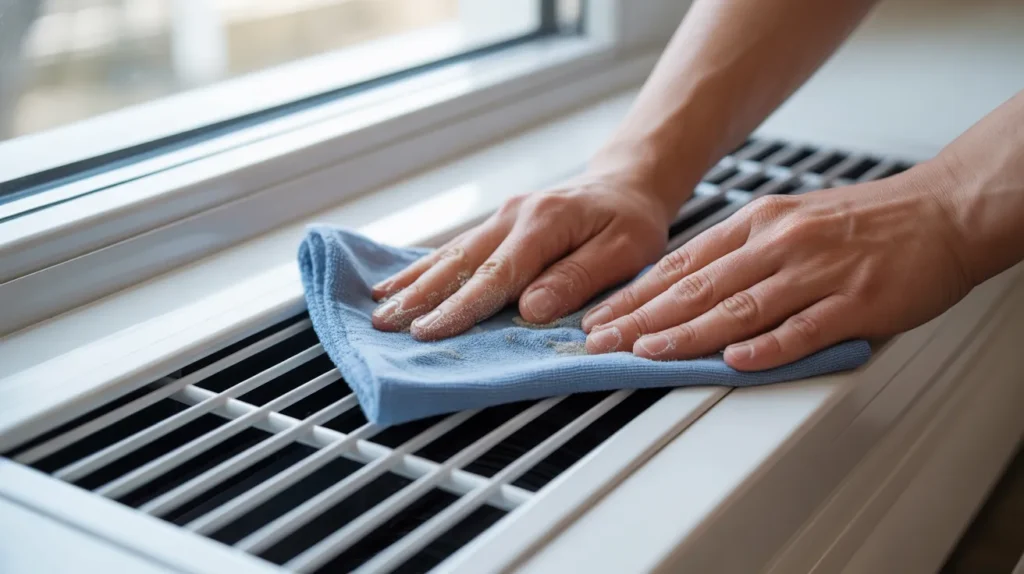
Dust buildup can slow air and throw dust back into the room. Take covers off, wash them, and let them dry. Also vacuum the duct opening right behind the grille.
Use the right fan setting on the thermostat
AUTO is the safer default in many climates. Fan ON can keep air mixing, but it can also keep moisture in the air. If your home feels humid, switch back to AUTO and see how it feels.
How to tell if the return air path is your real issue
Bedrooms are the most common trouble spot. A closed door can trap air inside the room. Then the supply vent keeps pushing air in, but nothing leaves easily. That hurts airflow and comfort.
Fix room airflow when doors stay closed
Start with the gap under the door. A small gap helps air move back to the hallway return. If the gap is tiny, you can talk to a pro about a transfer grille. That keeps privacy but improves return air movement.
Stop closing vents to force air into other rooms
It feels logical, but it often backfires. Closing vents can raise duct pressure and reduce total airflow. If one room gets too much air, balancing dampers are a better fix.
Check ductwork for leaks and crushed sections
Duct leaks waste cooled air in the attic or crawl space. Crushed flex duct works like a pinched hose. Look for loose connections near the air handler and visible duct runs. Seal gaps with duct mastic or metal foil tape. Avoid cloth duct tape because it fails over time.
Room by room fixes for hot and cold spots
Different rooms overheat for different reasons. Use the room clues to pick the right fix.
Bedroom stays hot at night
Confirm the vent is fully open and not blocked by furniture. Make sure the door does not trap return air. If airflow still feels weak, a tech can check balancing dampers.
Upstairs rooms feel hotter than downstairs
Heat rises, so upstairs usually needs extra help. Use ceiling fans to mix warm ceiling air with cooler air below. Close blinds during strong sun to reduce heat gain. If the attic is poorly insulated, the AC will struggle all summer.
Living room cools unevenly
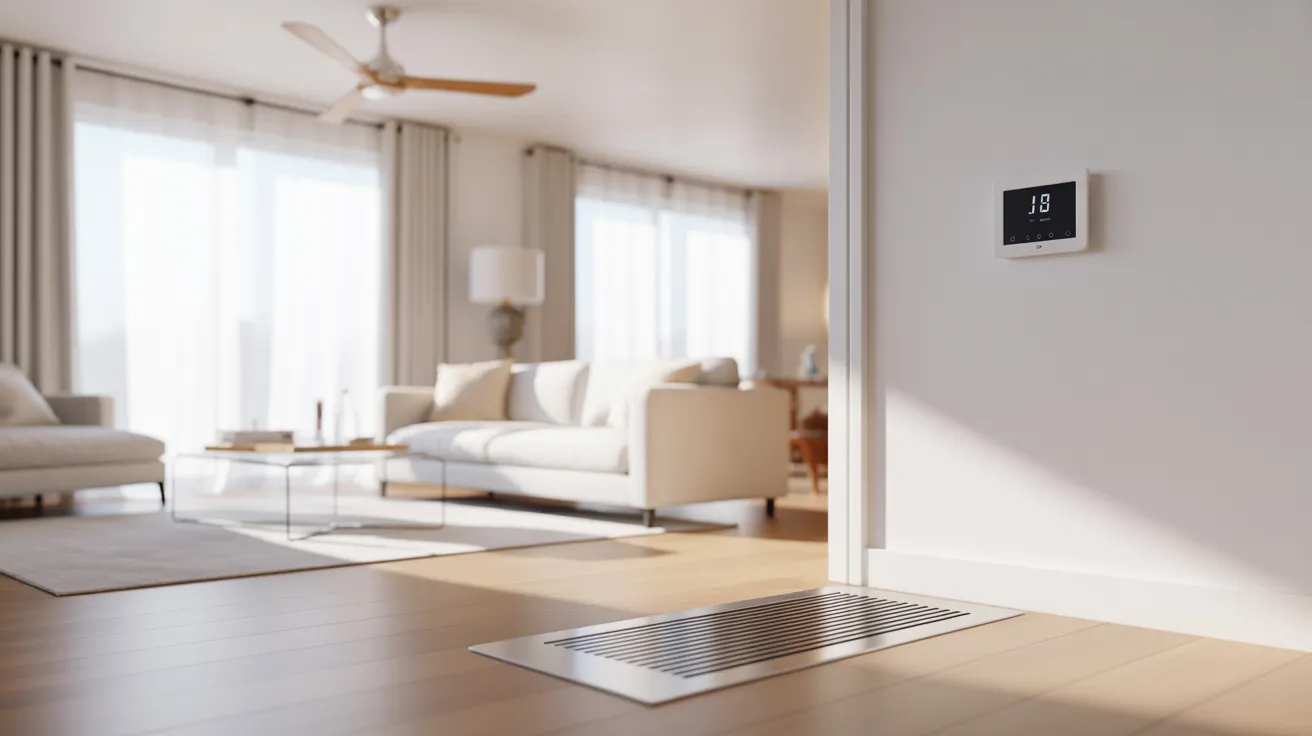
Large rooms often need better air mixing. A ceiling fan helps more than a small floor fan. Keep the main return vent clear so air can cycle back.
Clean the AC parts that affect airflow and efficiency
Airflow can drop even if vents look fine. The system can also get dirty and lose performance.
Clear the outdoor unit so it can breathe
Leaves and dirt clog the condenser coil. Turn off power, clear debris, and rinse the coil gently with a hose. Keep at least two feet of open space around the unit.
Watch for a dirty evaporator coil or ice buildup
Ice on the lines often points to low airflow or other issues. Start with a filter change and open vents. If it freezes again, call a technician to inspect the coil and refrigerant.
Listen for a blower that sounds strained
A blower moving against high static pressure can get loud. Filters, blocked returns, and duct problems can cause that pressure. Fix the restriction first before you assume the blower is failing.
Make the house easier to cool
Sometimes the AC works fine but the house fights it. Hot air leaks in and sun bakes rooms all afternoon.
Seal air leaks around windows and doors
Use weatherstripping on doors and caulk small gaps around trim. These leaks can add up and keep the AC running longer.
Improve insulation where it counts
Attic insulation is a big comfort driver. If upstairs rooms cook in the afternoon, check the attic first. Better insulation keeps ceiling heat from pouring into the rooms.
Use shade to cut heat gain
Direct sun through glass can heat a room fast. Close blinds during peak sun. Add curtains that block heat. Outdoor shade like an awning can help even more.
Thermostat settings that save money without feeling miserable
Pick a temperature the system can hold. Big temperature swings can cause long run times. Use schedules that match your day, not a generic template. If humidity feels high, avoid running the fan nonstop.
A simple troubleshooting order that prevents guesswork
Start small and work forward. This order catches the common problems first.
Troubleshooting checklist
- Replace the air filter.
- Check supply vents and return vents for blockage.
- Clean vent covers and return grilles.
- Check bedroom doors and return air paths.
- Inspect visible ducts for leaks or crushed runs.
- Clear debris around the outdoor unit.
- If problems continue, schedule airflow testing.
When you should call a pro
Call a technician if airflow stays weak after the basics. Also call if the coil freezes, if rooms never balance, or if the system runs nonstop. Ask for static pressure testing and a duct inspection. A good tech can find sizing and balancing issues that DIY steps cannot.
Common problems and the fastest fixes
Use these as quick diagnosis notes when something feels off.
My AC runs all day and the house still feels warm
Replace the filter and clear returns first. Then check outdoor unit airflow and visible duct leaks. If sun or attic heat is the main driver, add shade and insulation.
One room is always hotter than the rest
Look for a blocked return path and a weak vent. Check if the duct run is crushed or leaking. If the room faces harsh sun, treat the window and add shade.
Airflow is strong downstairs but weak upstairs
This can be a balancing issue. It can also be an attic duct leak problem. A tech can adjust dampers and confirm airflow at each register.
The house feels cool but still humid
Switch the fan to AUTO and check the filter. Make sure the system is not oversized and short cycling. If humidity stays high, ask a pro to check drainage and runtime.
Final note
Airflow fixes are not just comfort tricks. They reduce strain on your system. They also cut wasted cooling that never reaches the rooms.