
A blank wall can make a whole room feel unfinished. The fix is not buying more decor at once. Start with one clear plan and build around it. Good wall decor feels balanced from across the room and up close. Use simple rules for size, height, and spacing, and the wall will work every day.
Start with what the wall needs to do
Before you hang anything, decide the wall’s job. Some walls need a strong focal point, like above a sofa. Other walls need quiet support, like a hallway. Think about traffic, glare, and how far you stand from the wall. When the job is clear, your choices feel easy instead of random.
Measure first so the scale feels right
Most wall mistakes come from scale, not taste. Measure the wall width and the furniture under it. Also note the ceiling height and the viewing distance. On a large wall, small frames can look lost and scattered. When you size the main piece correctly, the room instantly feels calmer.
Two sizing rules that rarely fail
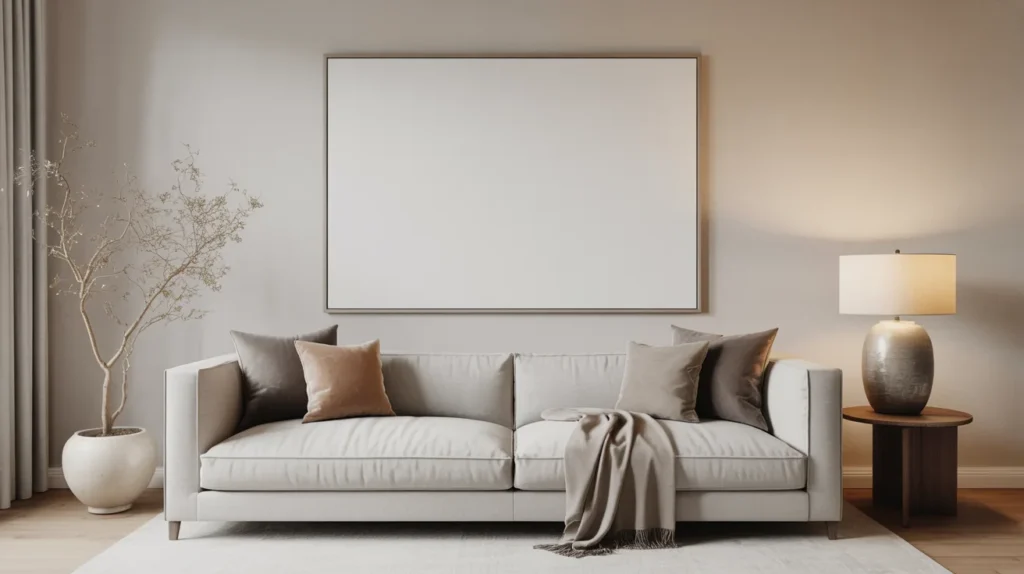
Use the two thirds rule above furniture for quick balance. Aim for art that is about two thirds of the sofa or console width. Keep the bottom of the frame about six to twelve inches above furniture. For open walls, hang the center around fifty seven to sixty inches from the floor. These numbers are guides, not laws, so adjust for your home.
Pick one main approach for the wall
Try to avoid mixing five ideas on one wall. Choose one main move, then add small support pieces. The main move can be oversized art, a gallery wall, shelves, or a wall treatment. Your choice should match your patience for measuring and holes. Once you pick a lane, styling gets much faster.
Oversized art for fast impact
Oversized art is the quickest way to fill a large wall. It works well above a sofa, bed, or dining bench. Choose a piece with colors that already exist in the room. If you cannot find one large piece, pair two medium pieces as a set. Keep frames simple so the art stays the hero.
A gallery wall that looks intentional
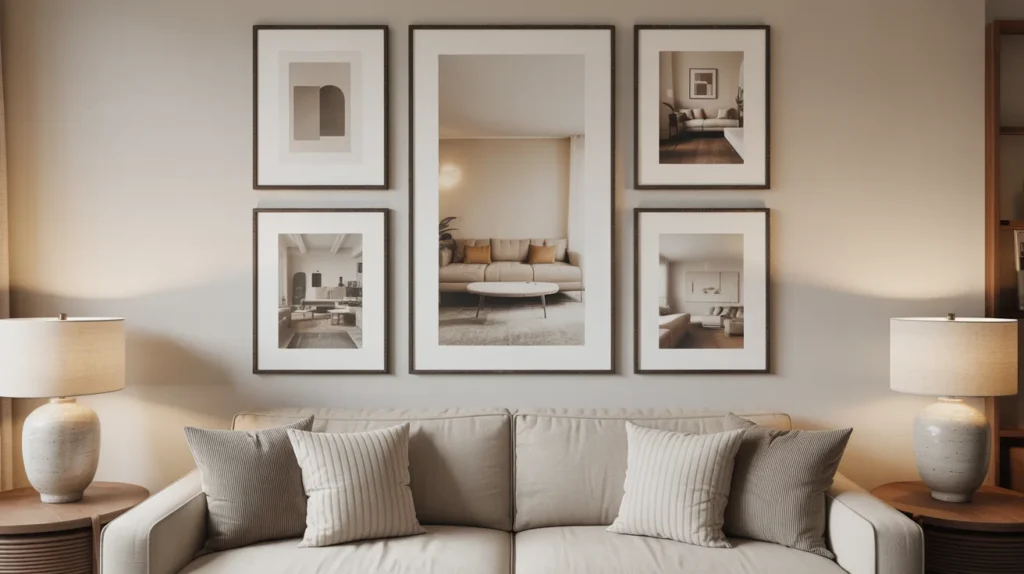
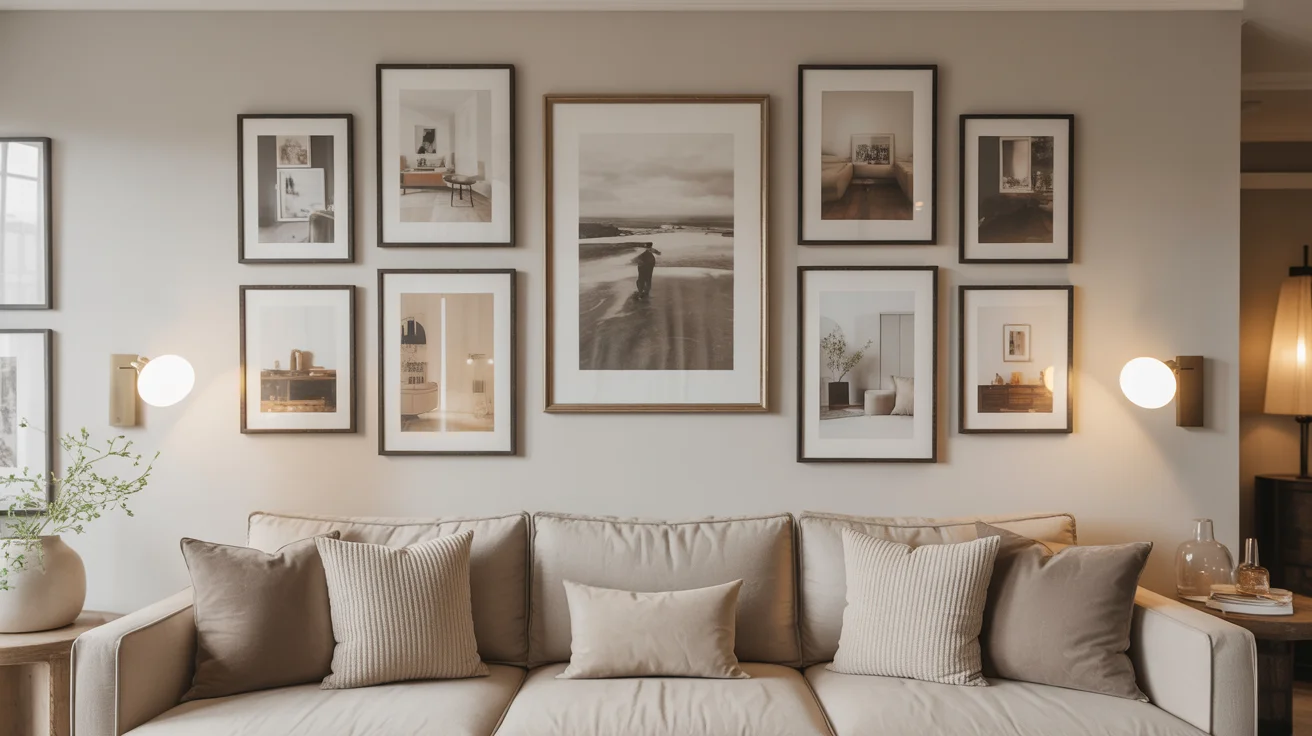
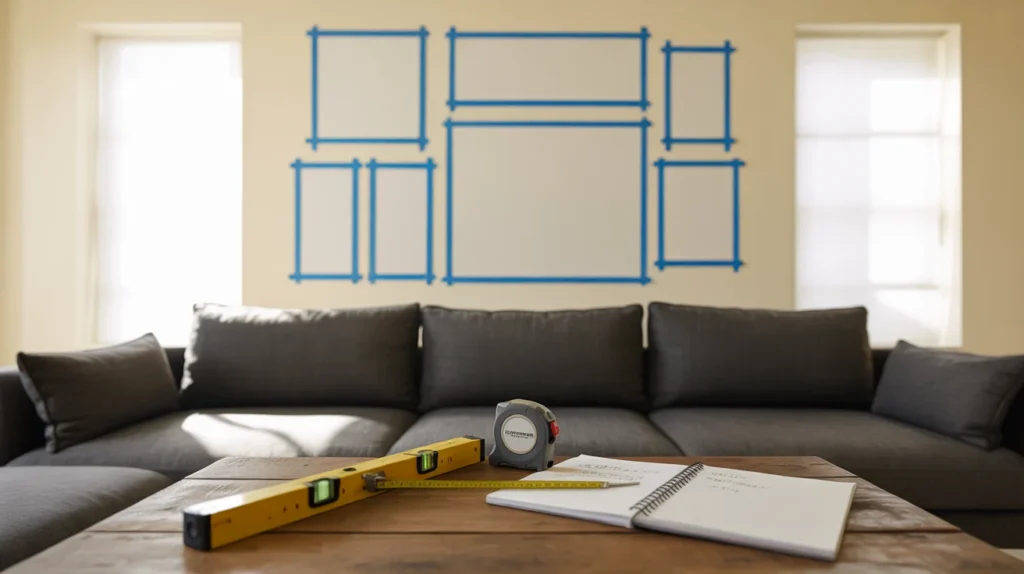
A gallery wall feels personal when it is planned first. Decide on a layout, like a clean grid or a relaxed salon style. Keep spacing consistent, usually two to three inches between frames. Use painter’s tape on the wall to test the shape before drilling. Center the whole group at eye level, not each frame.
Picture ledges and floating shelves
Shelves are perfect if you like changing things often. A picture ledge lets you lean frames without many holes. Mix a few frames with books, small pottery, or a plant. Keep items in a tight color palette so it does not look cluttered. Leave some negative space so your eye can rest.
Paint, wallpaper, or paneling for texture
If art feels too busy, change the wall itself. A soft accent wall can add depth without extra objects. Wallpaper and murals bring pattern, but keep the rest of the room calm. Paneling like board and batten adds structure and looks classic. Test samples in daylight and at night before you commit.
Hang pieces at the right height every time
Most people hang art too high because they follow the ceiling line. Instead, relate wall decor to people and furniture. For a sofa wall, keep the art close enough to feel connected. For tall walls, resist stacking frames all the way up. When the center sits near eye level, the room feels grounded.
Tools that make hanging less stressful
A tape measure and level save you from crooked frames. A stud finder helps with heavy pieces and shelves. Keep a pencil handy for tiny marks you can erase later. Use kraft paper templates if you want perfect spacing. Plan first, then drill once, and you avoid patching later.
Choose the right hardware for your wall type
The right hardware keeps art safe and walls clean. Drywall needs anchors for anything with real weight. Toggle bolts work well when no stud is available. Brick and plaster often need special bits and patience. When you match the hardware to the wall, the art stays straight for years.
| Wall surface | Best option | Best for | Quick note |
| Drywall with stud | Screw into stud | Heavy frames and shelves | Use a stud finder and level |
| Drywall no stud | Toggle bolt or strong anchor | Medium weight art | Match the anchor to the weight |
| Plaster | Masonry bit and anchor | Older homes | Drill slowly to avoid cracks |
| Brick | Masonry screw and plug | Heavier pieces | Use the right drill bit size |
| Tile | Tile bit and gentle pressure | Bathrooms and kitchens | Avoid grout lines when possible |
Make the wall feel connected to the room
A decorated wall should look like it belongs in that room. Repeat one or two colors from your rug, pillows, or curtains. Match metals across the space, like brass or black. Keep frame finishes consistent if the room is small. Add one texture element, like a textile wall hanging, for warmth.
Fix the most common wall decorating problems
If your wall feels off, the issue is usually one clear thing. The art may be too small, too high, or too spread out. Sometimes the wall needs light, not more objects. Other times the room needs fewer frames and more breathing space. Start by removing one item, then rebuild with a plan.
When art looks too small on a big wall
Small art can disappear on a large wall. Size up to an oversized piece, or group frames into one clear shape. Keep the group wider rather than taller in most living rooms. Add a large mirror if the room needs more light. Avoid scattering tiny frames across the whole wall.
When a gallery wall feels messy
A messy gallery wall usually has inconsistent spacing. Pick one spacing distance and stick to it. Use a common thread, like matching frame colors or a tight palette. Keep the outer edges in a simple rectangle or oval shape. If it still feels busy, remove two pieces and see the difference.
When the TV wall feels awkward
A TV can dominate the room if the wall is bare. Treat the TV as one rectangle in a bigger layout. Add built in shelves, a picture ledge, or tall art on one side. Keep decor low contrast so the screen still feels calm. Leave some empty space so the wall does not feel crowded.
When you need renter friendly wall decor
Rentals need flexible options that do not damage paint. Use adhesive strips for lightweight frames and prints. Try a large floor mirror if you cannot drill at all. Lean art on a picture ledge or on a console. Removable wallpaper can work, but test a small spot first.
Room by room wall ideas that always work
Different rooms need different wall choices. Living rooms often need a focal point above the sofa. Bedrooms feel best with softer, wider pieces over the bed. Hallways benefit from a mirror or a tight gallery run. Kitchens look great with shelves, small art, or a pinboard wall.
Living room wall above the sofa
Start by measuring the sofa width and choosing your main piece size. Keep the art centered and visually anchored to the sofa. Use the two thirds rule so the scale feels right. Add one sconce or picture light if the wall feels dim. Finish with a simple palette so the wall does not compete with the room.
Bedroom wall over the bed
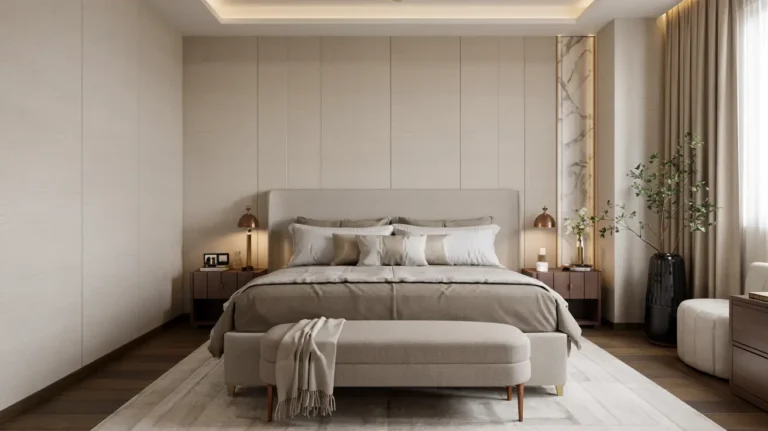
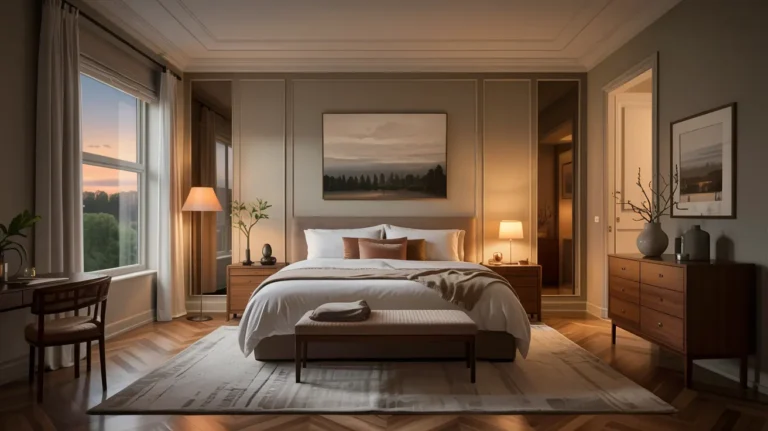
Bedroom walls should feel calm, not busy. Choose one wide piece or a pair of matching frames. Keep the bottom edge close enough to the headboard to feel connected. Soft photography and simple prints work well here. If you like texture, try a woven wall hanging in neutral tones.
Hallway, entry, and stair walls
These areas get quick glances, so keep choices bold and simple. A tall mirror can open a narrow entry fast. In a hallway, repeat the same frame size for a clean line. On stairs, follow the slope with a grouped arrangement, not single pieces. Good lighting matters here, so add a bright bulb or sconce.
Finishing touches that make it look styled
Once the main pieces are up, step back and check balance. Look for even weight on both sides of the wall. Add one small item for texture, like a basket, plant, or ceramic piece. Keep surfaces below the wall simple so the room does not feel cluttered. Take a photo and review it, because photos show issues fast.
FAQs
These quick answers cover the questions people ask before they hang anything. Use them to double check your plan before drilling. Simple rules can save you hours of fixing holes. If your wall still feels off, scale and spacing are the first things to revisit. When in doubt, keep it simpler than you think.
What is the best height for hanging wall art
For most open walls, hang the center near fifty seven to sixty inches from the floor. Above furniture, keep the art about six to twelve inches above the top. If ceilings are very high, you can go slightly higher, but not too much. Always relate the art to where people sit and stand. A quick test is to tape it up and live with it for a day.
How do I decorate a blank wall on a budget
Start with paint or a thrifted large frame for impact. Print your own photos or use affordable prints in matching sizes. Choose one frame finish so it looks intentional. Add a picture ledge if you want flexible styling with fewer holes. Spend your time planning layout, because planning is what makes it look expensive.
How can I plan a gallery wall without extra holes
Lay everything on the floor and test the order first. Trace frames on kraft paper, then tape the templates on the wall. Mark nail spots through the paper, then remove it. Keep spacing consistent so the grid feels calm. If you want fewer holes, use a picture ledge and rotate frames seasonally.
What can I use instead of framed art
Try a large mirror if the room needs light and depth. Textile wall hangings add softness in bedrooms and living rooms. Decorative baskets can create a warm, coastal look. A small collection of plates can work in a kitchen or dining room. Keep the grouping tight, and avoid spreading items too far apart.