

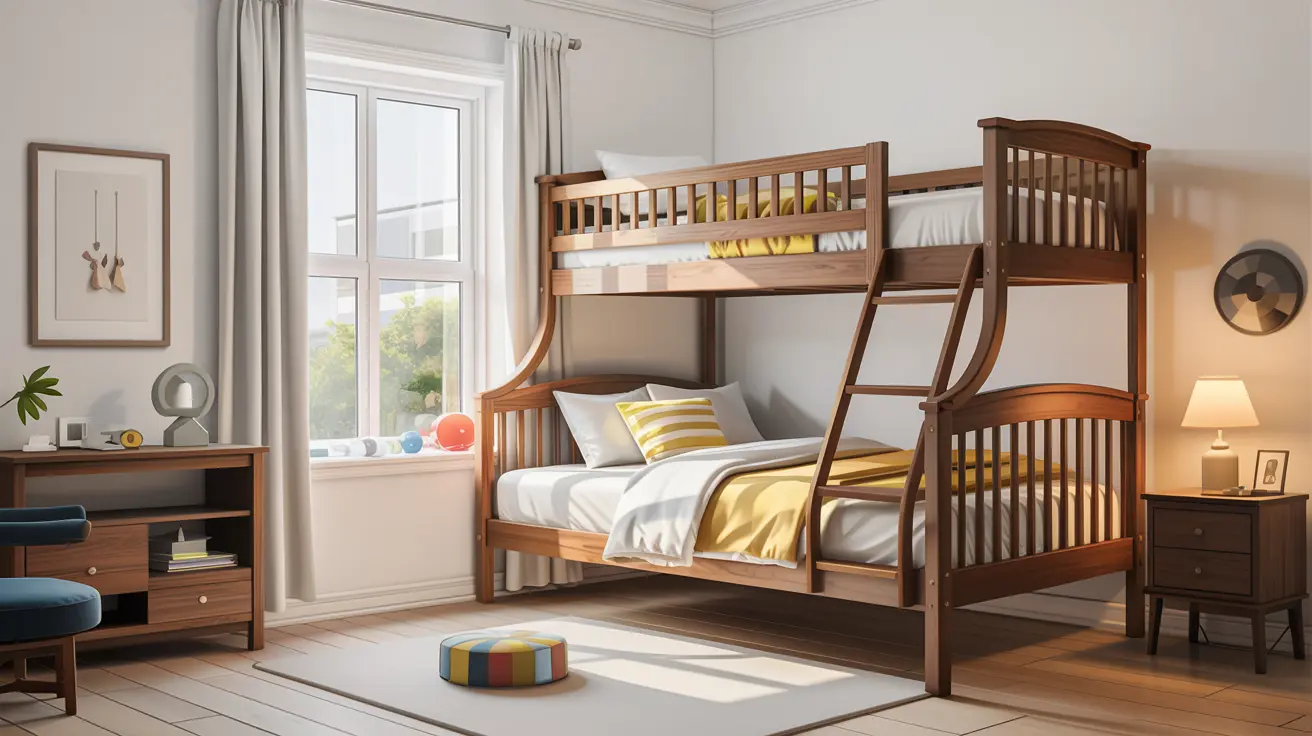
A full and twin bunk bed gives you two sleep spaces in one footprint. In most listings, it means a twin on top and a full on the bottom. The right choice depends on room clearance, top bunk safety, and weight ratings.
What a full and twin bunk bed is and who it fits
A twin over full bunk bed places a twin mattress above a full mattress. It works when one sleeper needs more width. It also works when the bottom bunk doubles as a lounging spot.
Twin over full vs other bunk layouts
Twin over twin suits two smaller sleepers and tight rooms. Full over full suits older kids but needs more space and stronger ratings. Twin over full sits in the middle for space and flexibility.
When this bed is a bad match
Skip it if the ceiling is low and the top sleeper will feel boxed in. Skip it if the top bunk is for a child under six. Skip it if the ladder blocks a door, closet, or main walkway.
Room fit first: measurements that prevent returns
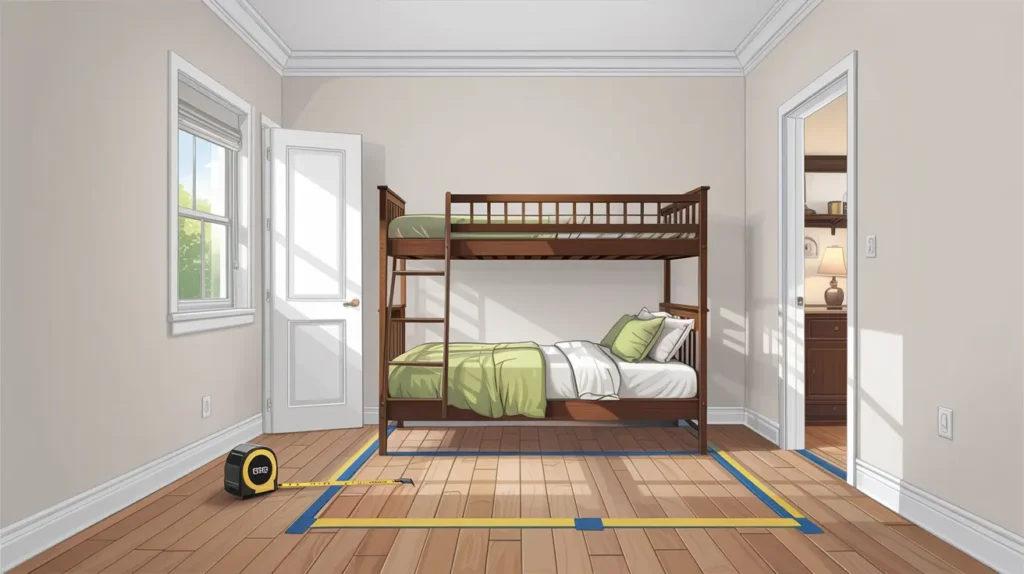
A bunk bed can look fine online and still fail in your room. Measure first and you avoid blocked paths and head bumps. Use these checks before you pick a model.
Space checklist you can do in minutes
Measure the wall length where the bed will sit. Measure ceiling height from floor to ceiling. Check door swing and closet doors. Leave space for climbing access and for making the bed.
Mattress sizes to confirm
A twin mattress is about 38 by 75 inches. A full mattress is about 54 by 75 inches. Some frames use twin XL, so confirm length before you order bedding.
Placement that avoids risky gaps
Keep the ladder side open and clear. Do not wedge the bed into a corner if it blocks rail access. Avoid large gaps between the bed and a wall.
Safety checks that matter
Most problems come from falls and trapped spaces. A safe bunk bed has the right rails and a stable way up. If the listing hides these details, move on.
Guardrails: what to look for
The upper bunk needs guardrails. Rails should cover the open side and reduce roll outs. The rail height must still work with the mattress thickness.
Ladder and stairs: stability over looks
A ladder needs firm attachment and rungs that do not flex. Stairs feel easier for many kids and reduce slip risk. Choose based on who climbs up at night.
Entrapment and wall setup
Avoid creating a wide gap along the wall side. Keep cords, blinds, and hanging items away from the bed. If the bed sits near a wall, make sure rails and spacing stay safe.
Labels and standards
Look for clear safety compliance language. Look for clear age guidance for the top bunk. Avoid listings that only say “strong” or “safe” without details.
Weight limits and adult use: read the numbers correctly
Weight ratings are not the same across brands. You need per bunk limits, not a single total number. If teens or adults may use the bed, this section matters.
Per bunk ratings
A solid listing shows a top bunk limit and a bottom bunk limit. The top number is often lower. If the seller only lists a total number, ask for per bunk limits.
Signs a bed handles heavier use
Look for strong slats and solid support under the full bed. Look for tight joinery and solid connection points. A stable frame reduces squeaks and loosening.
When adults can use it
Adults can use it only when the brand states the rating supports it. Do not guess based on wood thickness in photos. If you want adult use on top, choose models marketed for higher loads.
Ladder vs stairs: choose based on your room
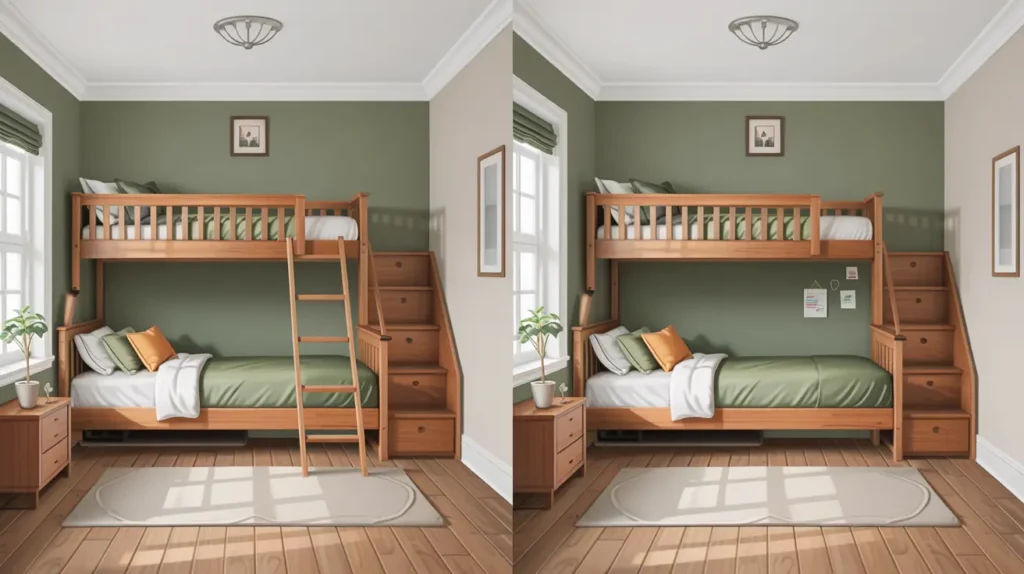
Access affects daily use and safety. A steep ladder in a tight room becomes a problem fast. A stair unit can solve climbing but eats floor space.
Straight ladder vs angled ladder
Straight ladders take less space. They can feel steep and less comfortable. Angled ladders feel easier but increase the footprint.
Stair builds with storage
Stairs often include drawers, which reduces the need for a dresser. They also give a wider step surface. Confirm the stair side fits your room layout.
Storage options that fix small room issues
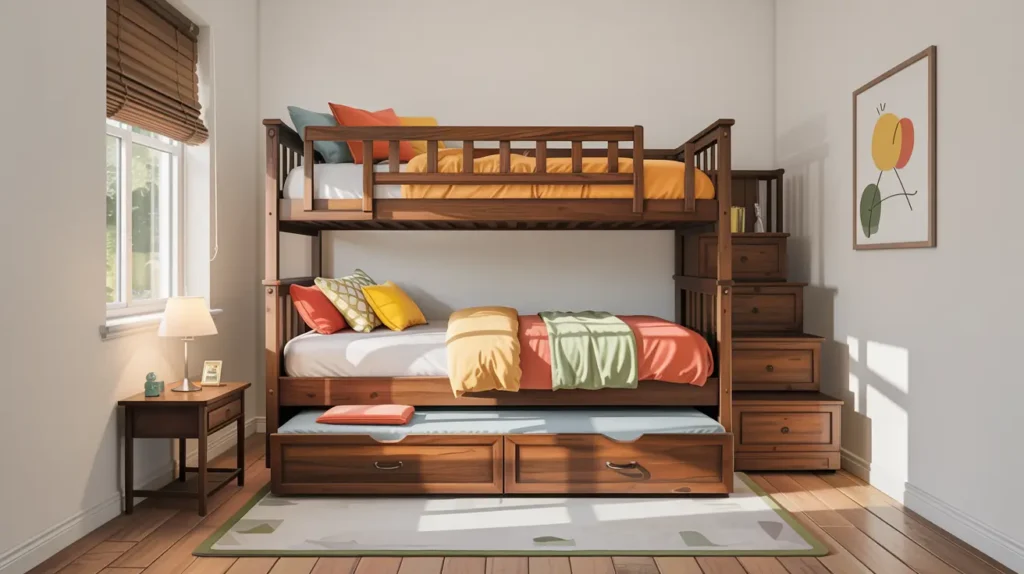
Storage features can replace other furniture. They can also make the bed feel bulky. Choose one storage goal and stick to it.
Trundle vs underbed drawers
A trundle adds a third sleep space for visitors. Underbed drawers add daily storage for clothes or linens. You usually choose one, because both together can clash.
Corner and L shaped designs
L shaped bunks can open up a walkway. They can also create space for a desk under a loft section. They need more planning and more room.
Materials and build quality: what lasts
The best material is the one that stays stable. Both wood and metal can work well. Build details matter more than the material label.
Wood vs metal
Wood often feels quieter when built well. Metal can be strong but may squeak if joints loosen. Reviews often reveal noise and wobble issues.
Delivery day checks
Set the bed on a flat surface. Tighten bolts evenly in stages. Push the frame gently to check sway before anyone sleeps on it.
Low emission notes for kids rooms
If air quality matters, look for low emission claims. Some products follow third party programs for chemical emissions. This is useful in small rooms with limited airflow.
Mattress and bedding rules that affect safety
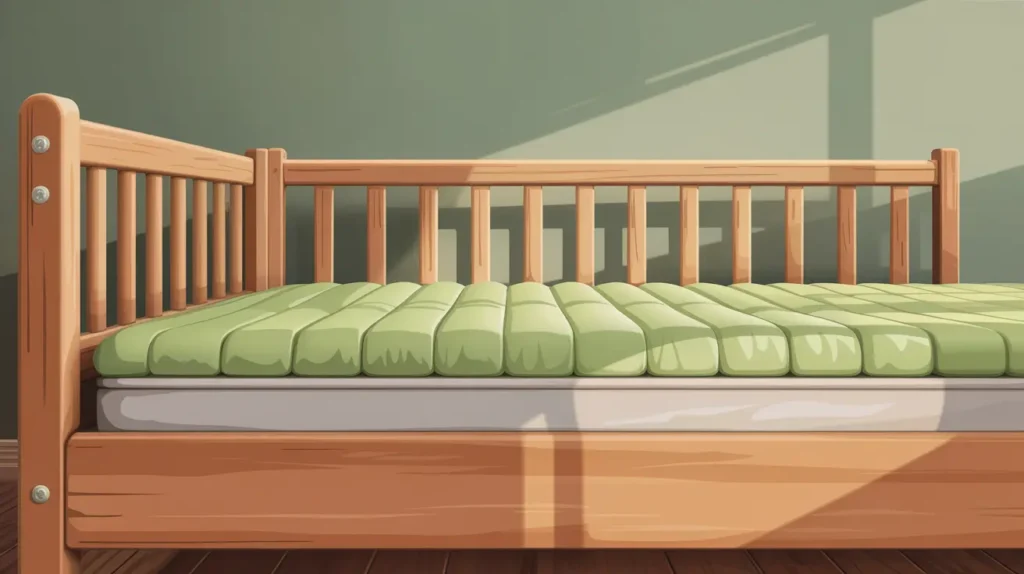
Top bunk safety depends on mattress thickness. A thick mattress reduces rail coverage. Follow the maker’s limit every time.
Mattress thickness and rail clearance
The top mattress must stay within the brand limit. If it is too thick, the rail becomes too low. This increases fall risk during sleep.
Comfort without raising risk
Use a firm mattress that fits the thickness limit. Use a thin protector for spills. Skip thick toppers on the top bunk.
Convertibility and long term use
Some beds stay useful longer because they change with your needs. Splitting the bunks can help when kids move rooms. Modular systems can change layouts over time.
Splitting into two beds
Some models separate into a twin bed and a full bed. This helps when bunk use ends. Check if the split hardware is included.
Converting to a loft setup
Some systems convert to a loft with open space under the top. This can make room for a desk or storage. Confirm the parts and cost before you plan for it.
Assembly, placement, and maintenance
Most wobble issues come from assembly steps and bolt tension. Placement also affects safety and ease of use. A simple routine prevents problems.
Assembly steps that reduce wobble
Tighten bolts in the order shown in the manual. Tighten in stages, not all at once. Recheck tightness after the first week.
Placement rules that prevent trouble
Keep the ladder side clear. Keep the bed away from windows and cords. Do not create a large gap between the bed and the wall.
Maintenance schedule
Check bolts every few months. Inspect slats and ladder mounts. Replace damaged parts instead of forcing use.
Common mistakes and quick fixes
Most regret comes from fit mistakes and missed safety details. Fixes are simple when you catch them early. Use these before checkout and after delivery.
Mistake: no measurement plan
Fix it by taping the bed footprint on the floor. Open doors and drawers and check movement. Confirm you can change sheets without hitting walls.
Mistake: wrong mattress thickness
Fix it by reading the top bunk limit first. Choose a mattress that stays under that limit. Avoid toppers that add height.
Mistake: wrong sleeper on the top bunk
Fix it by keeping young kids on the bottom. Use the top for older kids who climb safely. Add a night light to reduce night slips.
FAQs
These answers cover the questions buyers ask most. They help with fit, safety, and ratings. Use them as a final check.
What does full and twin bunk bed mean?
It usually means a twin on top and a full on the bottom. It gives more width on the lower bunk. It saves floor space compared to two beds.
How much room do I need?
You need wall space for the frame and floor space for access. You need headroom for the top sleeper. Measure and tape the footprint to confirm.
What ceiling height works?
More height gives better comfort and safer movement. The top sleeper needs space to sit up. If height is tight, pick a low profile model.
What age is safe for the top bunk?
Many safety sources advise not using the top bunk for children under six. Older kids should use the ladder correctly and follow rules. Guardrails must always be in place.
How do I know the bed can handle adults?
Check per bunk weight ratings from the maker. Do not guess from photos. Choose models rated for heavier use if adults may sleep on it.
Should I choose stairs or a ladder?
Choose stairs when stability matters more than footprint. Choose a ladder when space is tight. Match the choice to who climbs at night.
Can it separate into two beds?
Some models split into a twin and a full. This helps when you stop using bunks. Confirm this feature before buying.
Conclusion
Measure the room and clearance before you shop. Filter choices by guardrails, access type, and age rules. Verify per bunk weight limits and top mattress thickness limits. Choose one storage feature that solves a real need. Assemble carefully and recheck bolts after the first week.