
Many homes feel more closed than they need to. Solid doors block light. Rooms feel cut off from each other. Hallways can seem dark even in the middle of the day. Interior French doors offer a way to fix these problems without a major remodel. They open views, share daylight and still give you the option to close a room when you want peace and quiet.
Architects and door manufacturers describe French doors as a pair of hinged doors with large glass panels that meet in the centre. The glass brings light and keeps spaces visually connected while the frames shape the style. When you bring this idea inside the home, French doors stop being just an entrance to a garden. They become a flexible tool for zoning, comfort and style inside your floor plan.
What Interior French Doors Actually Are
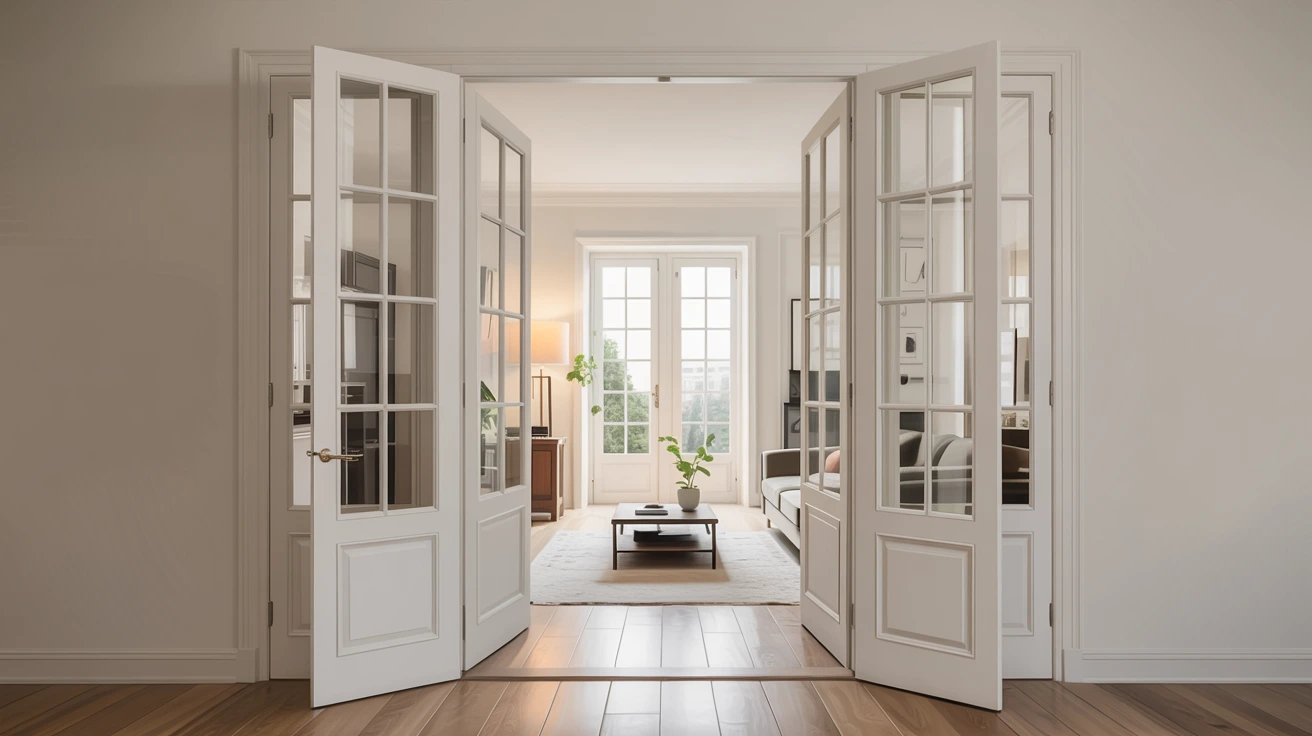
Interior French doors are double doors placed between rooms inside a home. Each leaf is usually the same size and carries glass from near the top down to most of the panel. In many designs the glass divides into smaller panes using thin bars. In others the glass is one clear sheet held by slim frames.
Unlike a standard solid door, a pair of glazed doors lets light pass between spaces even when closed. They can be used between living and dining rooms, between a hallway and a sitting room, or between a bedroom and a dressing space. Building and window brands describe them as a way to create easy passage and visual flow while keeping the ability to shut off a room when needed.
Why People Choose French Doors Inside the Home
The first reason is light. Many houses and apartments have interior rooms that do not touch an exterior wall. They rely on borrowed daylight from nearby spaces. Solid doors block that light. When you replace a solid door with glazed French doors, daylight from a bright room spills into the darker one. This simple change can lift the mood of both spaces.
The second reason is openness. Full open plan design brings air and light but can feel noisy and exposed. Some families later want more separation without returning to heavy walls. Interior French doors provide a middle path. When open, the doors fold back and give almost the same openness as a wide doorway. When closed, they still let you see through and feel connected while softening sound and smells.
A third reason is how they affect the sense of space. When your eye can travel through glass into the next room and on to a window, the home feels larger. Real estate professionals often point out that well placed French doors can improve the impression of size and quality, which can help long term value.
Traditional and Modern Styles of Interior French Doors
Traditional French doors show clear timber frames with divided panes. The grid of small rectangles gives a classic look that suits period homes, cottages and formal living rooms. The bars, sometimes called glazing bars or muntins, break up reflections and add pattern. Painted white, cream or soft colours, they blend into many traditional interiors.
Modern French doors look more minimal. They often use slim frames with one wide glass panel or a very simple grid. Dark frames in black, charcoal or bronze create a strong graphic edge that works well in contemporary spaces. Manufacturers of modern doors highlight how these slimmer profiles bring in more glass and give cleaner lines.
You can also find French doors that slide rather than swing. These are useful when you do not have enough floor area for doors to open on hinges. Sliding French style doors pair the look of glass panels and grids with tracks that move the leaf to the side. For very tight spots, pocket systems let the doors slide into the wall.
Frame materials vary. Solid wood and engineered wood give a warm, natural look and are easy to paint. Medium density fibreboard is common for painted interiors and holds smooth finishes. Aluminium and other metals suit modern designs and offer thin frames with good strength. Interior doors do not face rain, but quality still matters for long life and a solid feel.
Glass Choices for Interior French Doors
Glass selection shapes both the look and the comfort of interior French doors. Clear glass gives the most open feeling. It is ideal when you want full visual connection between rooms, such as between a living and dining area. Tempered safety glass is standard in many markets because it is stronger than ordinary glass and breaks into safer fragments if damaged.
In rooms where privacy matters, frosted or patterned glass performs better. Acid etched or sandblasted finishes soften the view while still passing plenty of light. Reeded glass, with narrow vertical ribs, blurs shapes and adds texture. These options suit bedrooms, home offices and bathroom entrances where you do not want a sharp view.
In homes where noise is an issue, such as a study next to a family room, laminated glass can help. It uses two sheets of glass bonded around a clear layer that reduces sound transmission. For extra control, some people choose double glazed units even inside, especially between busy and quiet zones. Window and door companies that focus on performance often recommend these upgrades when sound and comfort matter.
Where Interior French Doors Work Best
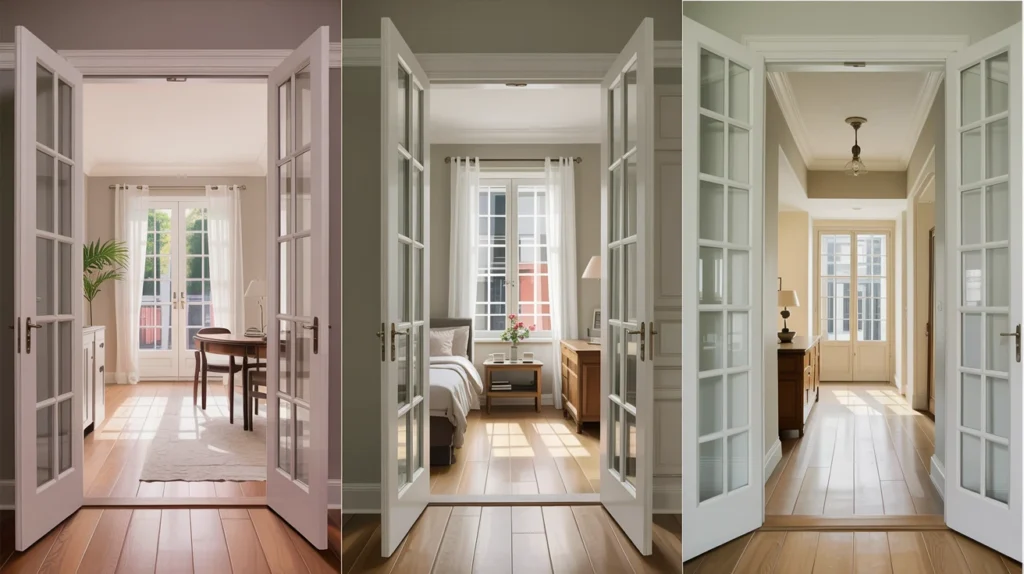
One of the most common positions is between a living room and a dining room. In many older homes these rooms sit side by side. A large opening with French doors lets you open the space for gatherings and close it for more intimate settings. When closed, the glass keeps the dining table and the sitting area visually linked.
Between kitchen and dining is another strong use. In many modern homes the kitchen is open to the rest of the house. Over time some families tire of cooking noise and visual mess. Double glazed doors with clear or lightly frosted glass can keep the kitchen connected but let you shut it during cooking. This is especially useful when guests are present or when someone wants quiet in the next room.
Home offices benefit from interior French doors too. Working in a small closed room with a solid door can feel isolating. Placing glazed doors between the office and a nearby room keeps the workspace bright and treats the office as part of the home instead of a box. When a video call starts, you can close the doors and still feel less shut in than with a solid slab.
French doors also work between a bedroom and a dressing area or walk in closet. In this case, many people choose frosted or reeded glass for a softer look. The suite feels like one calm zone, and daylight can pass between areas if windows exist on only one side.
At the end of a dark hallway, a pair of glazed doors can completely change the feel. The doors frame a view into the next space and draw the eye forward. Daylight from that space flows back down the hall and turns a tunnel into a connection.
Planning Space, Swing and Layout
Before ordering interior French doors, it is important to plan how they will move. Hinged pairs need enough floor space to swing open without hitting furniture or walls. Measure the width of each leaf and imagine the arc across the floor. This simple step prevents daily frustration later.
If the room is narrow, consider making the doors open into the larger space rather than the smaller one. In some cases the leaves can open away from main seating or walkway areas and rest against a clear stretch of wall. Where even this is tight, a sliding French style system may better suit the layout.
Think about where people will walk. French doors often sit at the edge of a main path between rooms. Make sure the clear opening feels generous enough when both leaves are open. Building guidance in many regions suggests typical minimum widths for comfortable passage. Wider opening sizes feel better in main living zones, especially when more than two people use the route.
Comfort, Sound and Everyday Use
Interior French doors should do more than look pretty. They need to support daily comfort. When used between quiet and noisy rooms, seals and glass type matter. Good quality frames with proper seals around the edges reduce the gap for sound to pass. Laminated or double glass improves this further. Acoustic tests published by door and window manufacturers show large gains in sound reduction when these elements work together.
Light control is another factor. Glass doors between a living area and a bedroom may leak light at night. For people sensitive to this, it can help to use thicker curtains on the bedroom side or choose more opaque glass. In some designs, simple fabric panels or internal blinds can be fitted to the doors themselves.
Cleaning and care are also part of everyday use. Doors with many small panes take longer to clean than full glass designs. Families with children may prefer larger single panes for faster wipe downs. Hardware such as handles and latches should feel solid and easy to use. Trusted brands often stress tested components and certified finishes that resist wear, which is worth noting when you expect long term use.
Cost and Installation Basics
The cost of interior French doors depends on size, material, glass and whether they are standard or custom. Pre hung sets from large home stores sit at the more affordable end. They include doors, frame and hinges ready to install in a prepared opening. Custom units from specialist joiners or high end brands cost more but offer exact sizes, special designs and higher performance glass.
Installation quality matters. A pair of doors must meet neatly in the centre, with even gaps around all edges. They should not bind against the frame or each other. Many manufacturers and building guides advise using a skilled carpenter or installer, especially for the first set. A level frame and careful adjustment of hinges and latches ensure smooth action and good sealing.
If the doorway already exists, the work is simpler. When you cut a new opening or widen a wall, a builder must check whether the wall carries weight. Structural walls need support above the new opening, often with a lintel. Local building codes and professional advice protect against sagging or cracks later.
Common Mistakes and How to Avoid Them
One frequent mistake is ignoring privacy. Clear glazed French doors look beautiful, but they may not suit every room. Doors between a bedroom and a busy hallway, or between a bathroom and a main space, often need frosted or textured glass. Thinking about views from both sides before final choice prevents awkward moments.
Another mistake is choosing a style that fights the rest of the home. Heavy traditional grids in a sleek modern interior, or sharp black frames in a very soft rustic room, can feel forced. It helps to echo details from existing windows, skirting boards or other doors. When frames, colours and hardware link, the new doors look like they belong.
Ignoring swing space is also common. Doors that hit furniture, radiators or stair rails quickly become annoying. A simple plan on paper, or tape lines on the floor, can show how each leaf will move. If the swing arcs cross too many objects, sliding systems or single wider doors may work better.
A final mistake is treating interior French doors as purely visual. If you never close them, you may not notice draughts or noise issues. Once you start using them for privacy, gaps become more obvious. Choosing doors with solid construction, proper seals and suitable glass at the start leads to a quieter and more comfortable result.
Bringing It All Together
Interior French doors combine the grace of glass with the control of a real door. They bring light into dark rooms, help small homes feel more open and create a sense of flow between spaces. At the same time, they keep the option to close off a room for work, rest or quiet evenings.
When you think carefully about where to place them, how they will swing, what glass you need and which style suits your home, they become more than a trend. They become a long lasting part of the way your home works every day.