

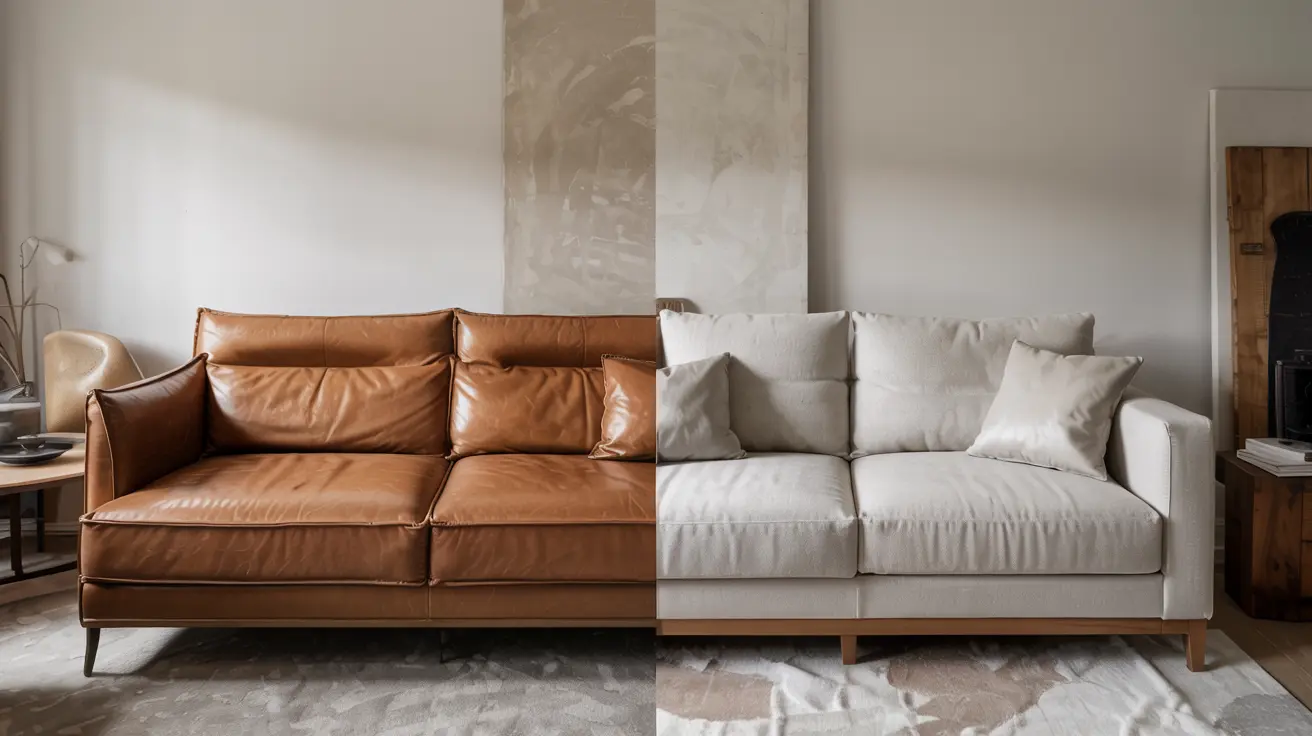
A sofa is a daily use item. It must handle bodies, spills, sunlight, pets, and cleaning. Leather and fabric can both last, but they fail in different ways. This guide helps you choose based on your home, not a showroom look.
leather for wipe cleaning, fabric for soft comfort
Leather suits homes where fast wipe cleaning matters and hair cleanup is frequent. Fabric suits homes where softness, warmth, and more color choices matter. Your best choice depends on pets, sun exposure, and how quickly you handle spills.
Three questions that decide fast
Do you have cats or scratch prone pets. Does the sofa sit in direct sunlight. Will you clean spills in the first few minutes.
Don’t compare mismatched quality
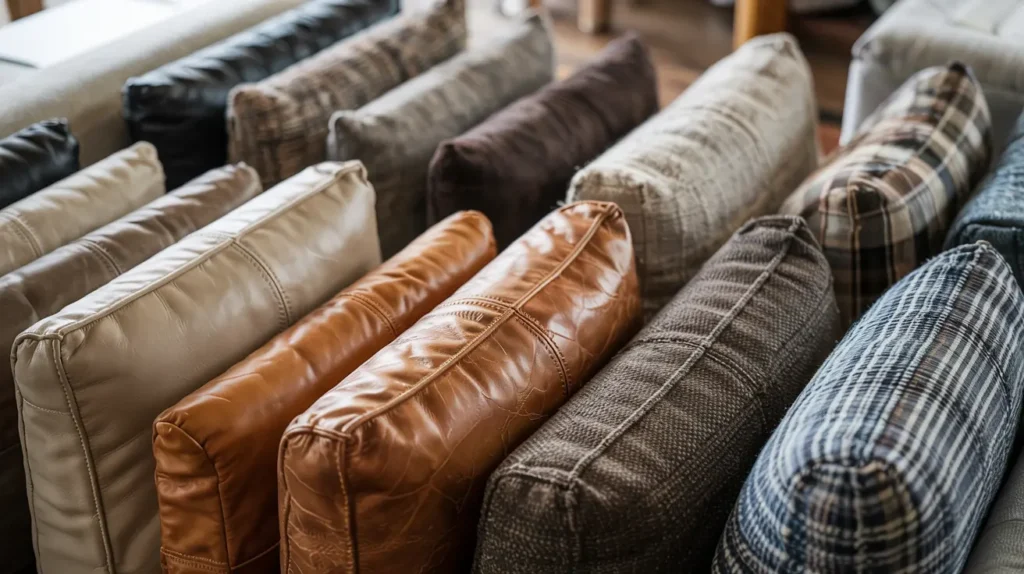
“Leather” can mean full grain or bonded. Those are not equal. “Fabric” can mean loose weave or performance fabric. Those are not equal. Compare similar build quality before you compare covers.
Leather vs fabric sofa comparison table
| Factor | Leather | Fabric |
|---|---|---|
| Cleanup | Wipes for many messes | Needs vacuum and spot cleaning |
| Spills | Often stays on top | Often absorbs quickly |
| Scratches | Can mark | Can snag or pill |
| Pet hair | Removes easily | Can cling to fibers |
| Allergies | Holds less dust on the surface | Can hold dust in fibers |
| Feel | Cool in winter, sticky in humidity | Usually steady and soft |
| Sun exposure | Can fade and dry | Can fade, some resist better |
| Style | Limited patterns | More colors and textures |
| Price | Often higher | Often lower, wide range |
| Value | Strong with higher grade leather | Strong with durable fabric |
Durability: what lasts longer and why
Durability comes from three things. Material grade, construction, and care. A strong frame and good suspension matter as much as the cover. A weak frame makes any sofa short lived.
Leather grades that change lifespan
Full grain often wears well and can develop patina. Top grain can also last well with a good finish. Aniline leather feels soft but stains easier because it has less protection. Semi aniline adds a light protective layer. Corrected grain has a stronger coating and hides marks but can feel less natural. Bonded leather is made from mixed layers and adhesives and can peel over time. Ask what leather is used on the seats and arms, not only the back.
Fabric durability basics
Tight weaves resist snags better than loose weaves. Performance fabrics often resist stains and wear better than standard upholstery fabric. Ask about abrasion ratings if available, and ask about pilling and colorfastness. Also ask if the fabric has a cleaning code and what it means for water based or solvent based cleaners.
Failure points people miss
Seams split before fabric “wears out” when stitching is weak. Foam sags when density is low. Springs or webbing fail when support is cheap. Check the seat edge support and the feel when you sit on the same spot twice.
Maintenance and cleaning: effort is the real cost
Most regret comes from cleaning reality. Pick the surface that matches your habits and your home’s mess level.
What to do right after a spill
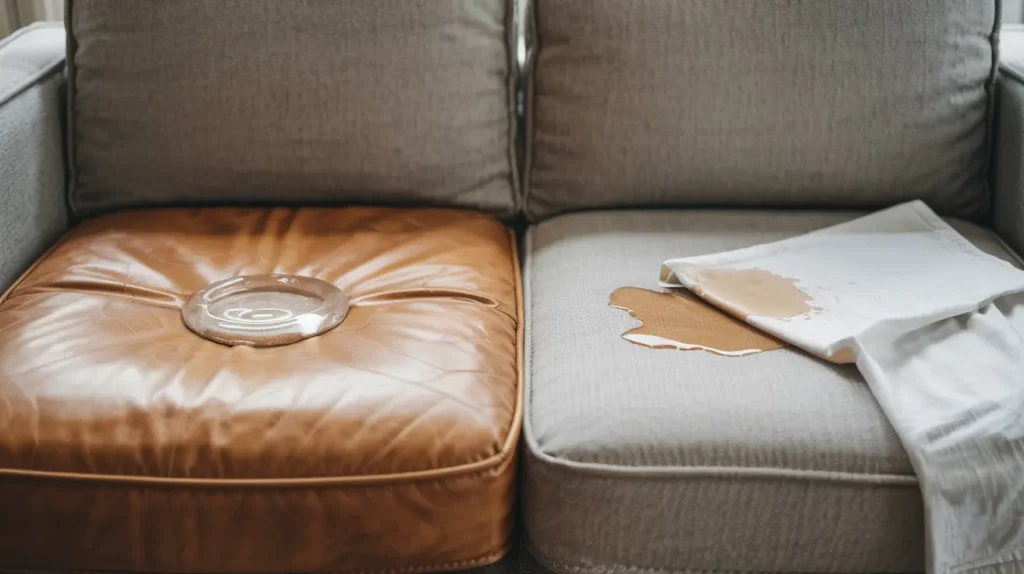
On leather, blot first, then wipe gently with a damp cloth. Avoid scrubbing because it can damage the finish. On fabric, blot and press with a clean towel. Avoid rubbing because it drives liquid deeper. If a stain remains, follow the care code and test any cleaner on a hidden area first.
What to avoid
Avoid bleach and harsh solvents. Avoid soaking cushions. Avoid steam unless the maker approves it. Avoid scented sprays that leave residue and attract dirt.
A simple upkeep routine
Wipe leather weekly with a soft dry cloth, then use a maker approved cleaner only when needed. Vacuum fabric weekly in busy rooms and brush crevices where crumbs collect. Clean spills immediately on both. Condition leather only if the maker recommends it, because the wrong product can soften the finish and attract grime.
Comfort and temperature: what it feels like daily
Comfort is cushion support plus surface feel. Temperature matters more than many buyers expect.
Heat and cold
Leather can feel cold at first touch in winter. In humid heat, it can feel sticky against skin. Fabric often feels more stable across seasons. If your home runs hot or humid, fabric may feel better in daily use.
Sunlight rules
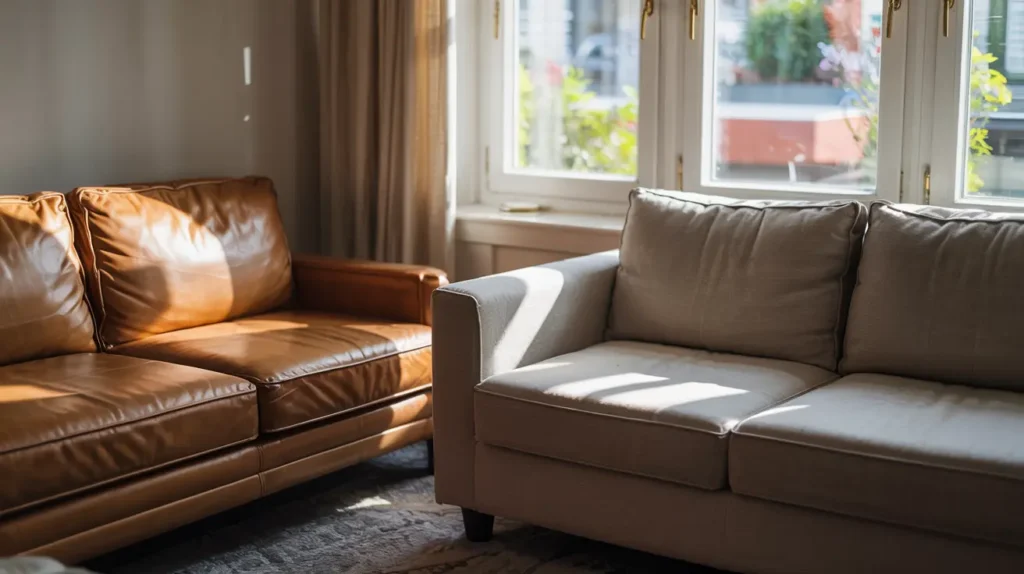
Direct sun fades both materials. It can also dry leather faster and make it stiff. If your sofa sits by a bright window, plan curtains, UV film, or rotate cushions to reduce uneven fading.
comfort checks before you buy
Sit for five minutes. Check seat depth and whether your feet rest flat. Check back support in your normal posture. Touch the surface with bare skin on your forearm. If it feels irritating now, it will not improve later.
price versus value over time
Upfront cost is only one part. A sofa that lasts longer and stays easy to clean can cost less over time.
Cost per year method
Divide the price by the years you expect to keep it. This helps compare a higher priced leather sofa with a durable fabric sofa. It also helps you justify paying for stronger cushions and better support.
When paying more makes sense
High traffic rooms need stronger materials and better suspension. Homes with kids and pets need surfaces that match cleaning speed. If spills happen often, washable covers or protected upholstery reduces stress. If you like changing decor often, fabric can be the flexible choice.
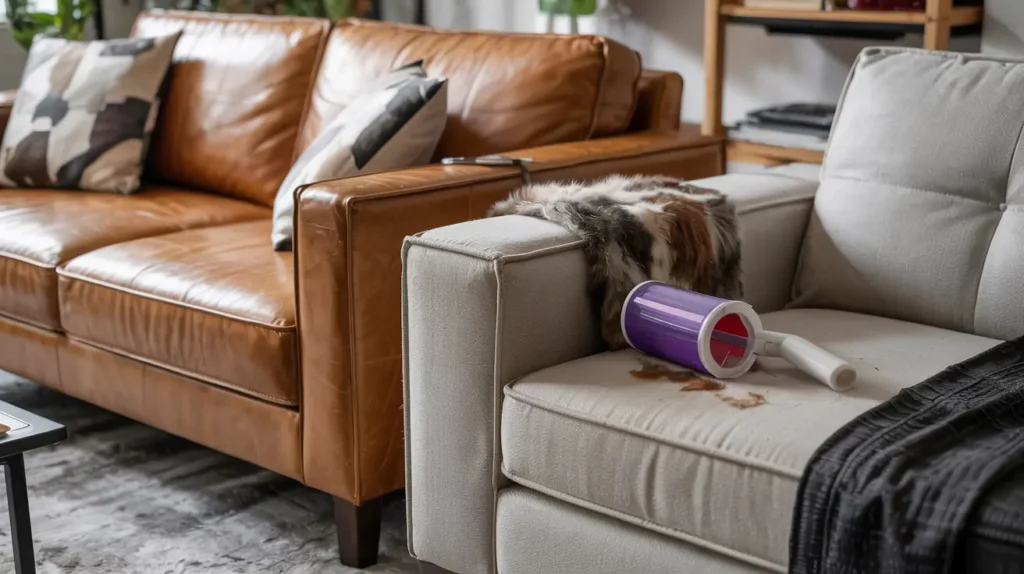
Pets and kids: choose based on what happens at home
Cats
Cats can scratch leather and leave visible marks, especially on softer finishes. Protected leather hides marks better than soft aniline styles. Tight weave fabric can reduce snagging, but loose weaves can pull and look worn fast. If you have cats, avoid delicate weaves and avoid very soft unprotected leather.
Dogs
Leather sheds hair easily and wipes muddy paw marks faster. Fabric can hold hair and odor if vacuuming is not regular. If your dog has accidents or comes in wet, leather can be easier day to day. Fabric can still work if covers are washable and the weave is tight.
Kids
Leather often handles food mess with a wipe. Fabric can work well when it is stain resistant or has removable covers. Medium colors hide small marks better than very light shades. If your home includes crayons, sauces, and sticky hands, plan for easy cleanup first.
Allergies, dust, and odor
Leather is a smooth surface, so dust and dander sit on top and wipe off. Fabric can trap dust in fibers, which matters for allergy sensitive homes. Fabric can still work if you vacuum weekly, clean cushions, and choose tight weaves. If allergies are severe, leather often reduces daily buildup work.
Style: what stays easy to live with
Leather often looks structured and clean. Fabric offers more color and texture options and can soften a room. For a long lasting look, choose a classic shape first, then choose the cover that fits your routine. A trendy color on a hard to clean fabric creates regret fast.
Buyer checklist: avoid common mistakes
Leather checklist
Confirm the leather type on seats and arms. Ask if any parts are bonded. Inspect seams, corners, and high touch areas. Ask what cleaners are approved and how often conditioning is recommended. Check how the finish reacts to light rubbing with a clean cloth.
Fabric checklist
Confirm fiber content and fabric name. Ask if it is performance upholstery fabric. Ask about pilling and colorfastness. Check weave tightness up close. Ask if covers are removable and washable and what cleaning method is allowed.
Red flags
No clear material details. Vague answers about care. Loose threads and weak seams. Seat cushions that feel flat in the showroom. A care guide with no simple cleaning steps.
FAQs
Is leather or fabric better?
Leather suits fast wipe cleaning and easier hair removal. Fabric suits softer comfort and more style choices. Pick based on pets, sunlight, and cleaning habits.
Which lasts longer?
Higher grade leather can last many years with care. Durable performance fabric can also last many years. Frame and cushion quality matter as much as the cover.
Which is easier to clean?
Leather is easier for many surface spills. Fabric is easier when covers are washable or the fabric is stain resistant. Fast spill response matters most.
Is faux leather worth it?
Some faux leather can peel with time and heat. If you choose it, check warranty terms and expected lifespan, and keep it out of direct sun.
Conclusion
Leather suits fast wipe cleaning and easy hair cleanup. Fabric suits soft comfort and more color options. Material grade and construction decide lifespan. Pets, sunlight, and cleaning habits decide the best fit. Use the checklist before you buy.
