
Why wardrobes get messy again even after you clean them
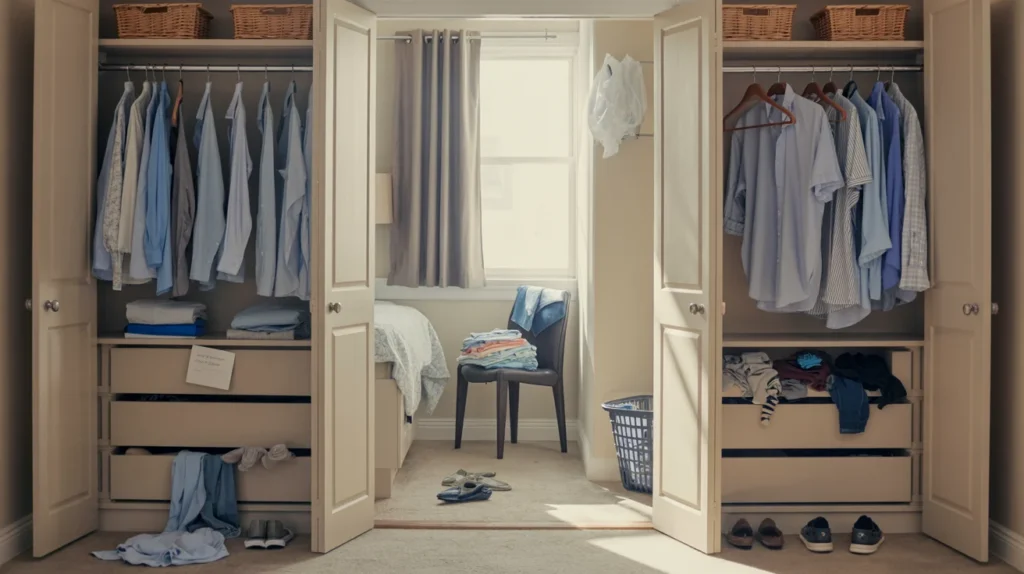
A wardrobe rarely gets messy because you are lazy. It usually fails for two reasons. The space has no clear rules, and the daily routine has no reset. Clothes get shoved into the nearest spot. Accessories drift. Shoes pile up. Then you waste time hunting for basics, and outfits feel harder than they should.A good setup does two jobs at once. It makes things easy to put away and easy to find. That is the whole game. If your system needs motivation it will break.
Start with a fast wardrobe reality check
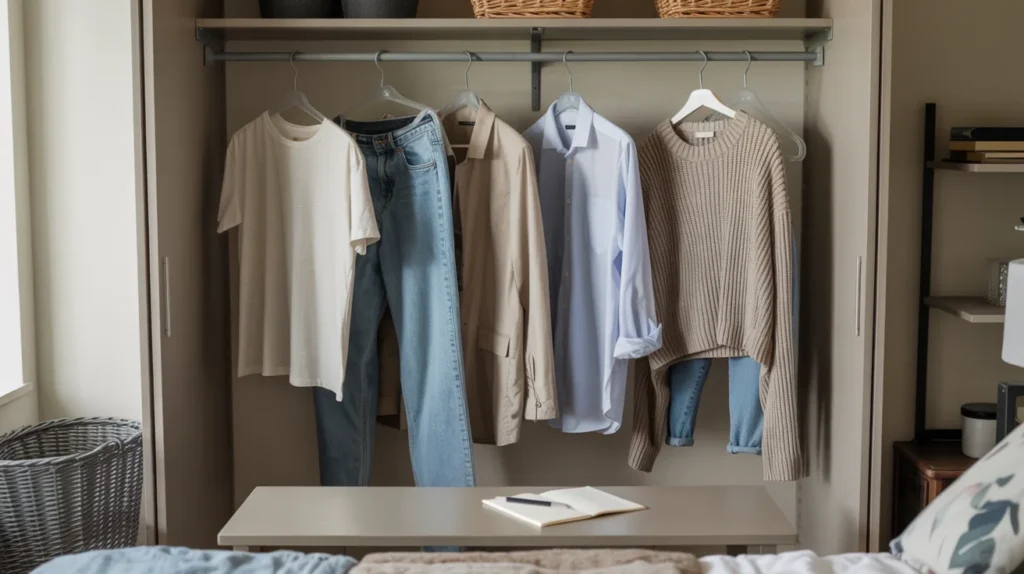
Before you buy organizers, look at what you own and how you live. Most people store clothes like a catalog, not like a real week. That mismatch creates clutter. Think about your last seven days. Which items did you wear twice? Which items stayed untouched. Which pieces caused stress because they were wrinkled, missing, or hard to reach. Those answers tell you what deserves prime space. Here is a quick check you can do in ten minutes. Pull out five items you wear often. Now find where they should live. If any item takes more than one move to put back, your layout needs a change.
Clear the floor and make three simple zones
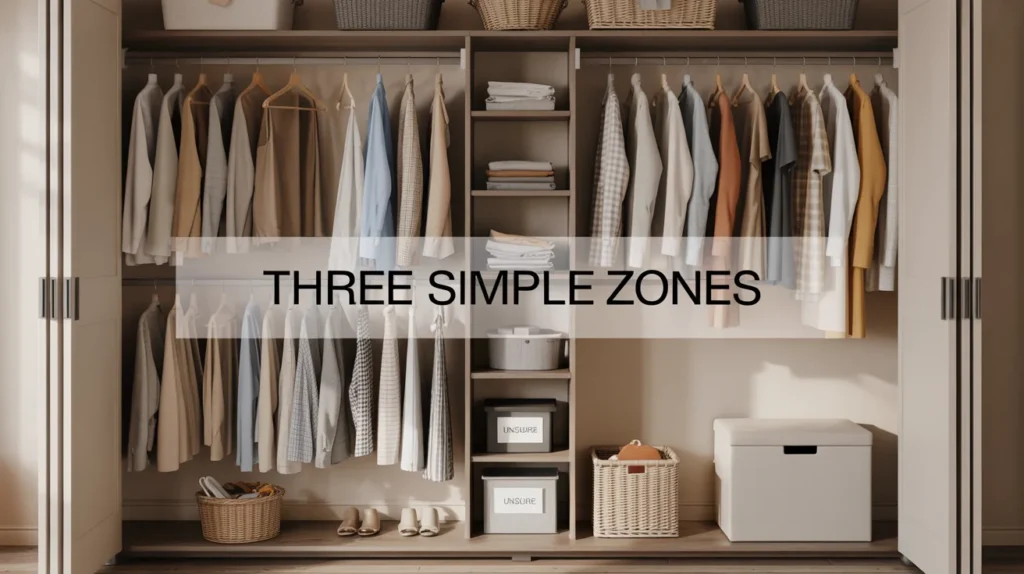
A wardrobe works better when it has zones, not piles. You do not need many zones. Three is enough for most people. The first zone is daily wear. These are the pieces you reach for every week. The second zone is occasional wear. These are your event outfits, seasonal extras, and backup layers. The third zone is holding space. This is where unsure items sit for a short time, not forever. This approach fixes a common problem. People try to organize everything equally. That looks neat for a day. It fails fast because daily wear gets buried under rarely used stuff.
Do a declutter that feels fair, not brutal
Decluttering gets a bad name because people go too extreme. A better way is to set clear questions and stop there. Start with fit and comfort. If it pinches, rides up, or needs constant fixing, it creates a mess because you avoid wearing it. Next, check the condition. Stains, stretched collars, and broken zips will not magically improve. Then look at frequency. If you did not wear it in a year, it needs a reason to stay. If you freeze many items, give them a proper place. Use a small box or one shelf as a maybe box. Set a date to review it in four weeks. If you never reach for those items, you have your answer.
Try this simple sorting method in one session.
- Keep: fits, feels good, and gets worn
- Donate or sell: good condition, not your style, or duplicates
- Recycle or discard: damaged beyond repair
- Maybe box: limited space, time-boxed decision
Set up your wardrobe like a map, not a museum
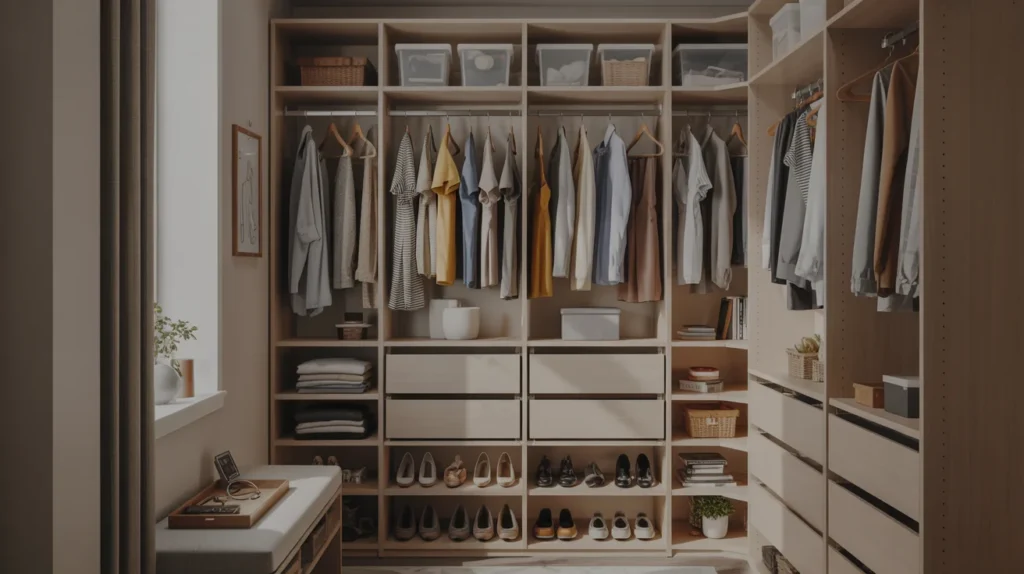
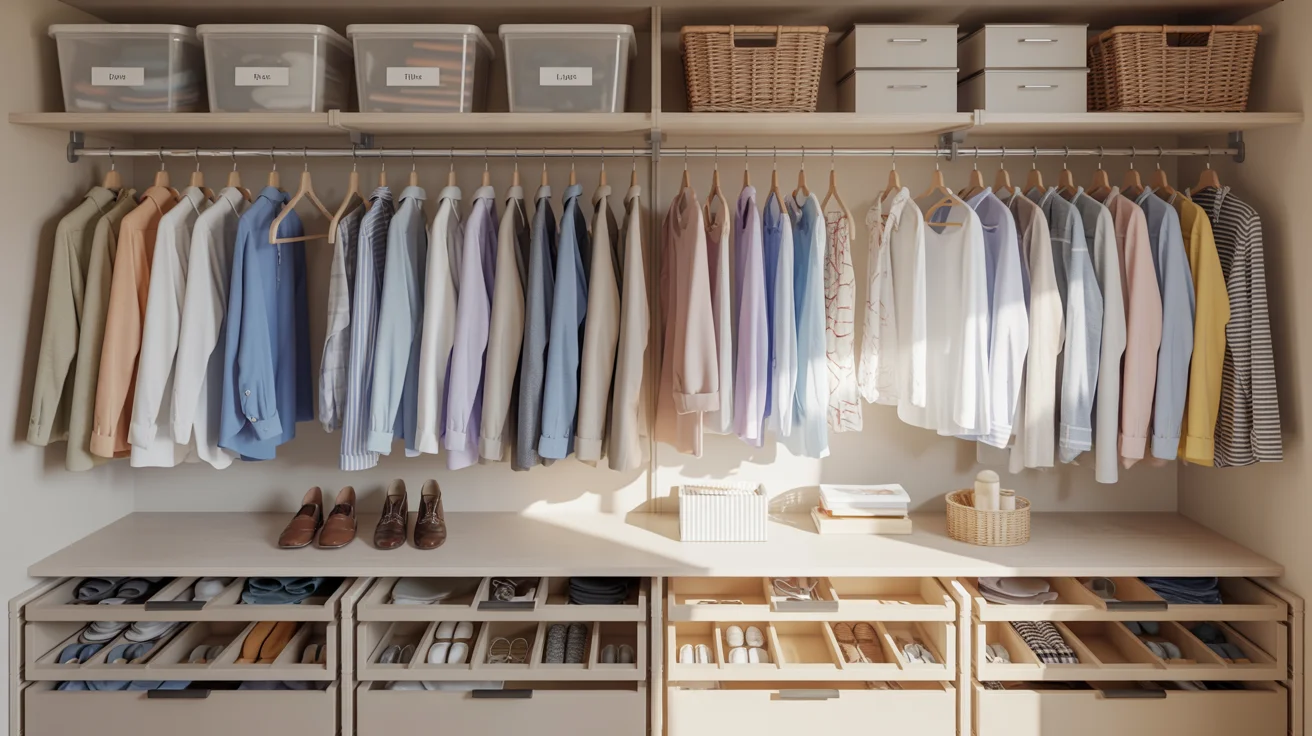
Once the clutter is down, build a layout that matches how you move. Think in terms of reach and visibility. Eye level and the front of the rail are prime spaces. Put your most worn shirts, trousers, and outer layers there. Waist level works best for folded basics in drawers. Top shelves are for light, bulky, or seasonal pieces. The floor level suits shoes and bags, not random piles. This is the part most people skip. They organize by category, then forget about access. Access is the difference between a tidy wardrobe and a messy one.
Choose a sorting style that matches your brain
Some people search by category. Others search by color. A few search by outfit purpose. Pick one main method, then keep the rest simple. Category first works well for most wardrobes. Group tops, bottoms, dresses, jackets, and knitwear. Inside each group, use a light color order if it helps. Color-only sorting can look pretty, but it often slows you down when you need a specific type fast.
Purpose sorting is great for busy weeks. Make a work section, a casual section, and a weekend section. This is a strong fix if you keep buying nothing to wear outfits. You probably have clothes. They are just stored in a way that hides complete looks.
The fold vs hang rule that saves space fast
A lot of wardrobe mess is really a wrong storage choice. Hanging everything eats rail space. Folding everything causes hidden stacks. Use hanging space for items that crease or that you want to see quickly. Use drawers for items that stretch, slide off hangers, or stack well. If your rail is packed, switch to slimmer matching hangers. This alone can free surprising space. It also looks calmer, which makes you more likely to maintain it.
Fix drawers so they stop turning into junk
Drawers fail when items slide into each other. You start with neat stacks. Then one rushed morning wipes it out. The fix is separation. Use drawer dividers or small boxes. Give each category a lane. Socks get their own lane. Underwear gets their own lane. Belts and scarves get a shallow tray or a box.
Try a simple drawer layout. Put daily basics in the top drawer. Put workout or lounge items in the next drawer. Put rarely used extras in the bottom drawer. When the top drawer is easy, your mornings feel easier too.
Handle accessories and shoes before they take over
Accessories create clutter because they are small and annoying to store. A random pile of belts and scarves always looks messy. Hang belts and scarves on a multi-hook hanger, or use an over-the-door hook strip. Store jewelry in a tray with sections, not in one box. Separate watches, rings, and earrings. When each piece has a slot, you stop losing them.
Shoes need rules. Keep only current-season shoes in the main area. Move off-season pairs into clear boxes or a labeled bin. If you have a shoe rack, limit it to the number of daily pairs you truly wear. Excess pairs belong elsewhere, or they will creep back into your floor space.
Make small wardrobes feel bigger with vertical space
A small closet is not a deal breaker. The problem is wasted height. Many wardrobes have empty air above the rail and unused shelf corners. Add a second hanging rail for shorter items like shirts and skirts. Use shelf risers to create two levels on a shelf. Add a hanging shelf organizer for folded items if you lack drawers. Use clear bins on high shelves so you can see what you store.
Underbed storage helps when you live in a tight space. It works best for seasonal clothing, spare bedding, or occasional shoes. Avoid stuffing daily wear under the bed. You will not put it back.
Stop the laundry flow from wrecking your system
A tidy wardrobe collapses when laundry has no landing plan. Clean clothes sit on chairs. Half-worn items float around. Then everything merges into one big mess. Give laundry clear steps. Dirty clothes go straight into a basket, not on the floor. Clean clothes get put away the same day, even if it is a quick sort. Half-worn items need a home too. Use one hook or one chair, but keep it limited. When that spot fills, it forces a reset. If you struggle with this, pick a fixed time. Ten minutes after dinner works for many people. A short daily reset beats a long weekend cleanout.
Build outfit sets so mornings stay easy
A wardrobe feels organized when you can make outfits fast. If you stare at clothes and still feel stuck, you need outfit sets. Pick three outfit formulas that match your life. For example, jeans plus knitwear plus sneakers. Or trousers plus tee plus jacket. Or a dress plus cardigan plus flats. Store pieces for each formula close together. Put your favorite jacket near your work tops. Put your go-to shoes under your most worn bottoms. This is a strong fix for the I have clothes but nothing works problem. You are not missing clothing. You are missing ready combos.
Keep clutter from coming back with two small rules
Most people do a big clean and then stop. That is why the mess returns. The goal is not perfection. The goal is repeatable. Rule one is a donation box. Keep a bag or box in your wardrobe area. When something feels wrong or never gets worn, drop it in. Once a month, empty it. Rule two is one in, one out for problem categories. If you keep buying t-shirts or black tops, that category will overflow. Tie new purchases to removing one old piece. This keeps the system stable without constant decluttering.
What to do with clothes you feel guilty about
Guilt is a hidden clutter driver. Gifts, expensive items, and someday clothes take up the best space. Then you resent your wardrobe. Be honest about why the item is there. If it does not fit your life now, it belongs in occasional space or the maybe box. If you keep it, store it out of prime space. Prime space is for what you actually wear. If you want a kinder way to let go, sell higher value pieces, donate to a cause you trust, or recycle responsibly. The goal is to stop paying rent to clothes that do not serve you.
A simple weekly reset that takes five minutes
A weekly reset keeps everything tidy without a long clean. Pick one day. Do it while you wait for something. Start by hanging stray items. Return folded basics to their lanes. Put shoes back on the rack. Empty any pockets. Drop one or two obvious no items into the donation box. That is enough. When you keep the system small, you keep it real.
Quick troubleshooting for common wardrobe problems
If your wardrobe still feels chaotic, it usually comes down to one issue. If you cannot find things, visibility is low. Reduce stacks, use clear bins, and hang more daily wear. If drawers explode, add dividers and reduce categories in each drawer. If the floor keeps filling, move seasonal items out and limit shoe space. If you feel bored with outfits, build outfit formulas and store them together. Small changes beat big reorganization. Your wardrobe needs to fit your habits, not your hopes.
Conclusion
A well-organized wardrobe is not about fancy storage. It is about a simple system you can keep on a busy week. Make daily wear easy to reach. Give drawers lanes. Store accessories with clear homes. Add a short reset habit that stops clutter from piling up. When your setup matches your real life, getting dressed feels calmer and faster.