
Fiberglass Bathroom Doors: Do They Really Make Sense for Wet Bathrooms?
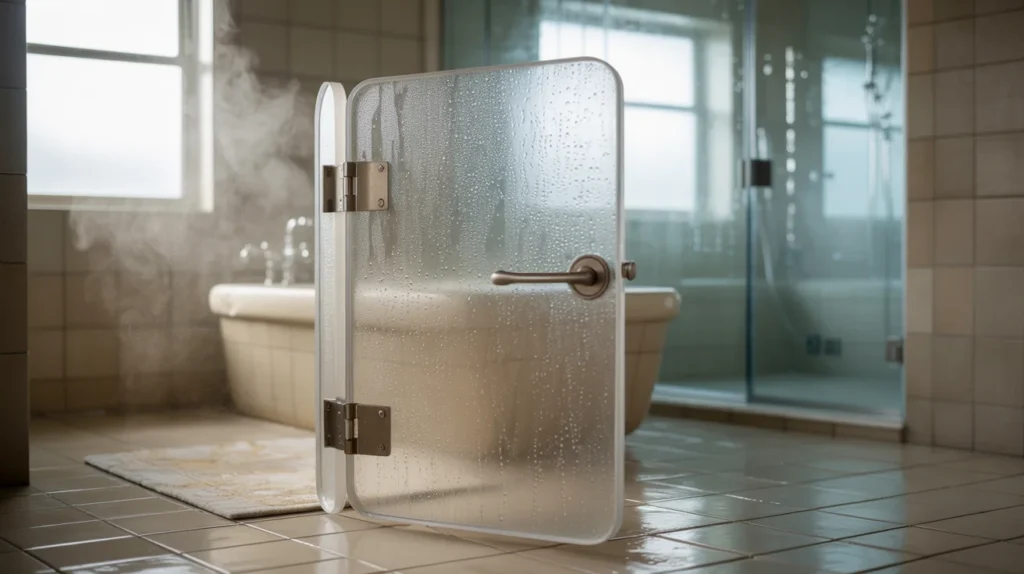
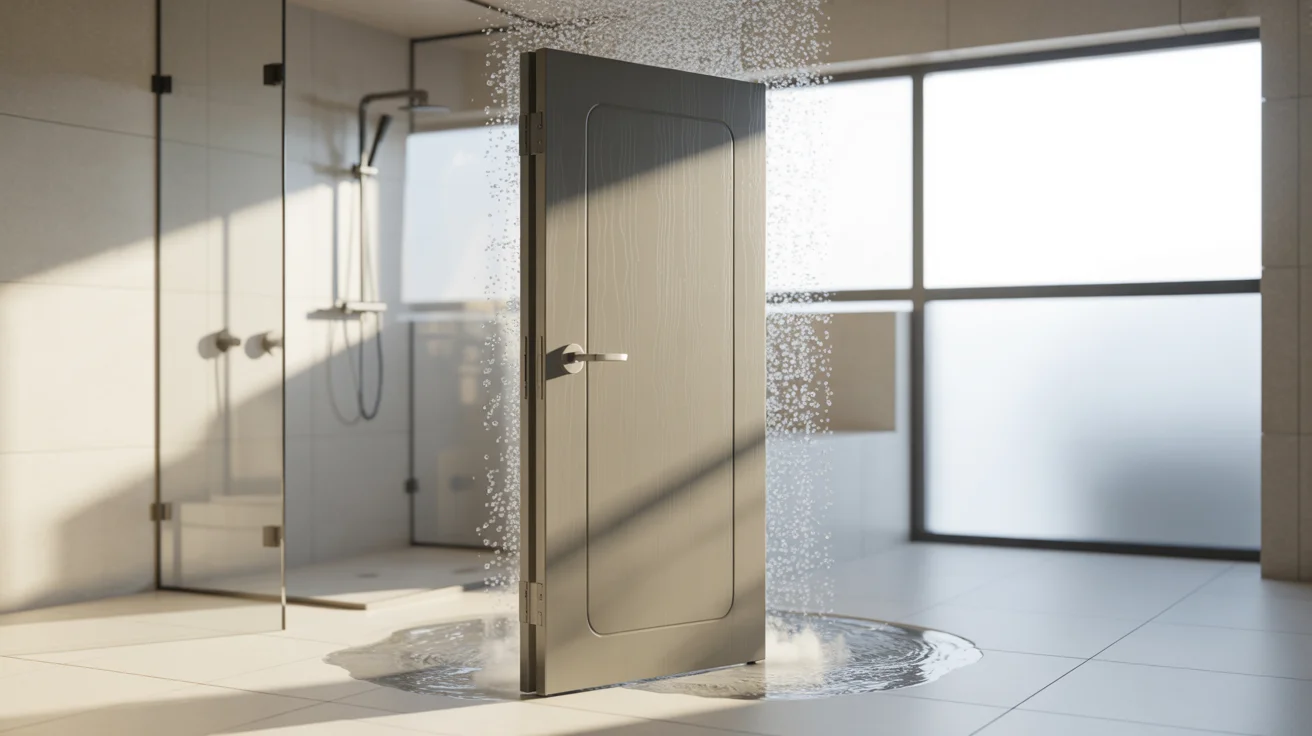
Bathroom doors take more abuse than most people expect. Steam hits the surface daily. Water splashes near the bottom edge. Humidity sits in the air for hours. A door that looks fine in a hallway can swell, warp, or start sticking in a bathroom. That is why many homeowners look at fiberglass bathroom doors as a long term fix. The big question is simple. Do they hold up better than other materials, and are they worth the money?
Why Bathroom Doors Fail So Often
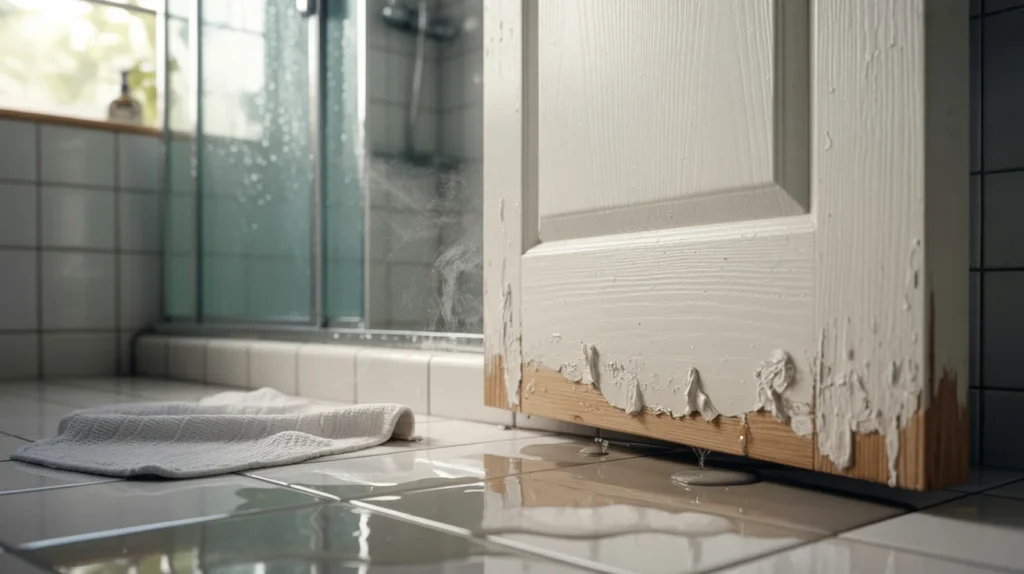
A bathroom is a high humidity room. Hot showers create steam that moves into the door slab and frame. If the door has a porous core, it can absorb moisture. Over time, that moisture can cause swelling along the bottom edge. You may notice the door rubbing the floor or catching on the jamb. Hinges can also shift when the frame changes shape.
Another common issue is surface damage. Paint can bubble on some doors when moisture gets under the finish. Wood doors can show dark stains near the corners. In some homes, poor ventilation leads to mold and mildew around the trim. None of this feels like a door problem at first. It feels like a bathroom problem. Still, the door takes the hit.
What a Fiberglass Bathroom Door Actually Is
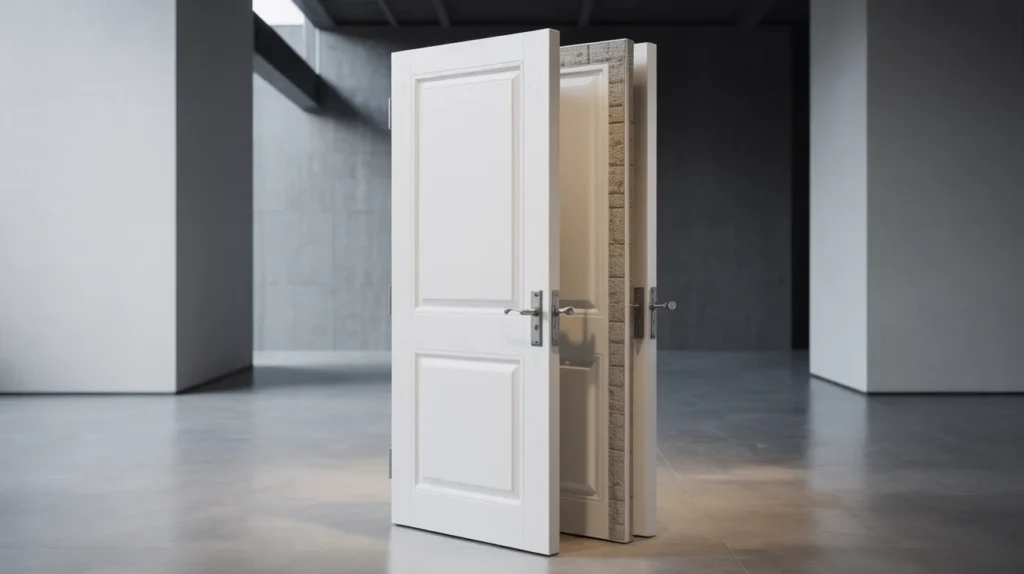
A fiberglass door is not a plastic sheet. It is a layered build. Many models use a fiberglass-reinforced skin with a resin binder. Inside, you often get a foam or composite core. The surface is usually non porous. That helps in wet spaces.
Some people also use the term FRP doors. That stands for fiberglass-reinforced plastic. In plain words, it is fiberglass with resin formed into tough panels. FRP is common in commercial bathrooms and hospitals. It is chosen because it cleans easily and does not rot.For home bathrooms, fiberglass doors can come in smooth styles or woodgrain looks. Many can be painted. Some come prefinished. The big advantage is moisture stability when compared to many wood based doors.
Fiberglass vs Wood in a Bathroom
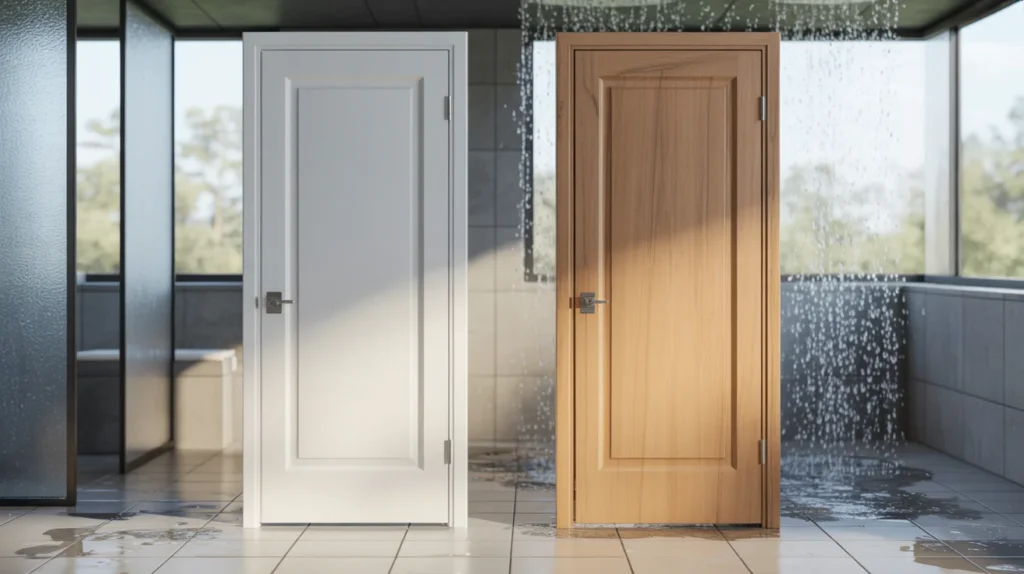
Wood doors can work in a bathroom, but the conditions must be right. Solid wood can last if you have strong airflow and good sealing. Still, wood is a natural material. It expands and contracts with humidity. Over time, that movement can lead to sticking or small cracks in paint.
Engineered wood doors vary a lot. Some have thin skins over a core that does not like moisture. If the bottom edge is not sealed well, the door can swell. MDF doors are also risky in bathrooms. MDF can drink moisture fast when exposed at edges or screw holes.
Fiberglass is more stable in that environment. It does not rot. It does not swell the same way. It also handles daily cleaning better. For many homes, that alone makes it a safer pick.
Fiberglass vs PVC, WPC, and Other Moisture Resistant Options
Fiberglass is not the only option for a wet bathroom. PVC doors and vinyl based doors can also resist moisture. They tend to be cheaper and light. The downside is feel. Some look and sound hollow. Cheaper models can flex. Hardware can loosen over time if the core is weak.
WPC doors are another option. WPC stands for wood plastic composite. These doors often resist swelling better than MDF. Many are made for wet spaces. They can still vary by brand and build. Some are heavy. Some have limited style options.
Solid core composite doors are often a strong middle ground. They can offer better sound control than hollow core doors. Some composites still use wood fibers. So edge sealing still matters.
If you want the most set it and forget it option, fiberglass often wins on stability. If budget is tight, PVC can work. If you care about sound, a solid core composite may fit better.
The Hidden Problem: The Bottom Edge and Unsealed Cuts
Most bathroom door damage starts at the bottom edge. Water collects on floors. Mopping pushes water toward the door. Steam condenses and runs down. If the bottom edge is raw or poorly sealed, moisture can creep in.
That is why many doors fail even when the surface looks fine. The core swells from below. The door starts rubbing. People trim the bottom. That exposes more raw material. The cycle repeats.
With fiberglass doors, you still need to think about cut edges and drilled holes. A fiberglass skin can resist moisture, but cut areas still need protection. If the door is trimmed or drilled on site, seal those areas with a good primer and paint, or the manufacturer’s recommended sealant.
Installation Mistakes That Ruin a Good Door
A great door can fail with a bad install. Bathrooms are unforgiving.One common mistake is tight clearances. If the gap at the bottom is too small, the door will rub once humidity rises. Another mistake is weak hinges. Humid air can speed up corrosion on cheap hardware. Sagging hinges can cause latch issues. Stainless steel hinges and screws help in damp rooms.
Frames matter too. A door can be stable, but a soft frame can swell. If the jamb absorbs moisture, it can pinch the slab. Paint all sides of the trim and frame. Seal the base near tile and wet zones.
Ventilation is the big one. If the exhaust fan is weak, humidity stays trapped. That affects every material. A better fan or longer run time can save your door and your walls.
How Fiberglass Doors Handle Humidity and Cleaning
Fiberglass doors are known for low maintenance. The surface does not soak up moisture like wood. Cleaning is simple. A mild cleaner and soft cloth usually works. That is useful in bathrooms where soap residue builds up.
They also resist dents better than many hollow core doors. That matters in small bathrooms where doors hit towel bars or walls.
One thing to watch is finish quality. A cheap factory finish can still peel if it was applied poorly. Paint can also fail if the surface was not prepped. Light sanding and the right primer make a big difference when painting fiberglass.
Privacy and Noise: What Most People Forget
Bathroom privacy is not only about locks. Sound matters too. Many homes use hollow core doors in bathrooms because they are cheap. These doors block very little noise. You can hear everything. That bothers families and roommates.
If privacy is a priority, focus on core type. Many fiberglass interior doors use a foam core. Foam can help some, but it may not match a dense solid core door for sound. If noise control matters, compare STC ratings when available. If ratings are not listed, ask about core density and weight. Heavier doors usually block more sound.
Weatherstripping can also help a bit, even indoors. A simple door sweep is not ideal for bathrooms, but a tight fit and a quality latch reduce gaps.
Choosing the Right Style for a Bathroom
A bathroom door is seen up close. It should match your home. Fiberglass doors come in smooth panel styles and woodgrain styles. Smooth doors fit modern homes. Woodgrain fits traditional spaces. Many can be painted.
If your bathroom is tight, consider a door that swings out. That is a layout decision, not a material issue. Pocket doors also work, but privacy and sound depend on the pocket system. If you want glass, use tempered privacy glass or frosted panels. Glass looks great, but it reduces privacy unless treated.
Match the door to your bathroom use. A guest bath has light use. A main bath runs hot showers daily. That daily steam changes what makes sense.
Cost: Are Fiberglass Bathroom Doors Worth It?
Fiberglass doors usually cost more than basic hollow core doors. They can cost similar to some midrange solid-core options. The value comes from fewer problems over time. If you have replaced a swollen door once, you already know the hidden cost. You pay again for paint, trimming, and labor.
Fiberglass can be a smart buy in these cases. You have a bathroom with poor airflow. You have kids who splash water often. The door sits near a shower with no curtain control. The home is humid most of the year.
If your bathroom is dry and well vented, you may not need fiberglass. In that case, a sealed solid core door may do fine. Still, fiberglass can give peace of mind.
Common Questions People Ask Before Buying
Are fiberglass bathroom doors waterproof?
They are highly moisture resistant. They do not rot like wood. Still, cut edges and drilled holes need sealing. Hardware areas also need care.
Can I paint a fiberglass bathroom door?
Yes, most can be painted. Clean it well first. Lightly sand if needed. Use a primer made for slick surfaces. Then apply a quality interior paint.
Will a fiberglass door stop bathroom noise?
It depends on the core. Compare weight and core type. If sound is a top issue, look at solid core doors or higher density builds.
Do fiberglass doors warp in humidity?
They resist warping better than many wood based doors. Frames and install gaps still matter. Ventilation still matters too.
What is better for a bathroom, fiberglass or PVC?
Fiberglass feels more solid in many cases. PVC can be cheaper and moisture safe. PVC quality varies more, so check core strength and hardware support.
A Simple Buying Checklist That Prevents Regrets
Measure the door opening and note swing direction. Check if the frame is straight. Plan for proper bottom clearance, especially if you have thick rugs or wet floors. Choose corrosion resistant hinges and screws. Confirm the door can handle bathroom humidity. Ask about sealed edges and finish warranty. Make sure your exhaust fan works well and runs long enough after showers.
My Take: The Best Way to Win Long Term
If your bathroom door keeps sticking, do not keep sanding it down. That is short term pain relief. Solve the cause. Improve airflow. Seal the frame edges. Then choose a door built for moisture. In most homes, fiberglass is the cleanest long term choice because it stays stable. It also stays easy to clean. Pair it with decent hardware and you will forget about it for years.