
A great armchair can change how a room feels. It adds comfort and balance. It can also solve a dead corner. A bad pick can waste space and hurt your back. This guide helps you choose well based on use, fit, comfort, and materials.
What an armchair is and how it differs from similar chairs
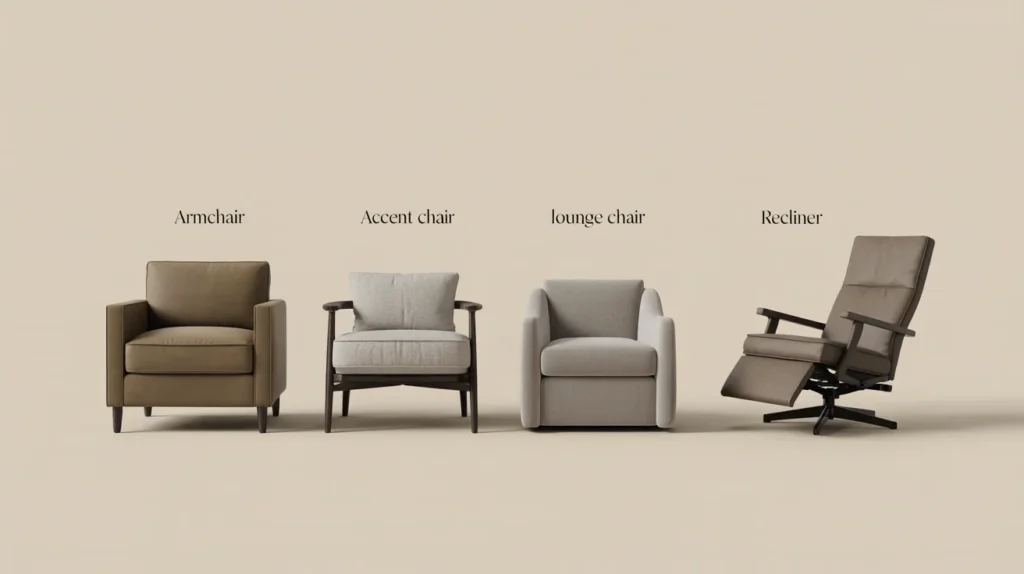
An armchair is a single seat with arms and steady back support. Many stores call similar pieces a lounge chair or an accent chair. A lounge chair often sits lower and leans back more. An accent chair often puts style first. A recliner has a moving back and a built in footrest. A wingback has side wings near your head. A club chair usually has a deep seat and thick arms.
Start with the main job you want the chair to do
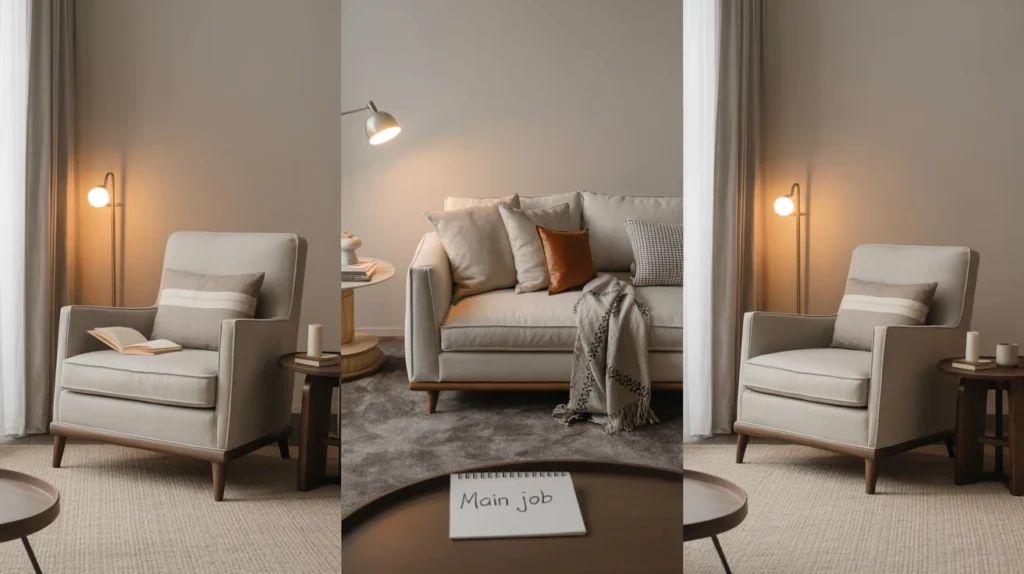
Most regrets come from buying for looks only. Begin with one main use and let that guide the rest. For reading, a higher back can support your neck. A firmer seat can keep you upright longer. For TV time, a deeper seat can feel relaxed. If you like feet up comfort, add an ottoman. For guests, choose a more upright back angle. For laptop work, check arm height so your shoulders stay relaxed.
Measure your space and the path into the room
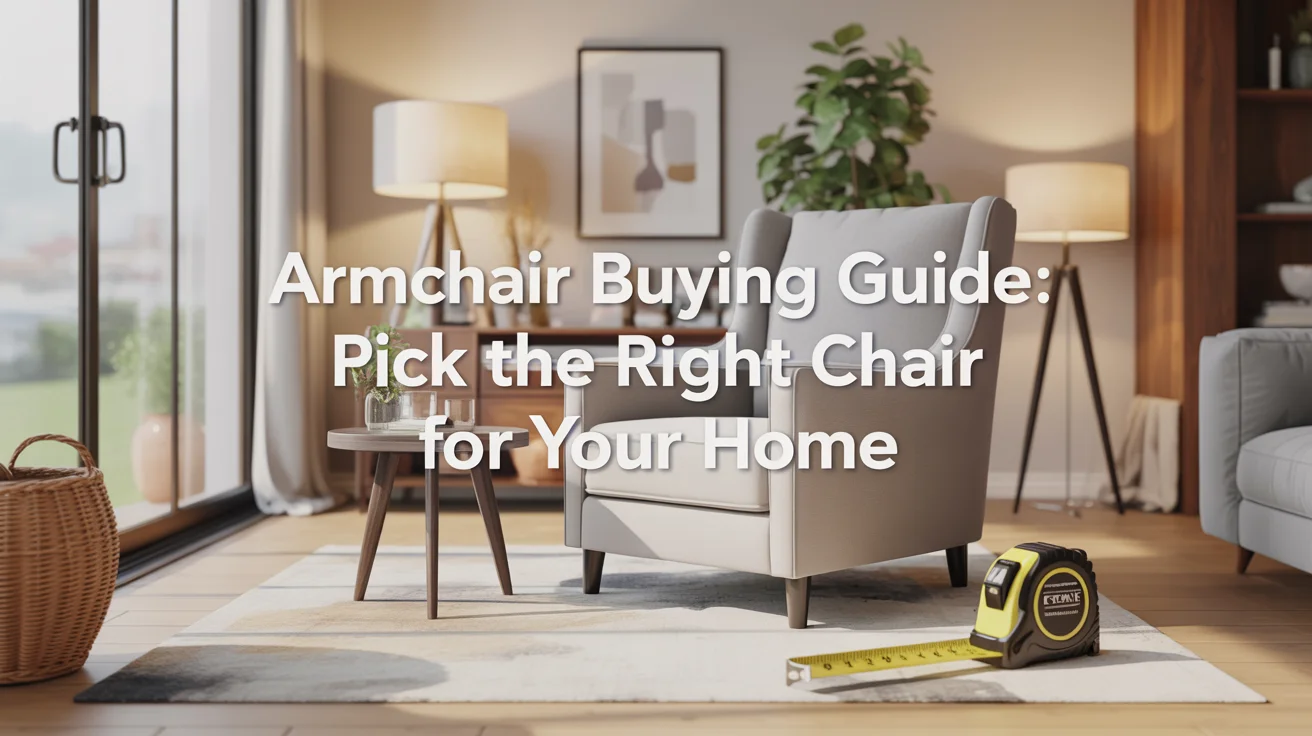
Photos can hide true size. Measure the spot where the chair will sit. Use tape on the floor to mark the footprint. Keep a clear walking path near doors and hallways. Leave room for a side table if you want one. Next, measure the doorway and any tight turns. Also check stairs and landings in multi floor homes. A chair that cannot enter the room will not work.
Five measurements that decide comfort
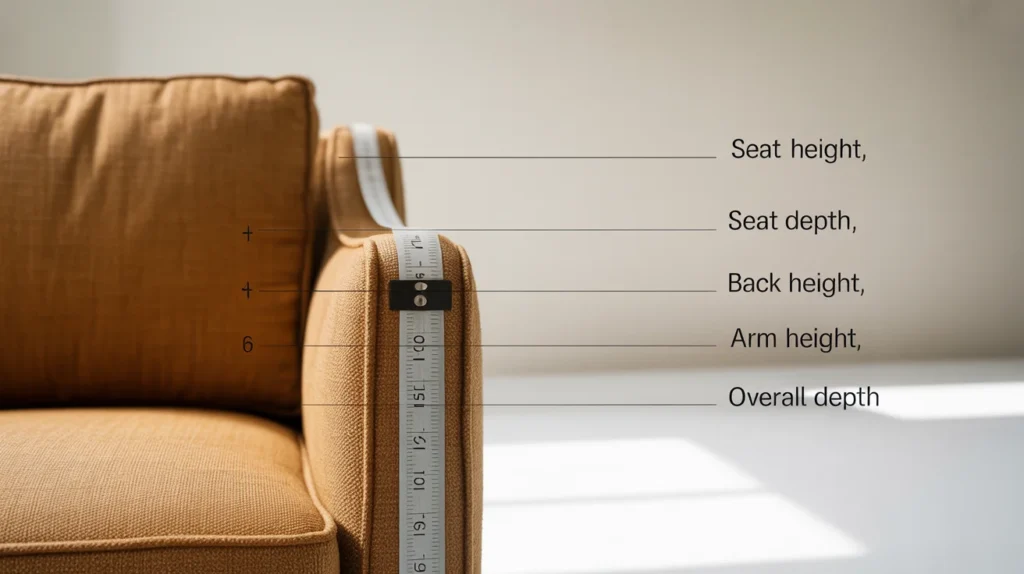
Width is not enough. These five numbers change how a chair feels. Seat height affects knees and hips. A low seat can feel hard to stand from. Seat depth affects back comfort. Deep seats often suit taller people. Back height affects neck support. Higher backs can feel more secure. Arm height affects shoulder comfort and side table use. Overall depth affects how far the chair sticks into the room.
Comfort that lasts, not just comfort in the showroom
Some chairs feel soft for five minutes then sag later. Others feel firm at first and stay supportive. Foam density matters. High density foam holds shape longer. Softer foam can flatten faster with daily use. Back cushions can be structured or loose. Structured backs support posture better. Loose pillows feel relaxed but can shift.
Pick upholstery that matches your real life
Fabric
Fabric offers many colors and textures. Tight weaves often handle daily use better. Loose weaves can snag. Removable covers make cleaning easier. For pets, a tight weave helps with claws and hair. Medium tones hide marks well.
Leather
Leather wipes clean fast and can age well. It can scratch. Smooth leather shows marks more than textured leather. In hot rooms it can feel sticky at first. In cold rooms it can feel cool.
Velvet and bouclé
Velvet adds depth and a soft look. It can show pressure marks. Bouclé adds warmth and rich texture. It can trap crumbs and hair. Regular vacuuming helps keep it neat.
Performance fabrics
Performance fabrics resist stains and wear. They suit busy family rooms. Read care notes and test a swatch when possible.
Build quality checks you can do fast
Start with the frame. Solid wood and quality plywood can both last. A good chair feels steady and does not wobble. Sit down and shift your weight. Listen for squeaks. Press on the arms and check for movement. Look at seams and stitching. Even stitching shows care. Check how cushions fit. Loose cushions can slide and look messy.
Swivel, rocker, or fixed legs, choose the base with purpose
Fixed legs feel stable and need less clearance. Swivel bases work well in open layouts. They let you turn toward people with ease. Leave space behind the chair so it can rotate. Rockers and gliders suit nurseries and calm corners. On hard floors, add felt pads to protect the surface.
Style choices that keep the chair from looking random
The chair does not need to match the sofa. It needs one clear link to the room. That link can be color, wood tone, metal finish, or texture. Curved shapes soften rooms with many straight lines. Boxy shapes add structure in softer spaces. If the room has strong patterns, pick a calmer silhouette. If the room feels flat, add texture with bouclé or velvet.
Placement tips that make it look planned
A chair alone can look lost. Give it a job and a partner. Angle it toward the sofa for easy conversation. Add a side table for a drink or book. Add a floor lamp if you plan to read there. A rug can anchor the chair. Front legs on the rug often looks best.
Sustainability that feels practical
If sustainability matters, focus on long life. Look for responsibly sourced wood and durable fabrics. Replaceable covers and cushions help a chair last longer. A repairable chair often beats a chair you replace.
Buying online without regret
Read dimensions first and compare them to seating you already own. Check seat height and seat depth next. Zoom in on seams and fabric texture. Order swatches when available. Review return rules and return shipping costs. Look for reviews that mention firmness and cushion flattening.
Common problems and simple fixes
- The chair feels too big
Angle it and add a small side table. Choose raised legs next time.
- The seat feels too deep
Add a firm lumbar pillow. Add a cushion behind your back.
- The chair feels too low
Use a thicker seat cushion. Add an ottoman for foot support.
- Cushions slide
Place a thin non slip pad under the cushion.
- Fabric pills or attracts lint
Use a fabric shaver. Keep a lint roller nearby.
- It squeaks or wobbles
Tighten screws and add felt pads. Return it if the frame flexes.
Quick checklist before you buy
- It fits the footprint and the walking paths
- It fits doors, halls, and stairs
- Seat height feels right for your knees
- Seat depth matches your height and habits
- Back height supports how you sit most days
- Upholstery fits your cleaning style and pets
- The frame feels steady and the arms feel firm
- Return rules and warranty feel fair
Final thoughts
A good armchair is the one you will use every day. It should fit your space first. It should fit your body next. Comfort comes from seat height and seat depth more than looks. Pick upholstery based on your real life. Pets and spills change everything. Check the frame and stitching before you commit. If you buy online, trust measurements over photos. When in doubt, choose a simple shape in a durable fabric. It stays timeless and easy to style.