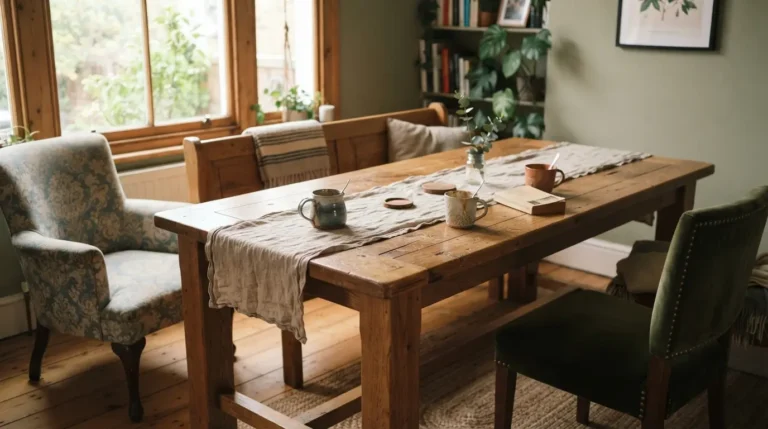

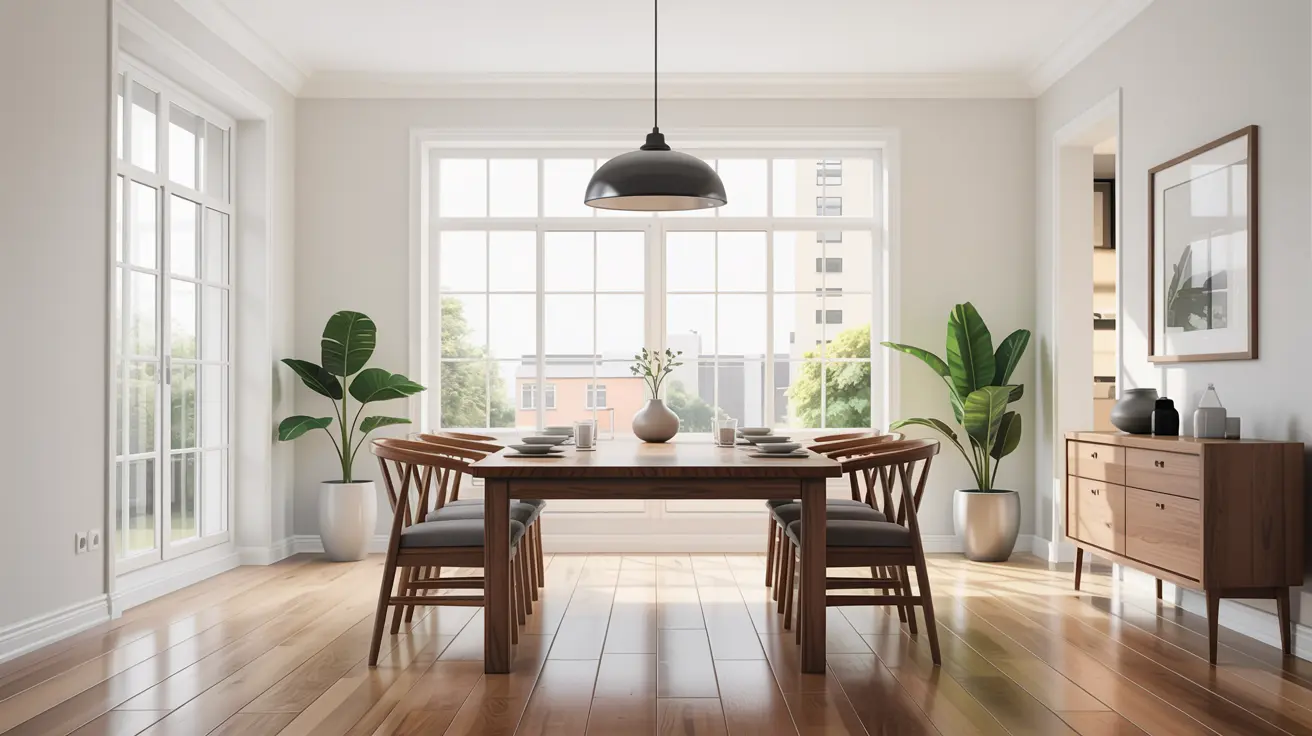
A natural wood dining table should solve daily problems. It should fit your room, seat people without crowding, and handle spills without stress. The best choice comes from three checks: size, build, and finish.
What counts as a natural wood dining table
“Natural wood” can mean solid wood, real wood veneer, or reclaimed boards. Stores often group them together, so you must confirm the construction. Your choice should match how hard the table will be used.
Solid wood vs veneer vs reclaimed wood
Solid wood can be sanded and refinished later, so it handles long ownership well. Veneer can stay flatter over time, but you cannot sand it much. Reclaimed wood has marks and variation, so it suits a lived in look.
Quick pick rule
If you want easy repairs later, choose solid wood. If your room swings hot to cold, a quality veneer top can stay more stable. If you like knots and color change, reclaimed wood fits better.
Start with size so it fits your room
Most table regrets start with size. A table that is too wide blocks walkways. A table that is too long makes chairs feel jammed.
Simple measuring steps
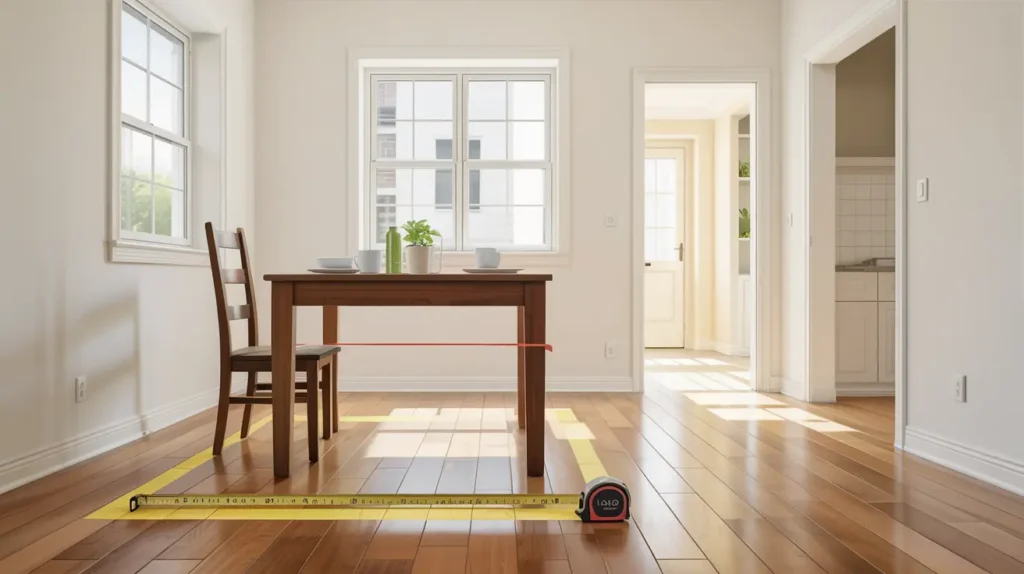
Measure the length and width of the open floor area. Tape the table outline on the floor. Place a chair in the tape area and pull it back to test movement.
Clearance that prevents tight seating
You need space behind chairs for people to stand up. You also need space on traffic paths, especially near doors. If clearance is limited, choose a round table or an extendable leaf.
Seating by length and daily comfort
Seat count is not only about numbers. It is about elbow room and easy entry. If you host often, plan for real spacing, not maximum squeeze.
Sizing and seating table
| Seats | Common table length | Best room fit | Notes that prevent regret |
|---|---|---|---|
| 4 | 48–60 in | small to mid rooms | round tables work well |
| 6 | 72–84 in | mid rooms | check chair pullback space |
| 8 | 90–108 in | large rooms | consider a leaf if space is tight |
| 10 | 108–120 in | very large rooms | base support matters more |
Choose shape and base for knee space
Two tables can be the same size and still feel different. The base decides where knees land and how chairs slide in. This is why people complain about comfort even when the table “fits.”
Rectangular, round, and oval
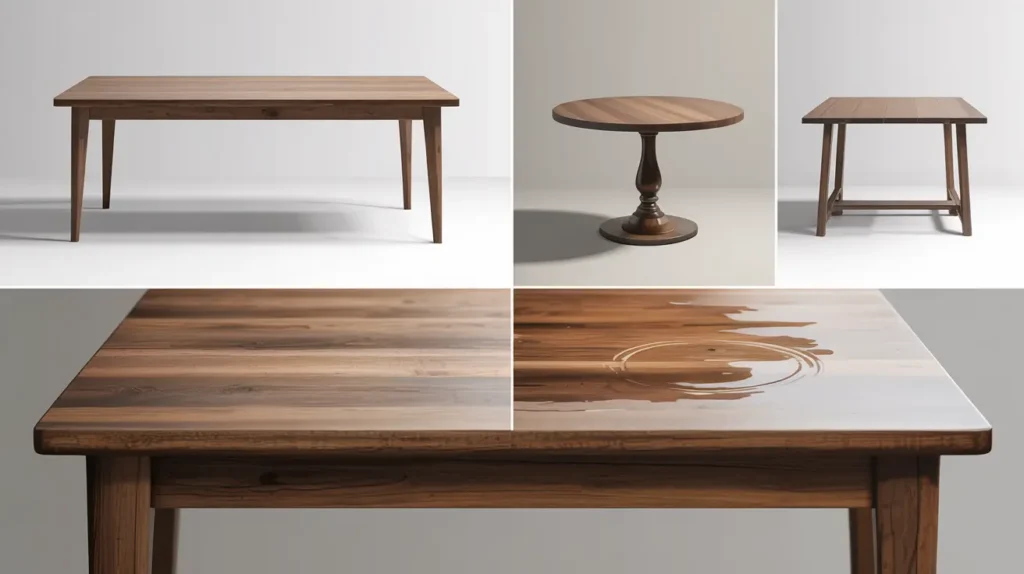
Rectangular works best in long rooms. Round helps tight rooms and keeps conversation balanced. Oval gives a softer look and avoids sharp corners in narrow paths.
Pedestal, trestle, and four legs
Pedestal bases often allow flexible seating because there are no corner legs. Trestle bases can block seats at certain points, so check where the feet land. Four leg tables can feel stable, but leg placement can steal chair width.
Edge profile for families
Rounded edges reduce bumps in small spaces. Sharp corners can be annoying in narrow rooms. If kids run through the area, choose a softer edge.
Pick a wood type that matches your use
Different woods show wear differently. Some hide dents and scratches better. Others show every mark if the finish is thin.
Oak, walnut, ash, and elm in real use
Oak has strong grain and can hide small marks. Walnut can show scratches, but it looks rich with the right finish. Ash often looks light and clean, while elm tends to show active grain.
Grain, knots, and color shift
Knots can add character but may create tiny uneven areas. Sunlight can shift color over time, so rotate decor and use window coverings if the table sits near strong light.
Reclaimed wood expectations
Reclaimed wood often has filled cracks and old marks. It can be very stable when built well. It will not look uniform, so do not expect a perfect surface.
Finish is the protection, not the wood
Most stain complaints come from finish choice. A great wood top can still stain if the finish is weak. Choose finish based on your routine, not the showroom look.
Hardwax oil vs sealed finishes
Hardwax oil feels close to raw wood and can be spot repaired, but it needs fast spill cleanup. Sealed finishes resist water rings and food stains better, so they fit daily meals.
Which finish fits your home
If you eat on the table daily, choose a sealed finish. If you want the natural feel and accept upkeep, choose hardwax oil. If you use hot dishes often, use trivets either way.
Red flags in listings
If a listing says “natural finish” but gives no details, treat it as unknown. Ask for finish type and care instructions. If the seller cannot tell you, the protection is often light.
Live edge vs straight edge
Edge style changes comfort and cleaning. Live edge looks unique, but it can be harder to pair with chairs. Straight edge often feels cleaner and easier to protect.
When live edge causes problems
Live edge can snag sleeves in tight paths. Crumbs can sit in deep texture. If you want clean lines and easy wipe downs, choose straight edge.
If you still want live edge
Choose a stable base and solid support under the top. Use placemats for meals. Keep the edge dry after cleaning.
Quality checks before you buy
A table can look strong and still wobble. Build choices decide stability. These checks help you avoid weak frames and sagging tops.
Joinery and construction
Look for solid joints where legs meet the base. Ask for underside photos if you cannot see support. Avoid tables with thin hardware and weak bracing.
Top thickness and support
Thickness alone does not prevent sag. Long tables need support rails or center braces. If a long table has little underside support, expect movement later.
Wobble test and leg placement
A stable table should not twist when pushed lightly. If legs sit too close to the center, the table can tip or rock. Wide stance legs feel stable but can limit chair placement.
Wood movement and what is normal
Solid wood moves with humidity. Small seasonal gaps can happen and are not always damage. Large splits and raised ridges are not normal and need attention.
Custom vs ready made
Your space decides this choice. Custom helps when you need an exact size. Ready made can work well if specs are clear.
When custom is worth it
Choose custom if your room needs a specific width or length. Choose it if you want a certain base that improves legroom. It also helps if you want matching benches.
Shipping and return reality
Large tables can be hard to return. Damage can happen in transit, so inspect fast. Report issues right away with photos.
Why swatches help
Wood tone changes in different light. Swatches reduce surprise next to your floors and walls. They also help you avoid a stain that looks too orange or too gray.
Care plan that prevents rings, cracks, and dull spots
Care should match the finish. A sealed table needs gentle cleaning and heat protection. An oiled table needs quick spill response and occasional refresh.
Daily cleaning that does not harm the surface
Use a soft cloth with mild soap if needed. Wipe dry after cleaning. Avoid strong sprays that can dull the finish.
Spill response in the first minute
Blot the spill and dry the area. Do not scrub hard into the grain. If the spill is dark, clean right away and dry fully.
Heat and water habits
Use coasters for drinks. Use trivets for hot dishes. Avoid leaving wet items on the surface.
Oiled top refresh timing
If the surface looks dry or patchy, it may need a refresh coat. Follow the maker’s care steps for the product used. Light upkeep beats heavy sanding.
Common problems and fixes
Most issues have simple causes. If you fix them early, you avoid bigger repairs. These are the problems people report most.
Water rings and cloudy marks
Cloudy marks often come from moisture trapped in the finish. Try gentle warmth and time first. If marks stay, the finish may need a refresh or professional help.
Wobble and loose joints
Wobble can come from uneven floors or loose bolts. Add felt pads or levelers if possible. Retighten hardware after two weeks and again every few months.
Scratches, dents, and fading
Small scratches can be improved with a matching repair kit. Dents can sometimes lift on solid wood with gentle steam. Fading often comes from sunlight, so adjust light exposure.
Cracks and gaps
Small gaps can be seasonal in solid wood. Rapid cracks or wide splits are not normal. Check indoor humidity and contact the maker if it worsens.
FAQs
Is a natural wood dining table always solid wood?
No, it can be solid wood, veneer, or reclaimed wood. Always read the material list and ask if it is unclear.
Is veneer a problem for dining use?
Veneer can work well when built right. It stays stable and can cost less. The downside is limited sanding and refinishing.
What size table seats 6 or 8?
Six seats often needs a longer table with good chair spacing. Eight seats needs more length and better clearance at the ends. A leaf can help if space is limited.
What finish is easiest for daily meals?
A sealed finish is usually easiest. It resists water rings and food stains better. It also needs less routine upkeep than oil finishes.
Do live edge tables crack?
They can move like other solid wood tops. Good build support and steady indoor humidity reduce risk.
How do I clean it without damage
Use a soft cloth and mild soap when needed. Dry the surface after wiping. Avoid abrasive pads and harsh cleaners.
Conclusion
Pick size first using room measurements and chair pullback space. Choose a base that keeps knee space open and seating flexible. Match wood species and finish to your daily routine, especially spills and hot dishes. Check underside support and joint strength before buying. Follow simple care habits to avoid rings, wobble, and cracking.