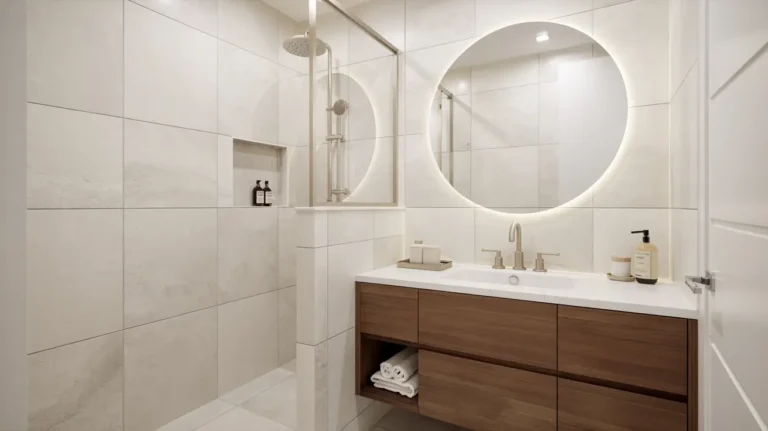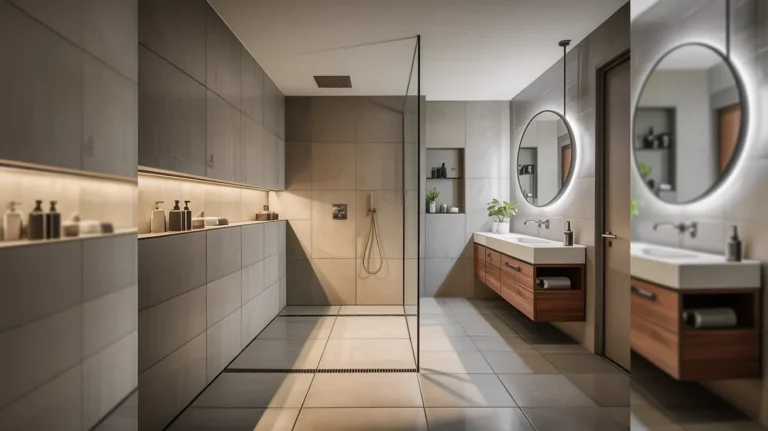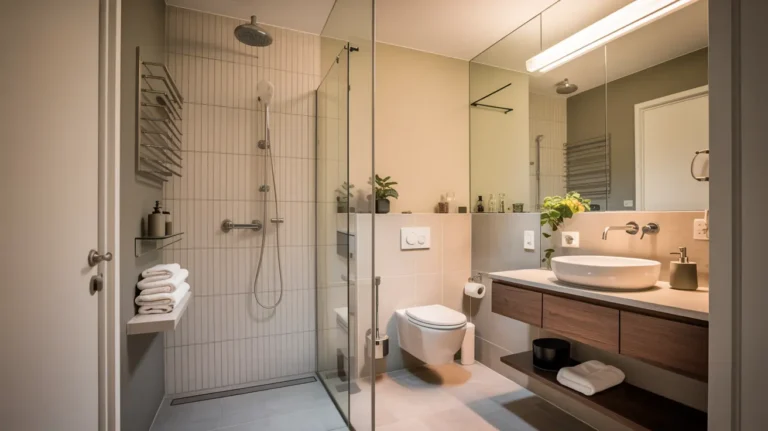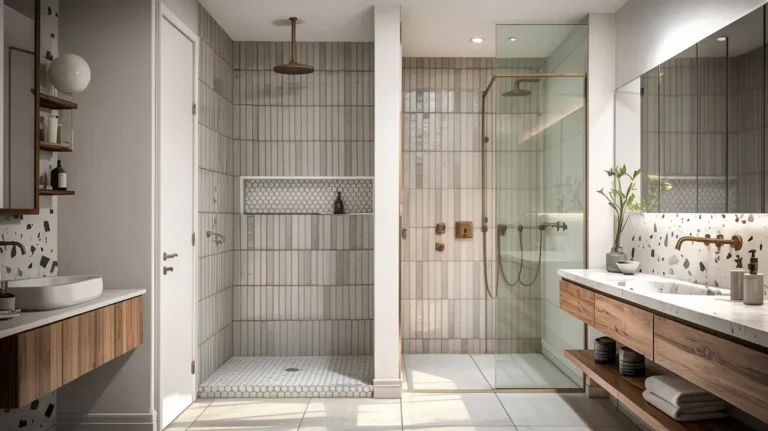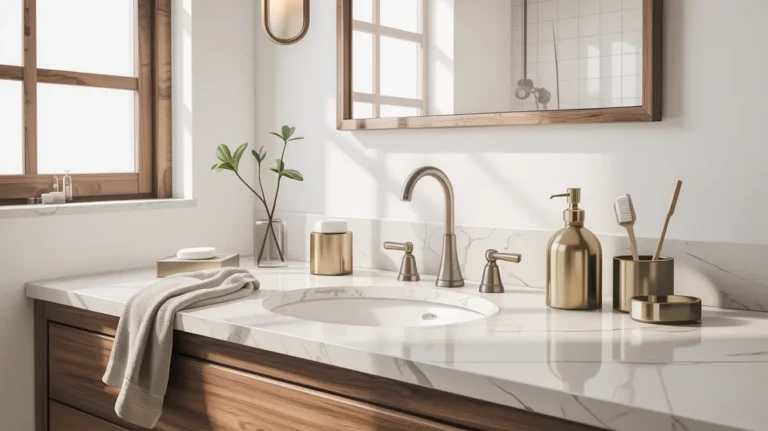

Modern bathroom cabinets solve two problems fast. They hide clutter and protect storage from bathroom moisture. If you pick the wrong type or size, you lose space and deal with swelling, peeling, and messy counters.
What “modern bathroom cabinets” usually means
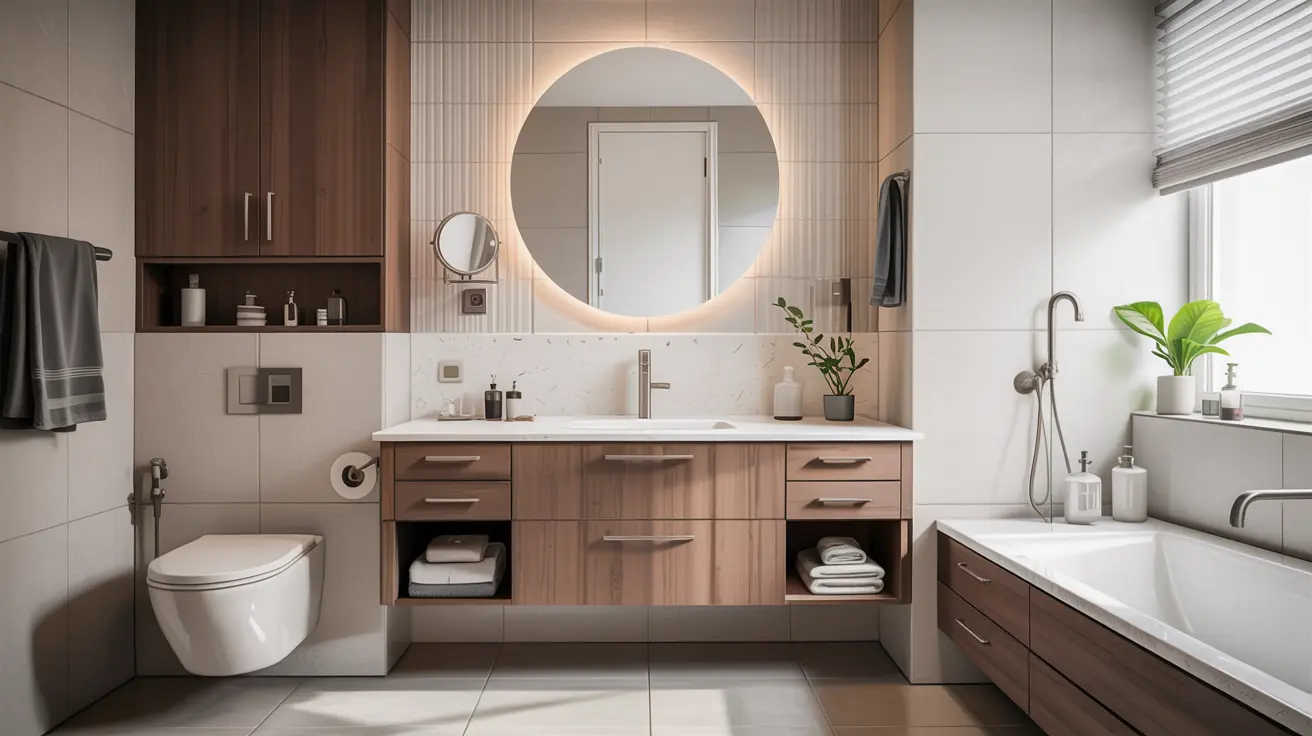
Modern usually means flat fronts, simple lines, and storage that keeps items out of sight. Most people are choosing one of three things. A vanity cabinet under the sink, a tall linen cabinet for towels, or a mirror cabinet for small items.
The three cabinet types you will see
A vanity cabinet supports a sink and hides plumbing. A linen cabinet stores towels, paper goods, and cleaning items. A medicine cabinet stores daily items behind a mirror.
Signs a cabinet will look modern for years
Flat doors work in most bathrooms. Slim pulls look clean and feel easy to use. Wood tones and matte neutrals stay steady in photos and real life.
Bathroom cabinet vs vanity: avoid buying the wrong item
A vanity cabinet is built for a sink and plumbing. A bathroom cabinet may be storage only. Product pages often mix the words, so you must confirm what is included.
What to confirm on the product page
Check if the cabinet comes with a top. Check if a sink is included. Check if plumbing cutouts are ready or need drilling.
When a linen cabinet makes more sense
If towels and bulk items have no home, add a linen cabinet first. It fixes clutter without changing plumbing. It also reduces the need for extra baskets on the floor.
When a medicine cabinet is the missing piece
If counters stay crowded, add mirror storage. It holds small items close to the sink. It also keeps the look clean without more shelves.
Pick the right cabinet in 5 minutes
Use this order to decide. It stops wasted money and bad fits. Start with type, then size, then mounting, then material, then storage.
Step 1: Choose one sink or two
One sink fits small rooms and keeps costs lower. Two sinks help when two people use the bathroom at the same time. If you pick two sinks, confirm you have enough wall width.
Step 2: Choose floating or freestanding
Floating cabinets free up floor space and make cleaning easier. They also need strong wall support. Freestanding cabinets install easier and handle heavy tops with less wall stress.
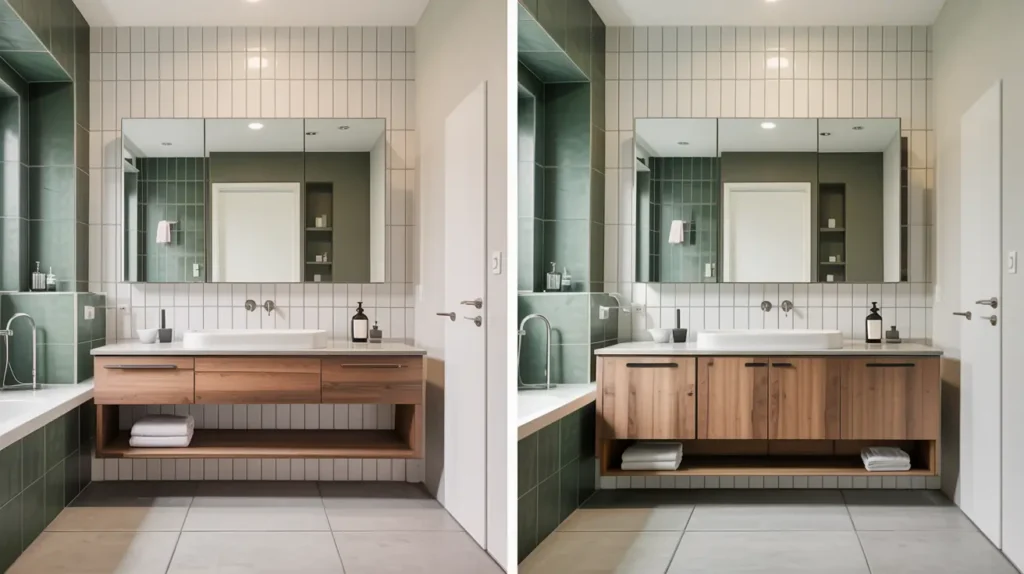
Step 3: Choose drawers or doors based on what you store
Drawers keep daily items easy to find. Doors work better for tall bottles and plumbing space. If you hate bending and digging, choose more drawers.
Sizes that work in real bathrooms
Sizing mistakes cause daily annoyance. A cabinet that is too deep blocks movement. A cabinet that is too small creates counter clutter.
Common widths and where they fit
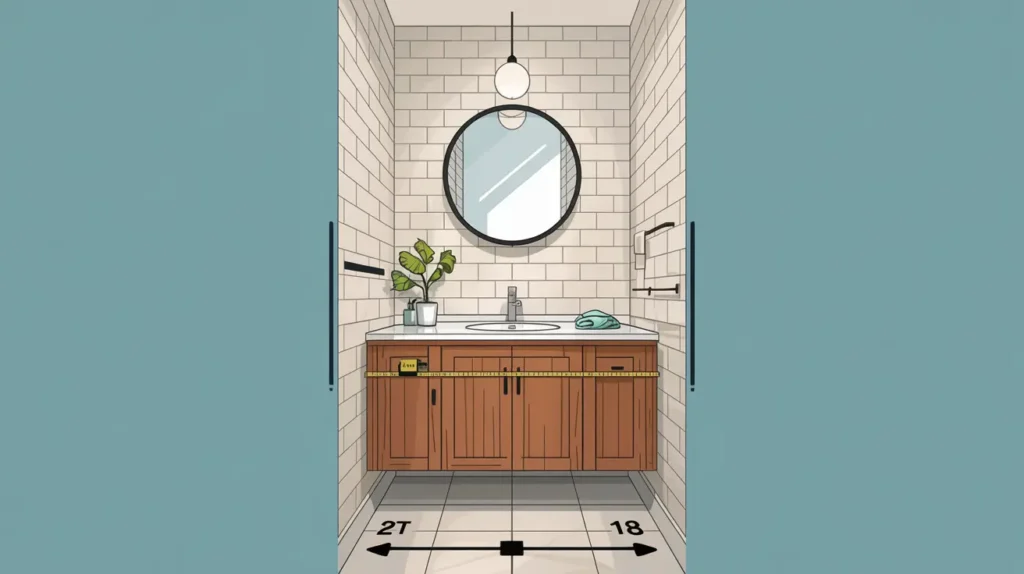
Many vanities come in 24, 30, 36, 48, 60, and 72 inches. Pick width based on wall space and who uses the sink. If you are unsure, measure the open wall and leave space on both sides.
Depth: the number that protects walking space
Depth often lands around 18 to 21 inches. In small bathrooms, a shallow depth can fix tight paths. If you hit your hips on the cabinet now, you need less depth.
Height: avoid daily back strain
Many cabinet heights fall around the low to mid 30s before the countertop. If you are tall, a slightly taller setup can feel better. If kids use the bath, keep height practical.
Quick sizing table
| Bathroom situation | Vanity width | Vanity depth | What works best |
|---|---|---|---|
| Powder room | 18–24 in | 14–18 in | drawers plus one door |
| Small full bath | 24–36 in | 18–21 in | more drawers |
| Shared bath | 48–72 in | 20–22 in | double sinks, drawer stacks |
| Need extra storage | add linen cabinet | 12–18 in | shelves plus doors |
Floating cabinets: benefits and failure points
Floating cabinets can look sharp. They can also fail when the wall is not prepared. Most problems come from poor support, not the cabinet design.
Benefits that matter every day
You can clean the floor without moving items. The room feels more open. Small bathrooms can feel less packed.
Failure points to watch for
Weak anchoring can cause movement. Tile cracks can happen if load is not supported. Heavy stone tops raise the risk if the wall is not reinforced.
Simple checks before buying floating
Locate studs and confirm you can anchor into them. Plan for blocking if the wall is open during remodel. Confirm plumbing lines match the cabinet layout.
Materials that handle bathroom moisture
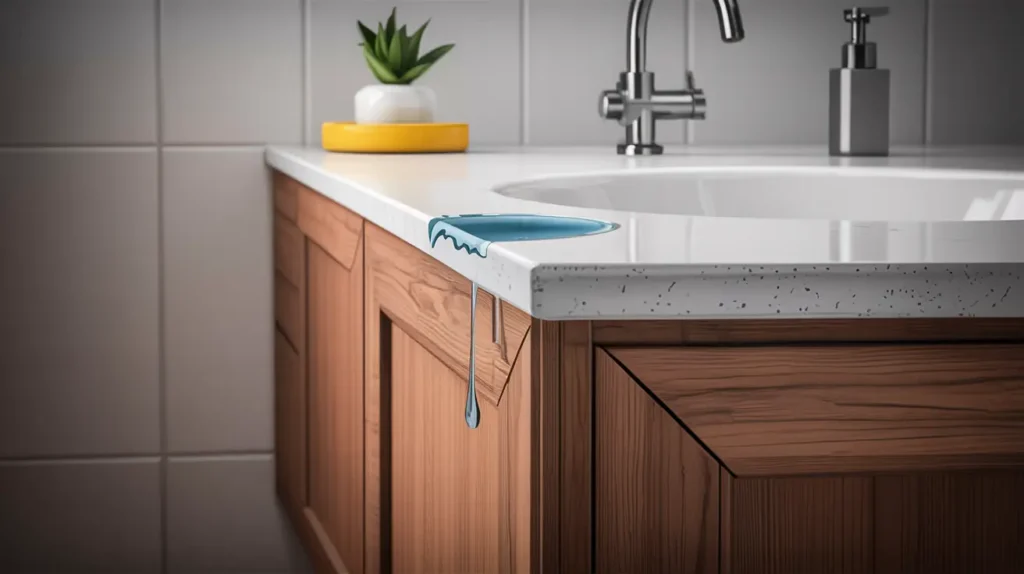
Bathrooms push moisture into cabinet edges and joints. If edges are not sealed, damage starts there. Material choice matters, but finish quality matters too.
Plywood, MDF, and solid wood
Plywood boxes tend to handle moisture better than basic MDF. Solid wood can last, but it needs good sealing. MDF can work in dry bathrooms, but it needs sealed edges and careful cleaning.
Finishes that last longer
Look for smooth, even coating inside and outside. Check if the sink base edges look protected. If the inside feels rough and raw, moisture will win.
Red flags you can spot fast
Raw edges inside the sink base are a risk. Thin back panels can warp. Loose corner joints can fail once water gets in.
Storage features that solve clutter
Modern storage is about function. It keeps daily items off the counter. It also helps you keep categories, not piles.
Drawer layout that works
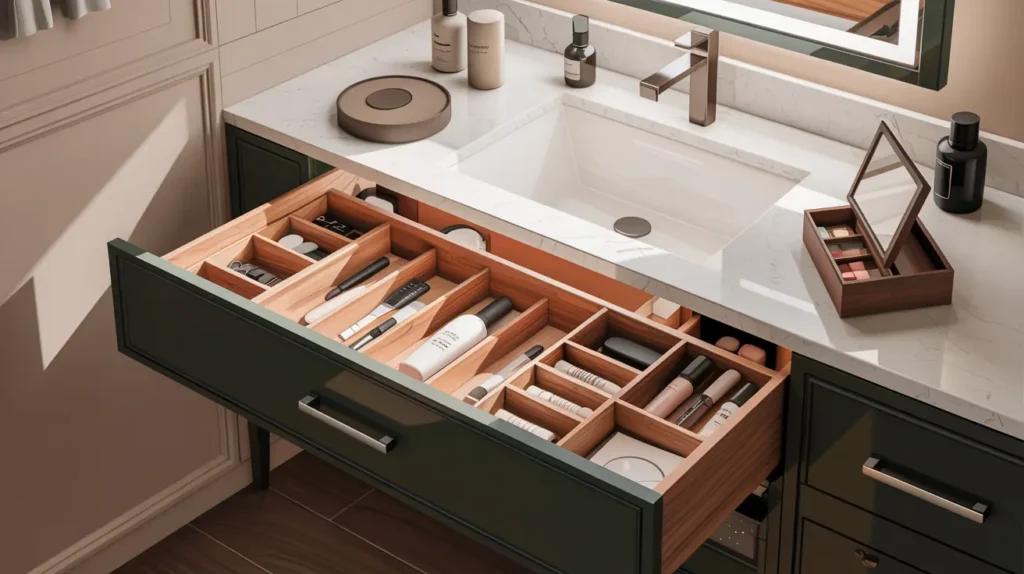
Top drawers fit toothbrush items, skincare, and tools. Deep drawers fit hair tools and bottles. If drawers stop short, you lose useful space.
Upgrades that earn their cost
Full extension drawers help you reach the back. Soft close reduces slams and wear. Dividers keep items from turning into a mixed pile.
Mirror storage that reduces counter mess
A mirror cabinet holds small items close to the sink. It also keeps walls cleaner than open shelves. If your counter is always full, this is a direct fix.
Style choices that do not age fast
Many people regret loud finishes. Choose a look that can handle new towels and paint later. Keep the cabinet simple and let accessories change.
Door fronts that stay steady
Slab and flat panels fit most modern bathrooms. Light texture can add depth without feeling busy. Avoid heavy patterns if your tile already has movement.
Hardware that stays easy to use
Slim pulls are easy to grip and clean. Handleless styles look clean but show fingerprints. If you want less wiping, choose pulls.
Color choices that stay practical
Matte white stays bright and hides water marks better than glossy. Wood tones add warmth and reduce the cold feel of tile. Dark finishes look strong but show dust and spots.
Countertop and sink pairing that prevents regret
If you are buying a vanity cabinet, the top matters. It affects cleaning, splash, and daily comfort. Choose sink style before you finalize faucet choice.
Undermount vs vessel
Undermount sinks wipe clean fast. Vessel sinks can splash more and need the right faucet height. Vessel styles also reduce counter space.
Countertop options with low hassle
Quartz wipes easily and keeps a clean look. Solid surface gives smooth seams. Natural stone can look rich but needs more care.
Faucet checks that stop splash issues
Confirm the spout reaches the center of the bowl. Avoid short reach on wide bowls. Check handle clearance near backsplashes.
Quality checks you can do before purchase
If you skip these checks, problems show up later. A cabinet can look good and still fail early. Use specs and photos like a checklist.
Construction checks
Look for a solid back panel. Look for sturdy box panels with clean joints. Check that the sink base looks protected near edges.
Hardware checks
Drawers should open smooth and feel stable. Hinges should close without bounce. Soft close should feel controlled, not stiff.
Signs the finish work is careful
Coating should look even inside doors. Corners should look sealed, not raw. If photos hide the interior, ask for them.
Budget choices that protect value
Cost is driven by size, materials, and finish work. Custom sizes raise cost fast. You can still get strong value with smart feature choices.
When stock is enough
Stock sizes work when your wall and plumbing are standard. They also ship faster. If you want fewer decisions, stock is simpler.
When semi custom helps
Semi custom helps when you need a better fit. It also helps when you want a specific finish. Use it when a stock cabinet leaves dead space.
Where to spend and where to save
Spend on drawers and slides. Spend on finish quality in wet zones. Save on door style and standard sizing.
Installation and care that prevents damage
Many cabinet problems are avoidable. Water and poor sealing cause most failures. Simple habits keep the finish and joints stable.
Installation mistakes that cause early issues
Skipping leveling can make doors drift. Leaving gaps unsealed lets water reach edges. Poor support on floating units can cause movement.
Cleaning habits that protect finish
Wipe water fast around the sink. Use mild soap and a soft cloth. Avoid harsh cleaners that strip coatings.
Humidity control that protects cabinets
Run the fan during showers and after. Fix leaks quickly, even slow drips. Keep wet towels off cabinet faces.
FAQs
These answers solve common buying problems. Use them before checkout. They can save a return.
What depth feels best in a small bathroom?
A shallow depth can protect walking space. Many small bathrooms do well with a compact depth. Measure your tight path and choose based on that.
What size is common for one sink?
Many one sink setups fit 24 to 36 inches. A 30 or 36 inch option often feels balanced. Your wall space decides the best width.
Are floating cabinets worth it?
They are worth it when the wall can support them. They also work well when you want easy floor cleaning. If the wall is weak, choose freestanding.
Is MDF a bad idea in bathrooms?
It depends on moisture and finish quality. In dry bathrooms with good ventilation, it can hold up. In wet rooms, plywood often reduces risk.
What matters more, material or finish?
Both matter, but edges and sealing decide many failures. A well sealed cabinet lasts longer than a raw edged one. Always inspect sink base areas.
How do I stop clutter around the sink?
Choose more drawers and add mirror storage. Use dividers to separate categories. Avoid open shelves if you do not keep them tidy.
Conclusion
Start by choosing the cabinet type that fixes your storage problem. Size it for your wall space and walking path. Pick moisture safe materials and sealed edges. Choose drawers and good hardware for daily ease. Plan installation details early, especially for floating units.