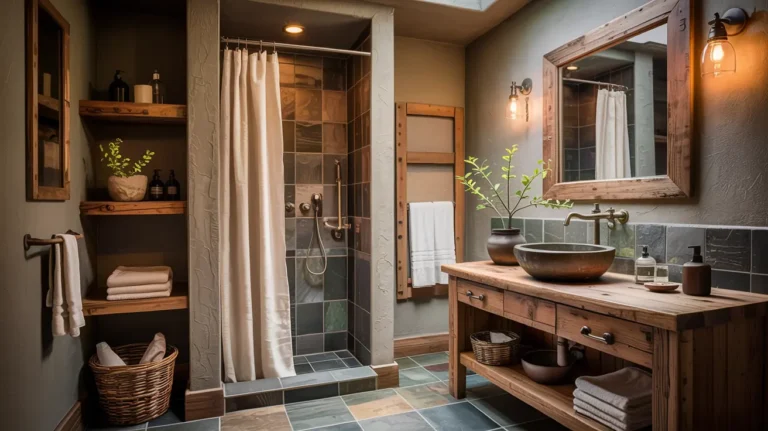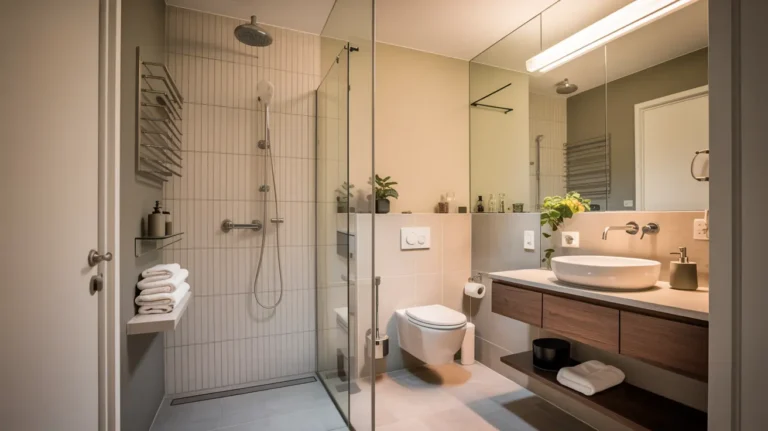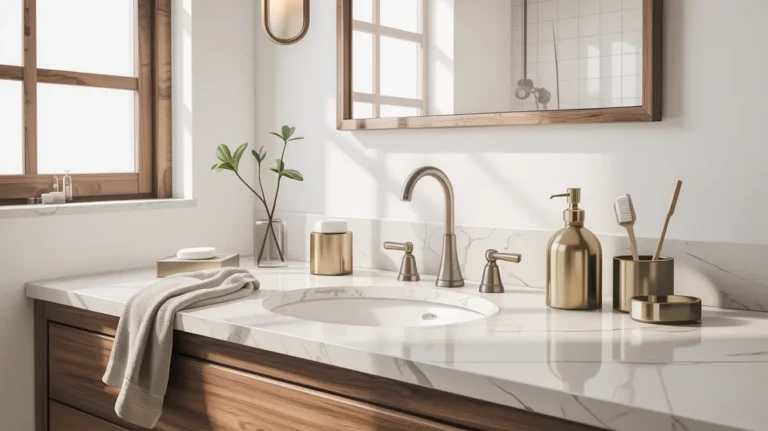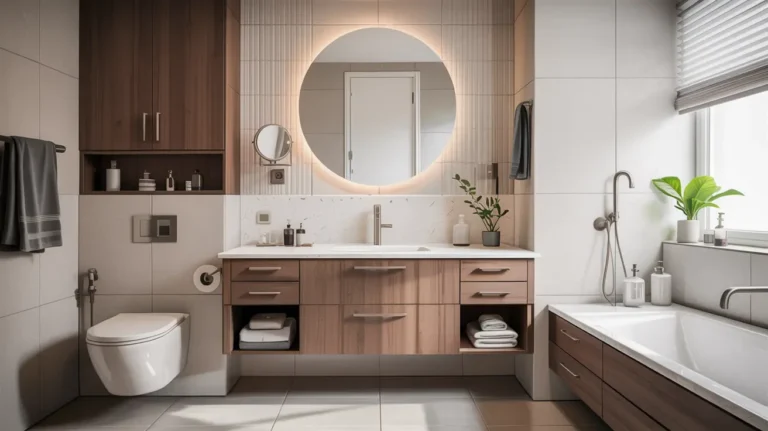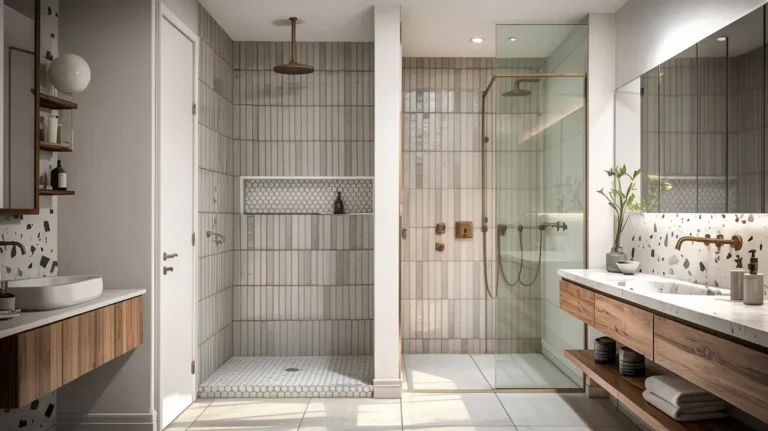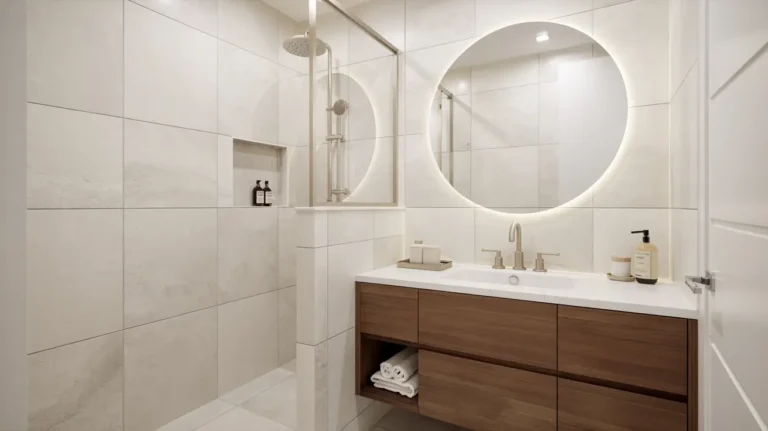

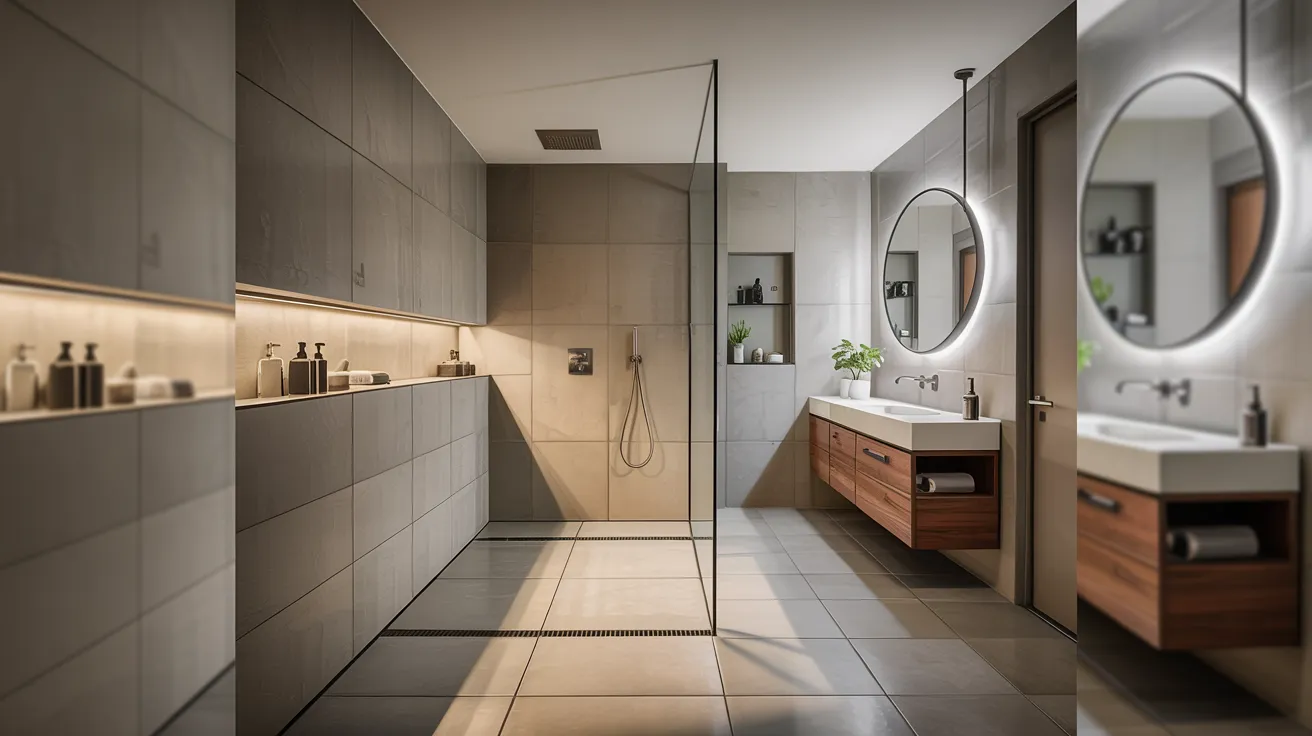
A wet room is a bathroom where the shower area blends into the room, with a waterproof floor and a drain that handles the water. It feels open, clean, and easy to move around in. It can also fail fast if planning is weak. This guide gives you wet room bathroom ideas that look great and stay practical.
What A Wet Room Bathroom Really Is
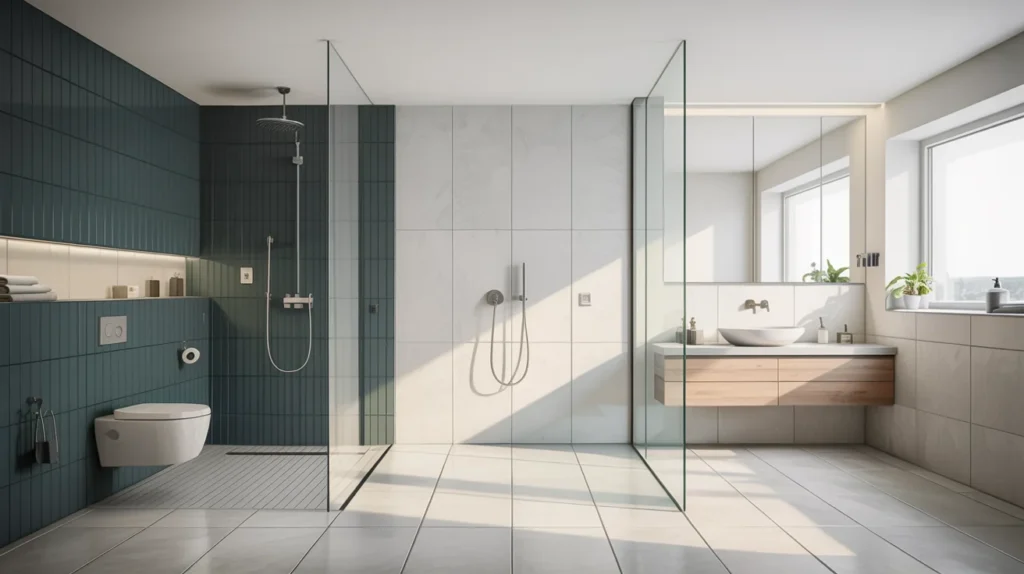
A wet room is not just a shower with no tray. The floor has a slight slope that sends water to a drain. The walls and floor sit on a waterproof system under the tiles. This system stops leaks and damp. Many wet rooms also use a glass screen or half wall to control splash.
Wet Room Vs Shower Room
A shower room often has a tray and clear shower boundaries. A wet room has a level floor and a bigger wet zone. Wet rooms can feel larger, but they need better water control. If you want less risk, a shower room can be easier. If you want a seamless look, a wet room wins.
Why People Choose Wet Rooms
People choose wet rooms for space, style, and comfort. They can make a small bathroom feel wider. They can also feel like a hotel bathroom at home. Some people choose them for step free access, which helps kids and older family members.
When A Wet Room Makes The Most Sense
A wet room works well in a small bathroom where every inch matters. It also works in a main bathroom where you want a clean layout. It can be great for a guest bath, since it looks high end. It is also smart for future proofing, because there is no step to enter.
The Most Important Wet Room Planning Rule
Plan your wet zone and your dry zone first. The wet zone is where water lands. The dry zone is where you keep the toilet and vanity safe from spray. This one choice decides if your wet room feels easy or messy.
Pick The Best Drain Location
Drain placement controls how water moves. A centered drain can work, but it may need careful tiling. A drain closer to the shower area can reduce water travel. The goal is simple. Water should reach the outlet fast, with no pooling.
Make Sure The Floor Has The Right Slope
A wet room floor needs a gentle fall toward the drain. If the slope is too weak, water sits. If it is too steep, it feels awkward to stand on. A good installer plans the gradient before tile goes down.
Waterproofing Is The Part You Cannot Skip
Waterproofing is what makes a wet room safe. Tiles and grout are not enough on their own. Water can pass through tiny gaps over time. A proper tanking system seals the room under the surface.
What Tanking Usually Includes
Most wet rooms use waterproof boards or backer boards on walls. Corners get jointing tape and careful sealing. Then a liquid membrane or sheet membrane goes on. The system must cover the floor and rise up the walls. This is what stops hidden leaks.
Common Waterproofing Mistakes
Many wet rooms fail because people rush this step. Some skip corners and joins. Some use the wrong sealant. Some tile too soon before layers cure. If you want a wet room that lasts, treat waterproofing like the foundation.
Wet Room Bathroom Ideas That Look Great And Stay Practical
A good wet room is not only about looks. It is about how you use it daily. These ideas mix style with real life function.
Use A Frameless Glass Screen For A Clean Look
A frameless screen keeps the open feel but blocks spray. It protects your vanity area and toilet zone. It also keeps towels drier. If you hate clutter, this is one of the best upgrades.
Choose A Fixed Panel Or Folding Screen
A fixed panel looks more modern and is easy to clean. A folding screen can help in very small rooms. It can also help if you need more space to move. Pick based on your room width and door swing.
Build A Half Wall To Add Privacy And Control Splash
A half wall can separate the shower area without closing the room. It can hide plumbing. It can also hold a niche or a ledge for bottles. This is a great option if you want a stronger boundary than glass alone.
Go For Large Format Tiles To Reduce Grout Lines
Large tiles create a calmer look. They also mean fewer grout joints. That can make cleaning easier. It can also reduce places where grime builds up. Use porcelain if you want a strong, low care finish.
Use Slip Resistant Floor Tiles
Wet room floors must handle water safely. Pick tiles with texture, not a glossy finish. A floor that looks smooth can be risky when soapy. Safety can still look stylish with the right tile choice.
Try A Single Floor Finish To Make The Room Feel Bigger
Using the same flooring across the room can stretch the space visually. It reduces harsh lines. It also gives a modern spa look. If you want contrast, use it on the wall instead.
Create A Feature Wall In The Shower Zone
A feature wall adds style without making the room busy. Use a patterned tile, a darker tone, or a textured finish. Keep the other walls simple so the room feels calm. This also helps you avoid trend overload.
Add A Built In Niche To Remove Clutter
A wall niche keeps bottles off the floor. It makes the room feel tidy. It also helps cleaning. Place it at a comfortable height where you can reach easily.
Use Two Niches If You Share The Shower
If two people use the space, one niche gets crowded fast. Two niches can keep routines smooth. It is a small change that feels big daily.
Use A Wall Hung Vanity For A Light And Airy Feel
A floating vanity makes the floor look larger. It also helps you clean under it. It suits modern wet rooms and small bathrooms. Choose drawers if you want hidden storage.
Add Warmth With Wood Tones And Soft Lighting
Wet rooms can feel cold if everything is tile. Add warmth with oak tones, soft beige tiles, or brass finishes. Use warm lighting near the mirror. Use brighter lighting in the shower zone for safety.
Install Underfloor Heating If You Can
Underfloor heating makes a wet room feel comfortable. It also helps water dry faster. This can reduce damp smells and cold feet. It is not required, but it is one of the most loved upgrades.
Small Wet Room Bathroom Ideas That Solve Real Problems
Small wet rooms can look amazing, but they need tight planning. The goal is to stop splash and keep storage smart.
Use A Corner Shower Zone
A corner wet zone can limit spray. It can also keep the center of the room open. Pair it with a glass panel to protect the vanity.
Choose A Compact Wall Mounted Toilet
A wall mounted toilet looks cleaner. It also frees floor space. That makes the room feel larger. It can also make cleaning easier.
Use A Sliding Or Pocket Door If Possible
A swinging door can steal space. A pocket door can change the whole layout. It can make room for storage or a wider shower zone. If you cannot change the door, use slim fixtures.
Wet Room Bathroom Ideas For A Luxury Look
Luxury wet rooms feel calm, not crowded. They use fewer materials, but better ones. They also focus on comfort details.
Add A Rainfall Shower And A Handheld Head
A rainfall head feels relaxing. A handheld head helps with rinsing and cleaning. Together they make the shower easier for all ages. It also feels more premium.
Use Minimal Hardware And Clean Lines
Choose simple taps and a clean shower valve. Avoid too many finishes. One metal finish across the room looks high end. Keep accessories limited to what you use.
Add A Heated Towel Rail
A towel rail keeps towels warm and dry. It also helps manage humidity. Place it near the shower exit. This keeps daily routines smooth.
Common Wet Room Problems And How To Fix Them
Wet rooms look simple, but small mistakes cause big stress. Here are the most common issues people face and the best ways to prevent them.
Problem One Water Spreads Everywhere
This happens when there is no splash control. It can also happen when the wet zone is too large. Fix it with a glass screen or half wall. Keep the shower head aimed away from the door. Place the drain where water collects.
Problem Two The Floor Stays Wet For Too Long
This is often a ventilation problem. It can also be a heating problem. Use a strong extractor fan. Open a window when possible. Underfloor heating can help drying too. Use a squeegee after showers if you want faster drying.
Problem Three Slippery Floors
This is a tile choice issue. Glossy tiles can look nice but feel unsafe. Choose textured tiles for the floor. Keep mats outside the wet zone only. Do not place mats where they stay wet.
Problem Four Bad Smells Or Mould
This usually comes from trapped moisture and weak airflow. Good ventilation matters more than people think. Clean grout lines often. Dry the room after heavy use. Make sure sealant lines stay intact.
Problem Five Leaks And Damp Patches
Leaks often come from poor tanking or weak corners. Tiles alone cannot stop water. The fix is doing waterproofing correctly from day one. If you see damp patches, call a professional early. Waiting makes repairs bigger and costlier.
How Much Does A Wet Room Bathroom Cost
Wet room cost depends on size, tile choice, and labour. Waterproofing, drainage, and tiling take time and skill. A simple wet room can cost less with standard tiles and a basic screen. A luxury wet room costs more due to premium finishes and extra features.
What Usually Increases The Price
Large format tiles can cost more to install. Fancy finishes can raise the budget fast. Moving plumbing also adds cost. Underfloor heating adds comfort but also adds work.
Can You Build A Wet Room Upstairs
Yes, but it needs careful planning. Upstairs wet rooms need strong waterproofing and correct drainage. The floor structure matters. This is not a place to cut corners. If you want peace of mind, use an experienced installer.
Wet Room Bathroom Maintenance Tips
Wet rooms are easy to maintain when set up right. Small habits keep them looking new.
Simple Cleaning That Works
Wipe the screen and tiles after use. Clean grout lines before they darken. Use a mild cleaner, not harsh acid products. Keep the drain clear of hair. These small steps stop most long term problems.
Wet Room Bathroom FAQs
Do Wet Rooms Work In Small Bathrooms
Yes, they can work very well. They can make the room feel more open. You must plan splash control and storage. A glass panel often makes the biggest difference.
Do You Need A Shower Screen In A Wet Room
Not always, but most homes benefit from one. It keeps the dry zone drier. It also reduces daily mess. A single fixed panel is often enough.
What Is The Best Tile For A Wet Room Floor
Choose a tile with texture and good grip. Porcelain is a strong choice. Avoid glossy finishes on the floor. Safety should come first.
Is A Wet Room Easy To Clean
It can be, if you reduce grout lines and add a niche. A frameless screen is easier to wipe. Good drainage helps too. Poor drainage makes cleaning harder.
Are Wet Rooms Good For Accessibility
Yes, they can be very accessible. Step free entry helps many people. Add a handheld shower head and a stable screen. Keep controls easy to reach.
Final Thoughts
Wet rooms look modern and feel open. They can also be practical with the right planning. Focus on waterproofing, drainage, and splash control first. Then choose tiles, screens, and features that fit your lifestyle. Do it right once, and you will love it every day.