
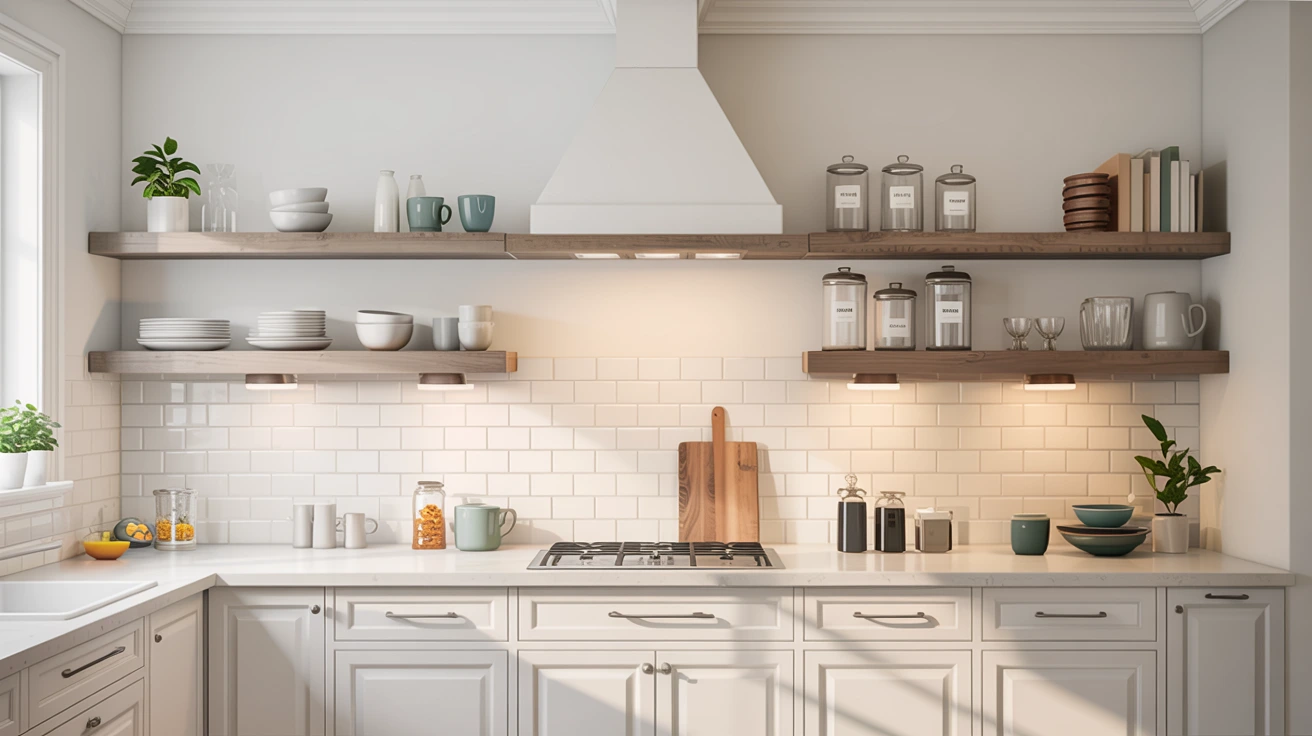
Floating shelves in kitchen can make a kitchen feel open. They can also make it easier to grab daily items. The secret is planning first. When shelves are placed well, they look calm. When they are random, they look messy fast.
Why People Add Floating Shelves In A Kitchen
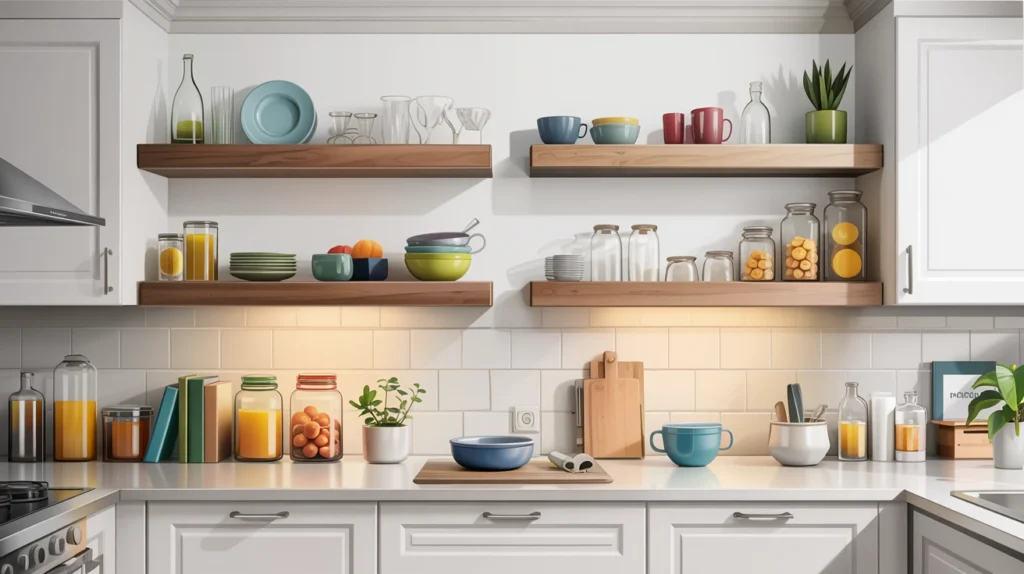
Floating shelves break up heavy upper cabinets. They give the eye a place to rest. They also let you show a pretty backsplash. Some people like shelves because they cook often. Others like them for styling.
Shelves are not for everyone. If you hate visual clutter, you need a simple system. If you love quick access, shelves can be great.
Floating Shelves Vs Upper Cabinets
Both can work in the same kitchen. You do not need to choose one only.
When floating shelves are better
Shelves are great for items you use every day. Plates, bowls, mugs, and spices work well. Shelves also help small kitchens feel less boxed in.
When cabinets are better
Cabinets hide mess. They protect items from dust and grease. If your kitchen gets oily near the stove, cabinets are easier to keep clean.
The best mix for most homes
Many kitchens work best with both. Keep cabinets for food and clutter. Use shelves for daily dishes and a few decor pieces. This mix feels practical and still looks light.
Best Places To Put Floating Shelves
Placement matters more than style. A good spot makes shelves useful. A bad spot makes them annoying.
Above the sink
This is a popular spot because it is central. It also keeps shelves away from heavy grease. Store glasses and bowls here. Keep it simple so it stays neat.
Beside the range hood
Shelves on both sides of a hood can look balanced. Use them for oils, spices, and everyday plates. If you cook a lot, wipe them often. You can also add a small rail to stop items from sliding.
Between cabinets
This is a smart way to “open up” a wall. It keeps the kitchen looking custom. Use two shelves for symmetry. Place items that match the cabinet style.
Over a coffee station
A coffee area is perfect for shelves. Store mugs, jars, and coffee tools. It keeps everything in one zone. It also looks great in photos.
Across a window
This can look amazing in bright kitchens. Keep shelves shallow so you do not block light. Use glasses, small plants, or light decor. Avoid heavy stacks here.
Shelf Height, Spacing, And Depth That Feel Right
Most shelf problems come from wrong spacing. A little planning fixes it.
Height from the counter
Leave enough space for your hands and items. Many kitchens feel good with about 16 to 18 inches from the counter to the first shelf. If you store tall canisters, go higher.
Space between shelves
For two shelves, a common range is about 11 to 13 inches between them. This fits plates and bowls well. If you want cookbooks, leave more space.
Shelf depth
Too deep can feel bulky. Too shallow can feel useless. Many people like a depth around 10 to 12 inches. If your kitchen is small, go closer to 8 to 10 inches.
Materials And Finishes That Match Any Kitchen
Choose a finish that supports the room. Shelves should not fight the cabinets.
Natural wood shelves
Wood adds warmth. It looks great with white cabinets. It also works with black cabinets. Oak feels light. Walnut feels rich. If your kitchen is cold, wood helps a lot.
White shelves
White shelves can disappear into white walls. That makes the kitchen feel bigger. This look works best when you keep styling simple.
Black shelves
Black shelves add contrast. They look sharp in modern kitchens. They also work in farmhouse kitchens with black hardware. Keep the rest calm so black does not feel heavy.
Stone or marble shelves
Stone shelves look high end. They work well in luxury kitchens. They can feel cold in some homes. Pair them with warm wood and soft lighting.
Brackets, Strength, And Safety
Good shelves are not only pretty. They need to hold weight.
Hidden brackets and strong mounting
Floating shelves often use hidden brackets. The wall must hold the load. Mount shelves into studs when possible. If you use wall anchors, use the correct type for your wall.
Think about what you will store
Plates and bowls get heavy fast. If you want heavy stacks, choose thicker shelves and strong support. If you only want decor, you can go lighter.
Keep shelves safe near heat
Near a stove, heat and grease matter. Avoid placing fragile items too close. Keep shelves higher if needed. Wipe shelves often.
What To Put On Kitchen Floating Shelves
This is where many people get stuck. The fix is to keep it simple and repeat a few items.
Best daily-use items
Plates, bowls, mugs, and glasses are perfect. Spices also work well in matching jars. Keep the most used items on the lower shelf.
Pretty storage that still works
Use labeled canisters for flour, sugar, tea, or pasta. Use a small basket for napkins. Use a jar for utensils if your counter is tight.
Decor that does not look cluttered
Add one plant. Add one small piece of art. Add a simple vase. Keep decor in small amounts. Empty space is part of the design.
Simple Shelf Styling Rules That Always Look Good
You do not need a perfect setup. You need a few rules.
Use a limited color set
Choose two or three colors. Keep most items in that range. White dishes and clear glass work in any kitchen.
Mix height and shape
Add a tall item like a cutting board. Add a medium stack like bowls. Add a small item like a jar. This creates balance.
Leave breathing space
Do not fill every inch. Open space makes shelves feel clean. It also makes the kitchen feel bigger.
Lighting Ideas That Make Shelves Look Better
Lighting adds a finished look. It also helps at night.
Under-shelf lighting
Small LED strips can light the counter. They also highlight the backsplash. Warm light works best for kitchens.
Spot lights and puck lights
Puck lights can work under a shelf. They are easy in some setups. Keep the light warm, not blue.
Common Problems And Easy Fixes
Floating shelves can look amazing. They can also cause stress if you do not plan.
Shelves look dusty
Dust is normal on open shelves. Wipe them weekly. Keep only the items you use often. Less stuff means less cleaning.
Shelves look messy
This happens when there are too many items. Remove half. Use matching dishes. Keep jars the same style. Group items in small sets.
Shelves feel too small
This often comes from shallow depth. If you need dishes, choose deeper shelves. If you need decor only, shallow is fine.
Shelves sag or feel weak
This is usually a mounting issue. Use stronger brackets. Mount into studs. Reduce the load if needed.
Floating Shelves Ideas By Kitchen Style
You can make shelves work with almost any look.
Modern kitchens
Use clean lines. Use black or white shelves. Keep decor minimal. Use matching jars and simple glassware.
Farmhouse kitchens
Wood shelves work best here. Add a simple rail under the shelf if you like hooks. Use white dishes and a few baskets.
Small kitchens
Use fewer shelves, not more. Use one long shelf or two short ones. Keep shelves shallow. Keep items light and simple.
Kitchens with bold backsplashes
Let the tile shine. Use simple shelves and minimal decor. Choose clear glass and plain dishes so the wall stays the star.
FAQ
Are floating shelves a good idea in a kitchen?
Yes, if you keep them simple and useful. They work best for daily items. They are not ideal if you hate visible storage.
Do floating shelves get greasy?
They can if they are near the stove. Place them away from heavy cooking zones. Wipe them often if they are near the cooker.
How many floating shelves should I use?
Most kitchens look best with two shelves in one zone. Too many shelves can feel busy.
What is the best wood for kitchen shelves?
Oak and walnut are popular choices. Oak feels lighter. Walnut feels deeper. Choose a finish that matches your cabinets.
Conclusion
Floating shelves can make a kitchen feel open and stylish. They can also be practical when planned well. Pick the best placement first. Choose the right size and strong mounting. Keep styling simple with daily items and a little decor. With these steps, your shelves will look clean and work every day.