
Most small bathrooms ideas are not uncomfortable because of their size. They feel bad because of the choices made inside them. One bulky vanity, one poor lighting decision, or one dark surface can turn a usable space into a daily annoyance. People blame square footage, but the real issue is almost always planning.
If you live with a small bathroom, you already know this feeling. You bump into things. The mirror fogs up too fast. Storage never feels enough. These problems repeat every morning, and over time they become frustrating. A small bathroom should work harder than a large one, not fight against you.
Why Small Bathrooms Go Wrong So Often
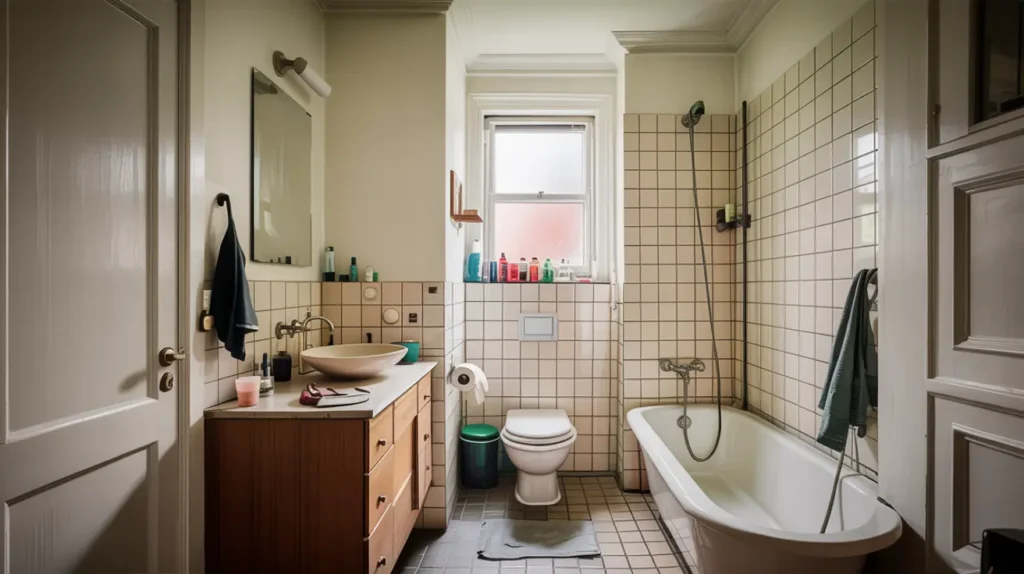
Many small bathrooms were never designed for real routines. They were built to fit fixtures, not people. A vanity that looked fine in a showroom suddenly eats half the room. A bathtub feels luxurious at first, then becomes an obstacle you walk around every day.
Lighting is another common failure. One ceiling light leaves corners dark and shadows harsh. Add dark tiles to that, and the room starts closing in. Storage gets added later, usually wherever it fits, not where it works. This is how clutter takes over.
Layout Choices That Change Everything
The layout sets the tone for the entire bathroom. When movement feels restricted, the room always feels smaller than it is. One of the biggest improvements comes from removing a bathtub and installing a walk-in shower. In real homes, tubs often go unused. They take space and limit flexibility.
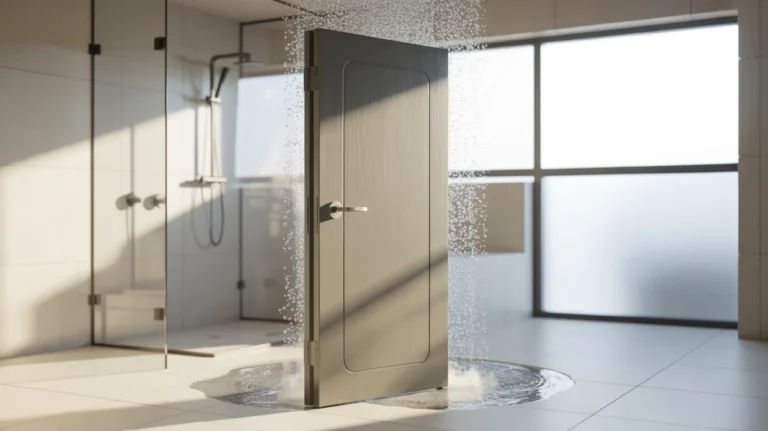
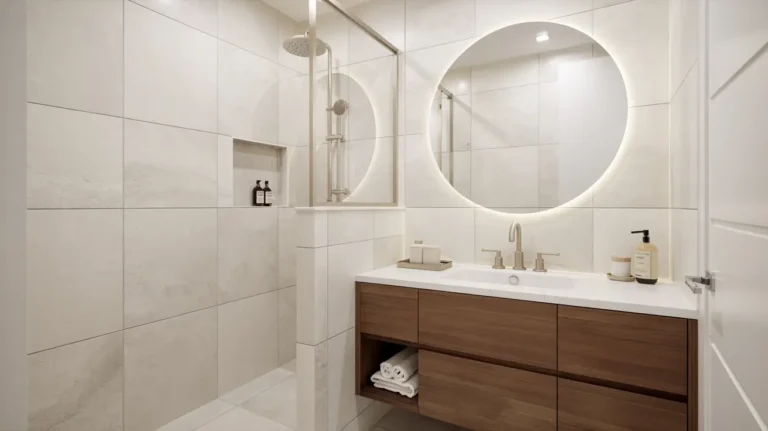
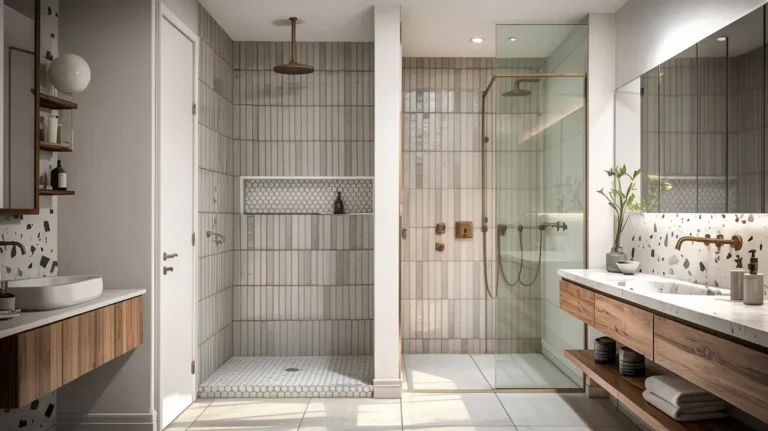
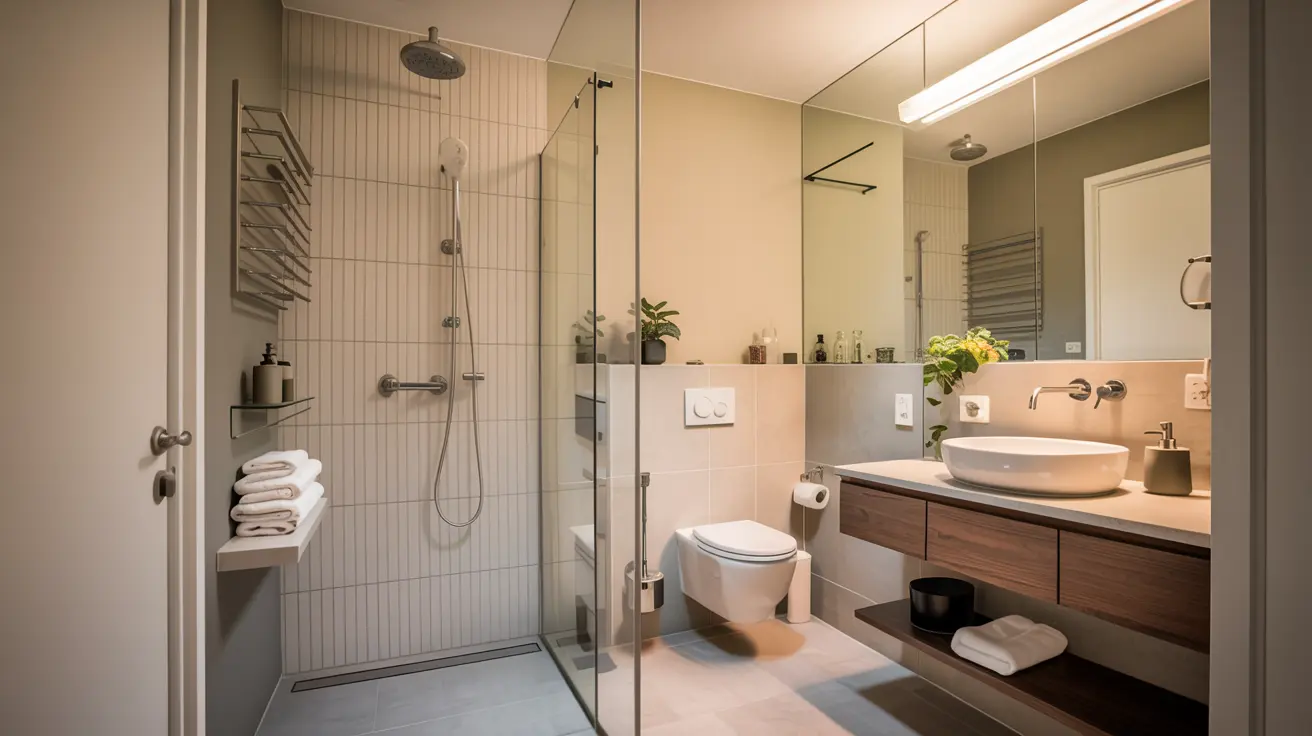
A walk-in shower opens the room immediately. Clear glass panels make a noticeable difference. Solid walls or thick frames cut the room in half visually. Glass keeps the space connected and lets light move freely.
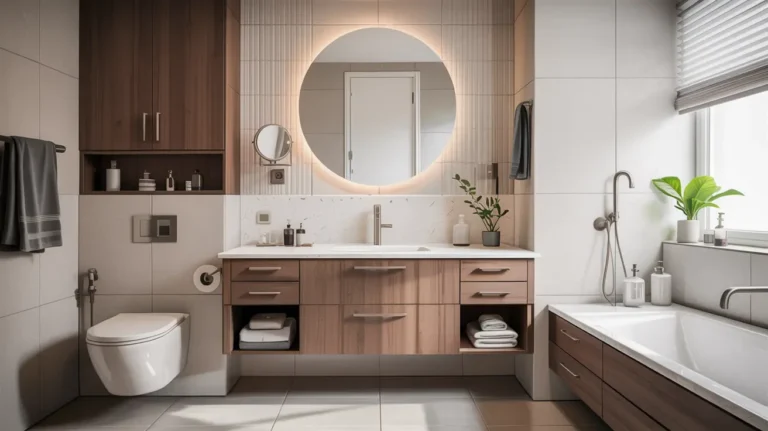
Wall-mounted toilets and floating vanities also matter more than people expect. When fixtures touch the floor, they anchor the space visually. Lifting them creates breathing room. The floor feels wider. Cleaning becomes easier. These small gains add up quickly.
Doors cause more problems than most homeowners realize. A swing door steals space every time it opens. In tight bathrooms, this can block access to the sink or shower. Sliding doors or pocket doors remove that issue completely.
Storage That Works Without Taking Over
Storage is where small bathrooms usually fail last and hardest. When there is nowhere to put daily items, clutter spreads fast. The solution is not adding more cabinets. It is choosing better ones.
Vertical storage helps because it uses space that often goes ignored. Tall cabinets pull attention upward and make the room feel taller. Open shelves can work, but only when kept simple. Overloaded shelves create the same problem as cluttered counters.
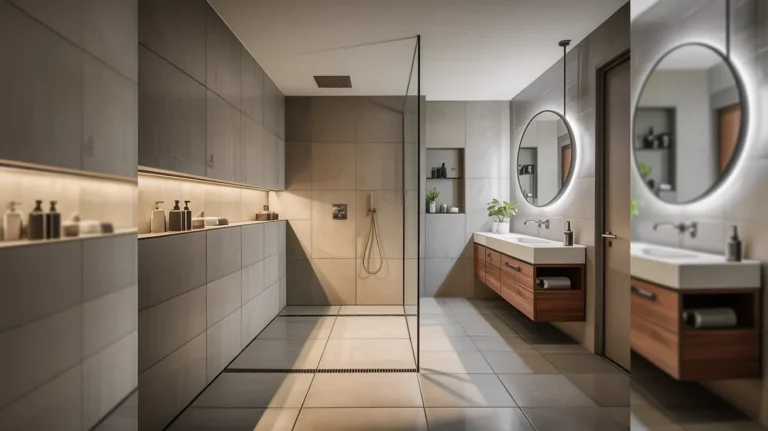
Recessed wall niches solve a problem most people do not notice at first. They store items without sticking out into the room. Inside showers, they replace hanging baskets. Near sinks, they reduce countertop mess.
Mirrored cabinets deserve more credit than they get. They hide everyday clutter and reflect light at the same time. In small bathrooms, that combination is powerful.
Color Choices That Affect How the Room Feels
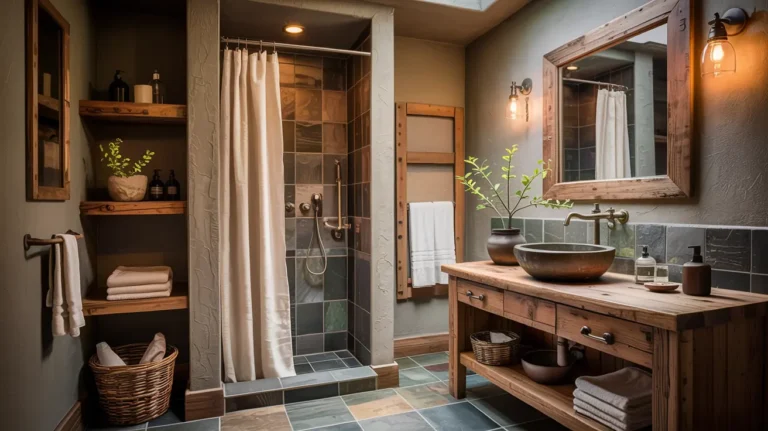
Color mistakes are common in small bathrooms. Dark colors look dramatic online, but they often fail in real spaces. Without strong natural light, dark walls and floors absorb light and shrink the room visually.
Light colors perform better in daily use. White reflects light and keeps the room open. Soft gray and warm beige add depth without heaviness. Pale tones feel calm and age better over time.
Too many colors create visual noise. One main color with small accents keeps the room balanced. This makes the bathroom easier to live with, not just easier to photograph.
Tile Decisions That Matter Long Term
Tile choice shapes how the space feels more than people realize. Small tiles with heavy grout lines break the room into pieces. This makes the space feel busy and tight.
Large format tiles reduce visual breaks. The surface feels smoother and wider. Vertical tile layouts guide the eye upward and help low ceilings feel taller. This simple choice changes perception without changing size.
Glossy tiles reflect light and brighten corners. They work best when balanced with softer finishes to avoid glare.
Lighting That Fixes More Than You Expect
Lighting problems make small bathrooms feel worse than they are. One overhead light rarely does enough. Shadows form where you need light most.
Layered lighting changes the experience completely. Ceiling lights provide general brightness. Lighting near mirrors supports daily routines. Soft accent lighting adds comfort and depth.
Backlit mirrors are practical, not just decorative. They reduce harsh shadows and create even light across the face. This improves both function and comfort.
Fixtures That Fit Real Life
Fixture size matters. Oversized vanities look impressive at first, then dominate the room. Compact vanities work better because they leave space to move.
Drawers are often more useful than deep cabinets. They keep items accessible without digging. Shallow sinks reduce bulk and maintain balance. In very tight layouts, corner sinks solve problems standard sinks cannot.
Design Styles That Actually Work in Small Bathrooms
Minimalist bathrooms work because they remove excess. Fewer elements mean less visual noise. Scandinavian styles add warmth through light colors and natural textures. This keeps the space comfortable without clutter.
Modern designs rely on floating elements and simple finishes. These features support better layouts and easier movement.
Mistakes That Make Small Bathrooms Worse
Some mistakes repeat again and again. Fixtures that are too large block movement. Dark floors without enough lighting shrink the space. Too many textures compete for attention. Bulky storage units overwhelm the room.
What to Think About Before Renovating
Renovation decisions should start with honesty. Review plumbing early, since moving pipes increases cost. Ventilation matters more in small bathrooms and should never be skipped. Storage needs should be planned before choosing fixtures.
Final Thoughts From Real Use
A small bathroom does not need to feel like a compromise. When layout, lighting, and storage are chosen with daily use in mind, the space becomes easier to live with. Good design does not shout. It works quietly, every morning, without frustration.