
Many people see the lowest fare on a cruise site and feel excited. Then they notice the words interior room or inside cabin and worry about a small dark box in the middle of the ship with no window and no view. The truth is more balanced. An interior cruise room guide can be a smart choice when you understand what you get and what you give up. Major cruise lines describe these rooms as standard cabins without windows that still include a private bathroom, bed, storage and daily service. This guide explains size, comfort, pros, cons and real tips so you can decide if this cabin type fits you and learn how to choose a good one.
What An Interior Cruise Room Actually Is
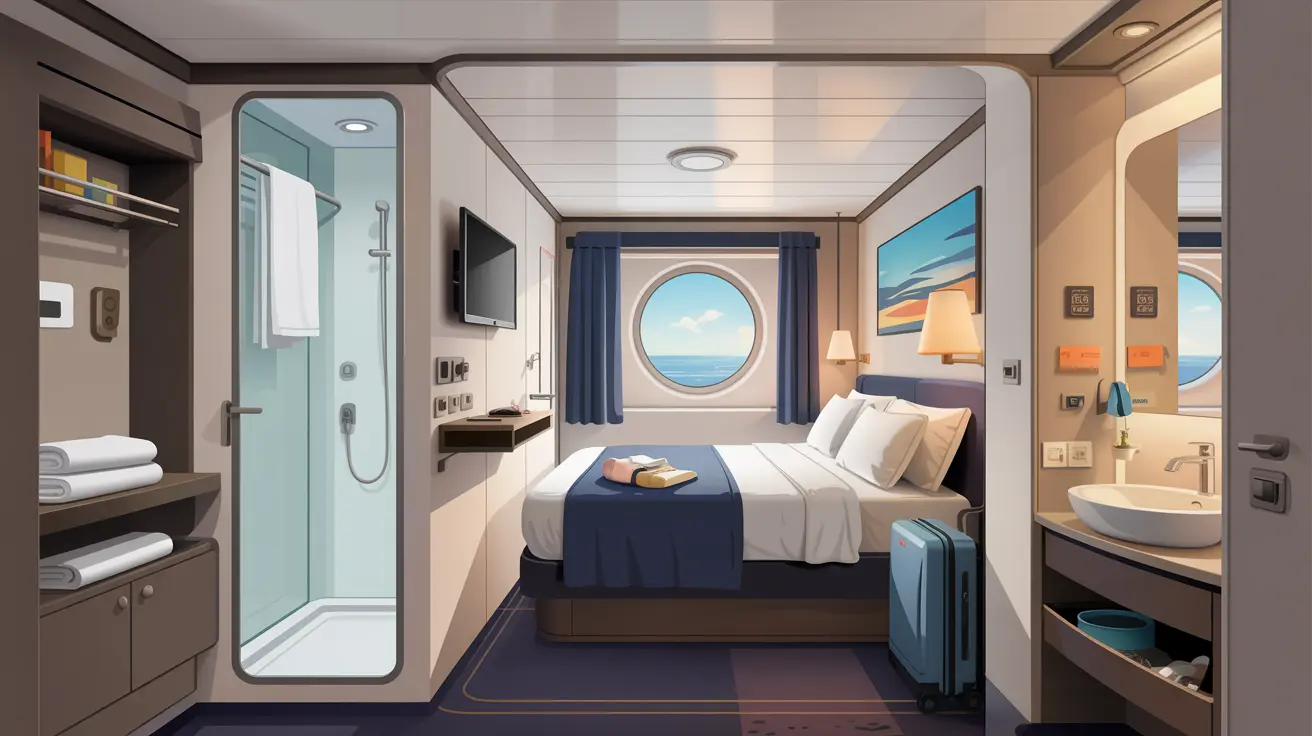
An interior cruise room sits inside the ship with no porthole or balcony. Cruise lines also call it an inside cabin or interior stateroom. On mainstream brands like Royal Caribbean, Princess and Carnival it is usually the entry level category and often has the lowest price for that sailing. You still get your own bathroom, climate control, bed, television, safe and storage, plus a stateroom attendant who cleans the cabin and refreshes towels. The main difference is the missing natural light and private outdoor space.
How Big Interior Cruise Rooms Are In Real Life
Interior cabins are compact, but they are not all tiny. On many large ships, typical inside rooms run from about one hundred thirty five to one hundred seventy five square feet, depending on ship and line, and Princess lists interior rooms on some ships at around one hundred fifty eight to one hundred sixty six square feet. You usually find a bed that can change between two twins and one queen, a compact bathroom with shower and toilet, a wardrobe or closet near the door and a small desk or vanity under the television. In many cases the interior room has a similar footprint to an ocean view cabin on the same ship, so you mainly give up the window rather than the basic layout.
What You Actually Get Inside The Room
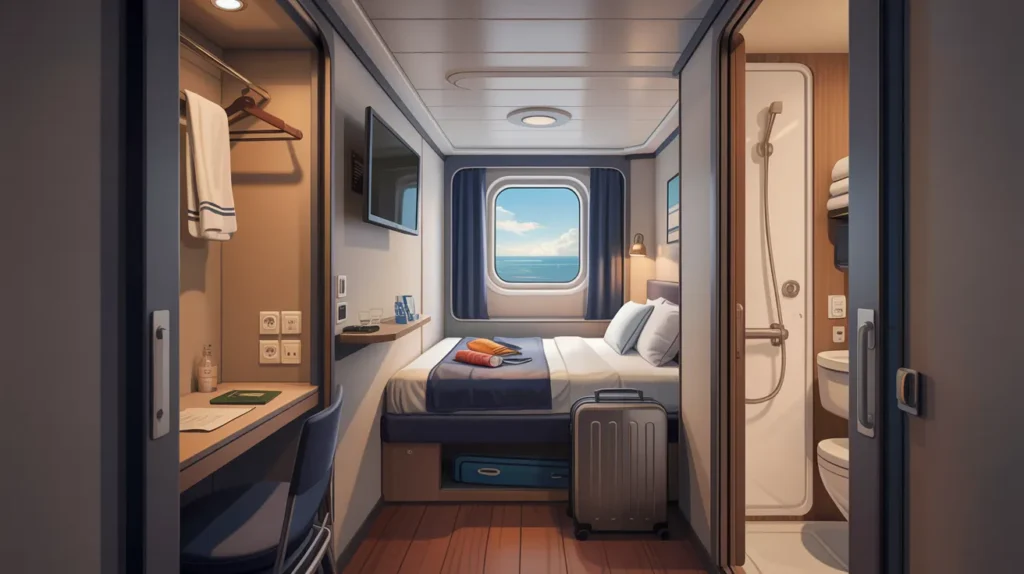
The checklist for an interior cabin looks familiar. You get a bed with decent mattress and bedding, and lines like Princess promote hotel style beds even in their entry cabins. You have a private bathroom with shower, sink, toilet and basic toiletries, plus a television with ship channels and some entertainment, a safe for valuables and a phone to reach guest services. Cabins include adjustable air conditioning and lighting, and many ships offer room service and daily housekeeping for inside cabins just like higher categories. On some brands, technology adds comfort, with Princess using a wearable token for keyless entry and in app services, and Royal Caribbean offering interior cabins with a virtual balcony screen that shows a live sea view. You still enjoy all public areas of the ship, since cabin type does not limit access to pools, dining rooms or shows.
The Real Advantages Of Interior Cruise Rooms
The clearest advantage is price. Interior cabins are often the cheapest way onto the same ship and itinerary, and guides that compare cabins show that inside rooms can cost hundreds less per person than balcony cabins on many sailings. That saving can cover excursions, drinks, specialty dining or even a longer cruise, which is why budget focused travelers and families often look at this category first. Another advantage is darkness. Without a window, the room stays very dark when you switch the lights off, and many cruisers report that they sleep better in this complete darkness, especially on sea days when they want extra rest. Guests who book interior cabins also tend to spend more time on deck, in lounges and in port, which means they see more of the ship instead of sitting on a private balcony.
The Real Drawbacks You Need To Know
The most obvious drawback is the lack of natural light. If you like to wake with sunrise you will not see it from the bed, and you need a watch or phone to know the time, which some people find disorienting on longer trips. Space can also feel tight, because even if the footprint is close to an ocean view cabin, the solid walls and closed door can make the room feel smaller, especially if you expect to spend long hours reading or working inside. Location plays a role as well, since some interior cabins sit under busy venues or near service areas, and these spots can bring more noise or vibration at certain times. If you know you dislike small enclosed spaces, this category may not be the best choice for a first cruise.
Who An Interior Cruise Room Suits Best
Interior rooms work well when the cabin is not the focus of your trip. They suit travelers who treat the room as a place to shower, change and sleep, and they suit guests who want the lowest fare and plan to spend days ashore or on deck. They can work for couples on a budget and for solo travelers on lines that offer studio interiors, and some families book an inside cabin for older kids while parents take a balcony nearby, which still costs less than two balconies in many cases. Interior cabins also suit deep sleepers and night owls, because if you enjoy a dark quiet cave for rest, the missing window becomes a feature rather than a problem.
Who Should Consider Ocean View Or Balcony Instead
Some guests feel happier in a brighter cabin. If you know you are sensitive to enclosed spaces, a window or balcony helps, and if you plan to work from the ship or spend long daytime hours in the cabin, natural light can improve mood and energy. Guests who value private outdoor space and sea views usually prefer balcony cabins, because they like coffee outside in the morning and quiet time in the evening without going to public decks, and many feel this is worth the extra cost. If you cruise rarely and want a special once in a while trip, you may decide that a balcony or suite fits you better even at a higher price.
Interior Rooms Compared With Other Cabin Types
On most large ships you can choose four broad cabin types, which are interior, ocean view, balcony and suite. The interior room is the only one without a window, ocean view cabins add a porthole or picture window without outdoor space, balcony cabins add a private open area with chairs and sometimes a small table, and suites increase both space and perks with larger seating areas and on some lines extra services. In simple terms, you trade money for light and space, and the right choice depends on how long you spend in the cabin and how much you value a private view.
How To Choose A Good Interior Cabin On A Ship
Cabin type is one decision, cabin location is another. Start with deck plans from the cruise line, look at the cabins you want and check what sits above and below them, and avoid rooms under the main pool deck, under the theater or next to nightclubs when you can, because these areas can bring more noise. Midship cabins on lower decks often feel the least motion, while forward and aft can move more in rough seas, so if you know you get seasick this matters. Think about distance to elevators and stairs, as close cabins make it easier to reach key areas but can have extra corridor traffic. Finally, check special interior types such as virtual balcony rooms with live sea views on a wall screen, solo studio cabins for single travelers and larger family interiors that connect.
How To Make An Interior Room Feel Bigger And Brighter
You can improve the feel of an inside cabin with simple habits. Keep luggage under the bed once you unpack so the floor stays clear and moving around feels easier. Use vertical storage inside the wardrobe and on shelves, and pack with cubes and small pouches so items stay grouped and surfaces stay neat. Bring a small travel clock or gentle light for morning, because without a window you need your own cue for time, and many guests like a sunrise style alarm or soft lamp to mimic daylight. Keep the room tidy by giving shoes, bags and chargers set spots, since a neat space feels larger than a cluttered one with the same size.
Common Myths About Interior Cruise Rooms
Many fears about inside cabins come from myths. One myth says interior rooms are always tiny and miserable, but in reality many are close in size to ocean view cabins on the same ship and the lack of window changes the feel more than the floor area. Another myth says no window means poor sleep, yet for many people it is the opposite, because a dark cool cabin with no early light can give deep rest as long as you set an alarm. A third myth says a cheap room means a second class experience, but guests in interior cabins use the same restaurants, shows and pool decks as guests in suites, so the cabin changes how you use the ship, not which core services you can enjoy.
Modern Upgrades That Improve Interior Cabins
Newer ships and refits keep improving these rooms. Virtual balcony screens on some Royal Caribbean ships show real time outside views with sound and bring a sense of connection to the sea into an otherwise closed room. On Princess ships with MedallionClass, a small wearable token unlocks your door automatically and lets you order food and drinks to the cabin through an app, which adds convenience for all cabin types including inside rooms. Bedding, lighting and climate systems have also improved, and mainstream lines now highlight quality mattresses and linens even in standard cabins because sleep quality is a key part of guest satisfaction.
Questions To Ask Before You Book An Interior Room
Before you confirm an inside cabin, take a short pause. Ask yourself how many waking hours you expect to spend in the room, because if the answer is very few the value case for an interior becomes strong. Ask whether you feel comfortable in darker spaces and think about hotel rooms with blackout curtains; if you like that feeling an interior will likely work, but if it makes you uneasy consider at least an ocean view. Check the deck plan for noise sources, cabin size and possible connecting doors, and make sure the bed setup, occupancy and storage match your group. When these answers line up, an interior cruise room can feel like a smart informed decision instead of a risk.
Bringing It All Together
An interior cabin is not perfect for everyone, but it is not a mistake for everyone either. It is a compact windowless space with a private bathroom, bed, storage and service at the lowest price on many ships. It works best for guests who spend most of their time enjoying the ship and ports, who sleep well in the dark and who prefer to put their budget into experiences rather than the view from the bed. If you match the right person to the right interior room in the right location, this small space can support a great trip very well.