
Spanish home interior design feel gentle and welcoming. Nothing looks too polished or cold. Rooms feel like they grew over years, not days. Soft walls and warm floors with wood and iron details work together in a calm way.
You do not need a large villa to use this style. The same ideas work in a small bungalow, a townhouse, or a flat. The aim is simple. A home that stays cool in heat, feels cozy in the evening, and works well in daily life.
What Really Makes a Home Feel Spanish
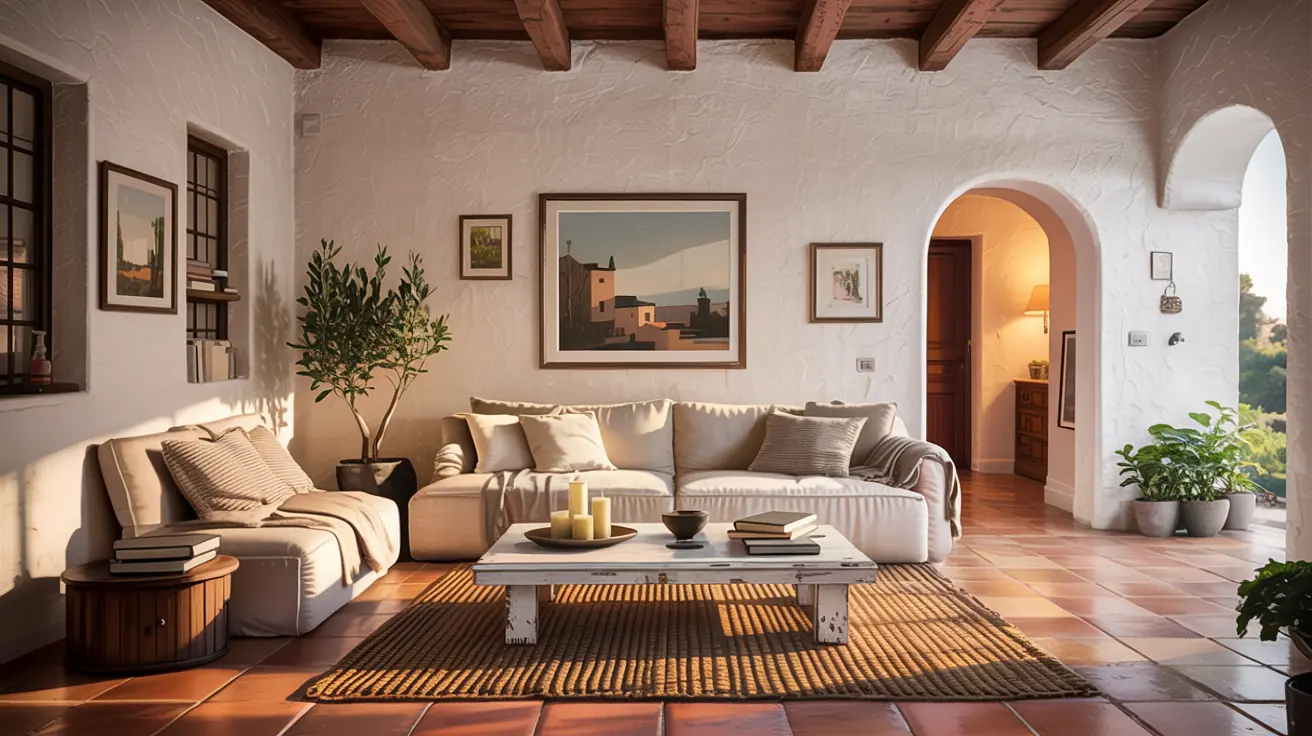
Certain features appear again and again in Spanish homes. Walls look thick and are often finished in plaster. Doorways and openings are rounded instead of sharp. Beams run across the ceiling in wood. Floors use tile or stone and stay cool under bare feet.
Rooms often open toward a patio or small garden. Doors and windows frame plants, sky, or a fountain instead of a blank fence. Inside and outside feel connected, and that brings a quiet holiday mood to normal days.
If your home already has arches, beams, old tile or iron railings, keep them. These details carry most of the character. Your main task is to support them with good colours and simple, solid furniture.
Walls, Arches and Ceilings
Start with the walls. Spanish homes rarely use harsh bright white. They lean toward warm shades that feel like sun on stone. Soft white, cream, light beige and pale sand work well and flatter wood and terracotta. A hint of texture in the paint keeps the walls from looking flat and lifeless.
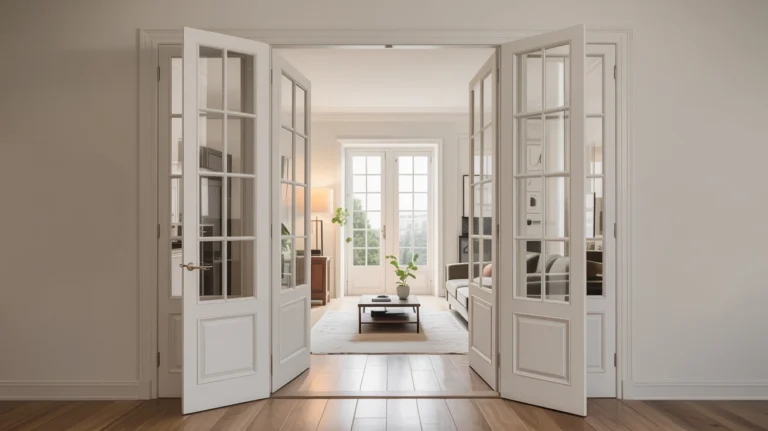
Arches soften the inside of the house. You might have a curved opening between the hall and living room or a rounded doorway into the kitchen. You can also have a small arch over a niche. If you do not have any built in, you can still suggest the shape with curved mirrors, rounded furniture or a simple painted curve above a doorway.
Ceilings often show wood. Some homes have dark beams with white between them. Others use lighter wood. If a room feels low and heavy, you can brighten the beams or the spaces between them. If the room already feels tall, you can leave the beams darker to frame the ceiling.
Floors, Tile and Other Hard Surfaces
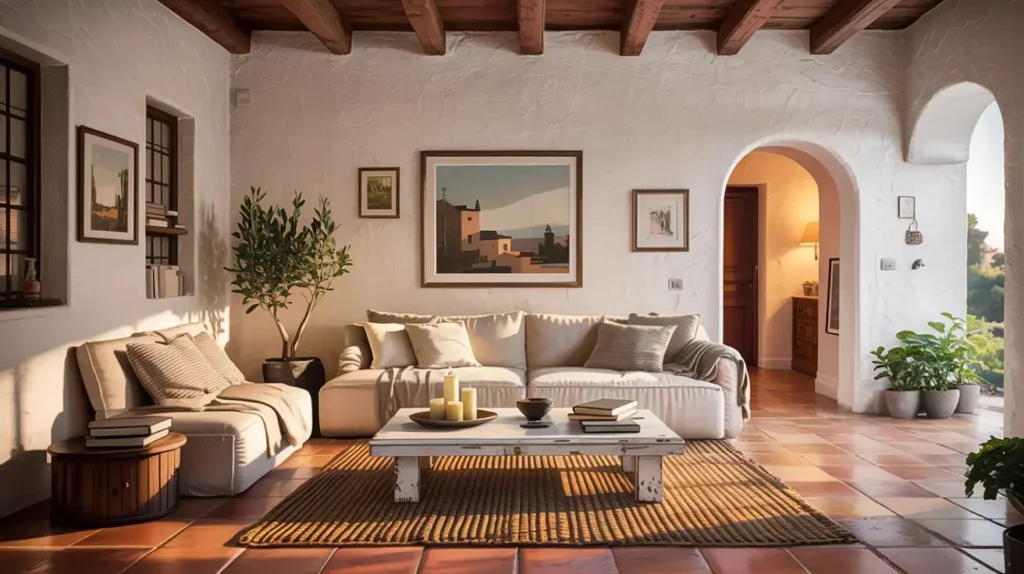
Floors do a lot of work in this style. Old terracotta and Saltillo tiles are very common. They show marks and colour changes over time and that is part of their charm. They suit kitchens, halls, entries and terraces.
If the floor tone feels too strong, do not rush into a full change. Place a large rug in the seating area and a runner in long halls. Paint the walls in a warmer soft tone. Replace very dark curtains with lighter fabric. Often the floor settles down once the rest of the room feels calmer.
Patterned tile appears in key spots. Stair risers, a kitchen backsplash, a bathroom floor or the face of a fireplace. One clear area is usually enough. When tile covers every wall and floor, the house starts to feel noisy and busy.
Stone often frames fireplaces, forms window sills or covers outside steps. Iron appears in stair rails, balcony guards, window grilles and door hardware. These elements last a long time and look better as they age.
Colours That Suit This Kind of Home
Think about warm places in the sun. Walls are pale and soft. Roofs and pots are clay. Trees and shrubs add deep green. The sky and some tiles bring in blue. That simple picture can guide your palette.
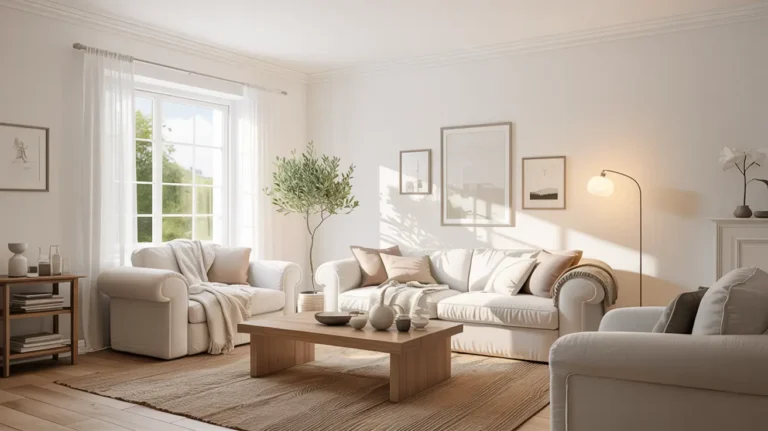
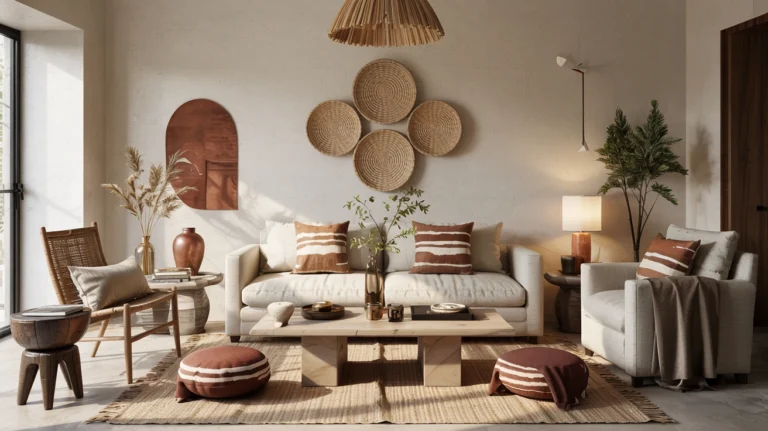
Keep larger areas quiet. Use soft white or cream on most walls. Let floors bring in terracotta, stone or warm wood. Choose one or two fabric colours that feel natural, such as olive, rust, mustard, clay or gentle blue. Repeat those same colours in cushions, throws, rugs and pottery instead of adding new ones in every corner.
Furniture That Feels Right in a Spanish Home
Furniture should look sturdy and honest. A wood table with a few marks and dents often looks better than a glossy surface. Real wood consoles, sideboards and coffee tables suit this style very well. Many rooms mix one or two older pieces with simple new ones.
For seating, comfort comes first. A plain linen or cotton sofa in a light shade works in most spaces. Brown leather chairs age nicely and fit the mood. Low woven stools are handy and easy to move.
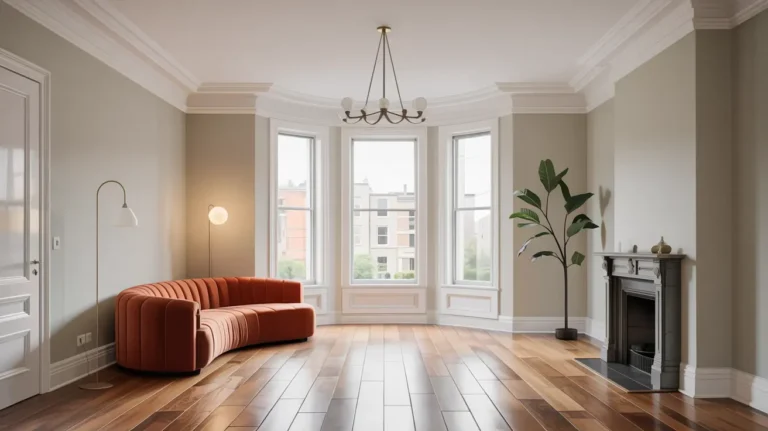
Lighting has a huge effect. In the main room or above the dining table, an iron or bronze chandelier or lantern gives strong character. In other spots, wall lights and table lamps with warm shades spread soft light that flatters plaster and paint.
Textiles and rugs bind the space together. Linen, cotton, wool, jute and sisal feel right under hand and foot. Rugs do not need complex patterns. Simple stripes, small motifs or plain weaves in warm tones are enough.
Pottery, terracotta pots, simple bowls and a few framed prints or paintings finish the room. Leave open space on shelves and walls so the eye can rest.
When Your Home Is Already Very “Spanish”
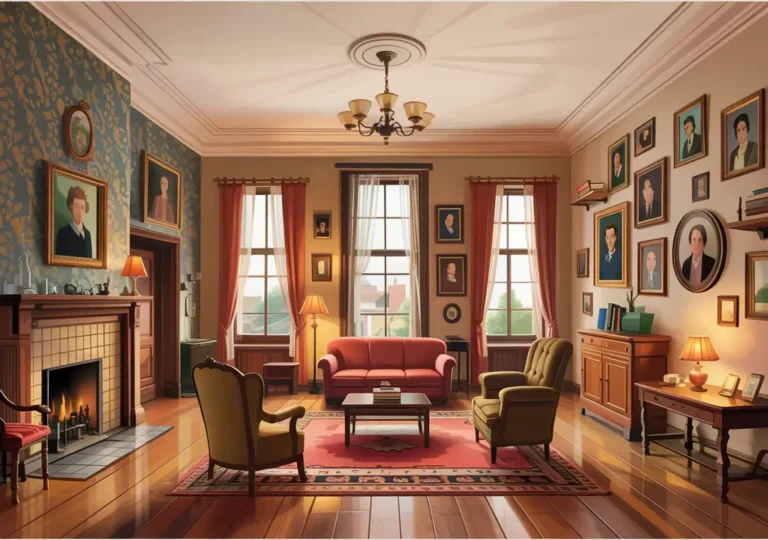
Some homes already have strong features. Dark beams, heavy tile, a big plaster fireplace and lots of iron. If you add more pattern and dark colour, the house can start to feel like a set.
Clear the main room and edit first. Remove small accessories from every surface. Lighten the walls. Bring in larger pale rugs. Pick one or two fabric colours and repeat them instead of many. Let beams, floors and the fireplace act as the main deep tones. The space will still feel Spanish but more open and easy to use.
When Your Home Is New and Straight Lined
Many newer homes and flats have flat ceilings and square openings. You can still borrow this style.
Paint the walls a warm soft white. Add one large curved mirror or a rounded side table. Swap shiny silver handles for black, bronze or aged brass. Choose a wood dining table with simple chairs in natural materials. Pick one strong iron or dark metal light for the main room or above the dining table.
Use terracotta pots with green plants, plain clay dishes, a woven rug and linen curtains. These pieces carry the mood without fake beams or pretend arches.
Climate and Comfort
This way of building and decorating comes from sunny regions with long hot seasons. Cool floors, thick walls and shaded areas outside help people rest during the hottest hours.
If you live in a hot place, lean into that. Tile or stone in busy rooms keeps them cool. Light curtains that move with air feel better than heavy drapes. A shaded corner outside with a bench or two chairs extends your living space.
If you live in a cooler place, adapt the idea. Keep some tile or stone but add deep rugs when you need them. Use thicker throws and cushions. Choose lamps with warm light. The forms and materials stay rooted in Spanish style while the house still suits local weather.
Small and Low Cost Changes That Work
If you have a limited budget or rent your home, focus on what you can change without building work.
Paint is the most powerful tool. A shift to warmer white or a gentle beige can soften a whole space. After that, look at light fittings. Replacing one flat ceiling light with a simple iron chandelier or pendant can change the feel of a room more than a new sofa.
Rugs and curtains come next. Swap cold tones for jute, sisal or warm wool. Hang plain linen or cotton curtains that fall in a clean line. Add a few clay pots, woven baskets and simple ceramics. Frame one or two pictures with soft earthy colours or calm landscapes.
Mistakes to Avoid
It is easy to go too dark. When beams, floors, large furniture and fabrics are all deep in tone, rooms feel heavy. Light walls, pale rugs and some lighter fabrics balance the darker parts and help the important details stand out.
Another mistake is turning the house into a theme. If every surface has scrolls, bright patterns and ornate details, the space feels forced. One strong tile, one clear iron feature and a handful of well chosen objects usually look better than a room full of props.
Many people also strip away character too fast. They cover arches, box beams or replace all tile before trying simpler fixes. Often it is wiser to keep the best old parts and update what surrounds them.
Mixing too many similar styles can also cause confusion. Spanish, Tuscan and wider Mediterranean looks share stone, wood and iron but use them in different ways. Choose one path that fits both the house and your taste and let that choice guide new purchases.
A Simple Way to Begin
Walk through your home and note three things you already like. It may be a tile floor, a small arch, a brick fireplace, a sunny window or a quiet corner outside. Decide to make those the main features instead of hiding them.
Choose a warm wall colour, a few natural materials and two or three fabric colours. Remove pieces that clash with them. Bring in items that support them. Work on one room at a time so the process stays clear. Over time your home will feel calmer, warmer and more grounded. It will look less like a display and more like a Spanish home that fits your life and your routine.