
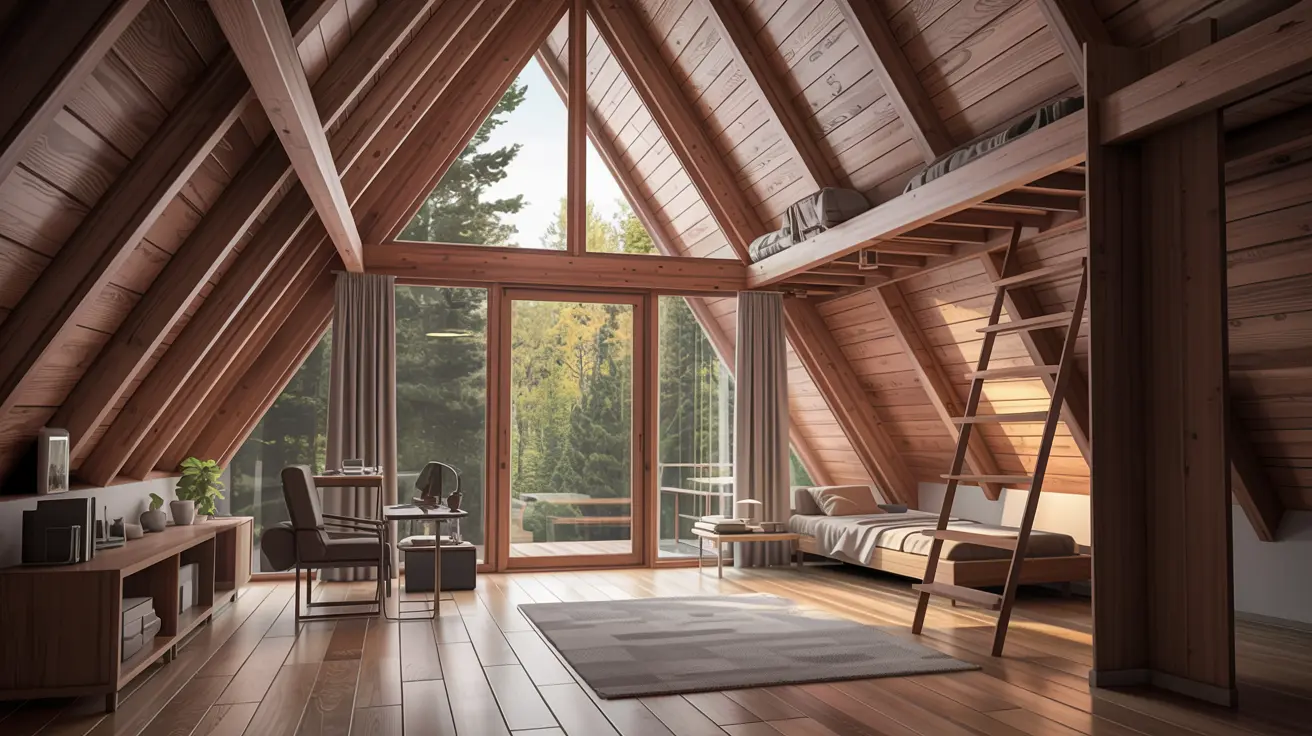
An A frame house interior design has a steep roof that drops almost to the ground and forms a clean triangle. The roof becomes both roof and walls, which gives these homes their strong shape and cozy, cabin feel. Architectural sources describe A-frame houses as simple structures with angled sides and tall open ceilings, often with a full glass wall at one end.
This shape brings special design gifts and real problems. You get soaring ceilings, beautiful views and a strong link to nature. You also get sloping walls, tricky storage and narrow floor plans. A good interior plan respects the shape instead of fighting it.
What an A-frame House Really Is
An A-frame building is basically a gable roof pulled right down to the ground. There are no standard side walls. The two roof planes meet at the top ridge and create the letter A when you look at the house from the front.
Because the roof and walls are the same, the ceiling inside can stay open to the rafters. Many cabins keep the interior structure visible. This creates a tall main room with exposed beams and a strong sense of height, even when the floor area stays small.
A-frame homes became very popular in the mid twentieth century as simple mountain, forest and lakeside retreats. Their shape was easy to build from kits and worked well on sloping or wooded sites.
Today people still choose them for that same feeling of escape and simplicity. The structure is straightforward. The interior can be rustic, modern or anything in between.
Design Challenges and Opportunities in A-frame Interiors
The same elements that make these homes charming also create design headaches. Sloping walls reduce usable wall height. Upper floors lose some floor area near the edges. Heat and light rise into the peak and can leave the lower areas darker or cooler.
Yet the tall volume and exposed structure give you strong character to work with. A clear roof peak, visible beams and a glazed gable wall can all become natural focal points. Interior designers often highlight these features instead of hiding them.
If you treat the A-frame as a simple box, you will struggle. If you treat it as a special shell that needs custom answers, the design starts to click.
Planning the Layout Inside an A-frame
Most A-frame footprints are longer than they are wide. The smartest plans use this length instead of fighting it. Guides on A-frame design suggest running living, dining and kitchen in one open line rather than trying to carve out many small rooms.
Start by choosing a main zone under the highest part of the roof. This is often the living area, because you get the full drama of the peak and the best view of the window wall. Place the main sofa so it faces either the view or a fireplace. Keep circulation paths clear along one side.
Next, position the dining area and kitchen along the length of the plan. A straight kitchen with a long island works well in narrow shells. A dining table placed between the kitchen and the living area can act as a soft divider without adding walls.
Lofts or mezzanines usually sit over the kitchen or part of the living space. They can become bedrooms, offices or small lounges. Think about privacy, ceiling height at the bed, and how light and sound move between the loft and main room.
Working With Sloping Walls Instead of Fighting Them
Sloping walls are the biggest A-frame design puzzle. Tall wardrobes, standard bookcases and high cabinets rarely sit well under the roof angle. They either stick out awkwardly or waste space behind them.
A better approach is to keep tall items on the flat gable walls at the front and back. Place wardrobes, tall shelving or media units there. Use low furniture on the sloping sides. Sofas, benches, low storage units and floor lamps suit those areas and protect headroom.
Built-in storage under the eaves is one of the best space savers. Custom cabinets, drawers or open shelves can follow the roof line and turn awkward corners into useful storage. In bedrooms, low dressers along the knee walls can remove the need for big wardrobes.
For art and feature walls, count on the flat ends again. Use the gable walls for large pieces, statement paint or paneling. Treat the slopes more gently with smaller pieces or leave them mostly clean so the structure can speak.
Light, Windows and the Connection to Nature
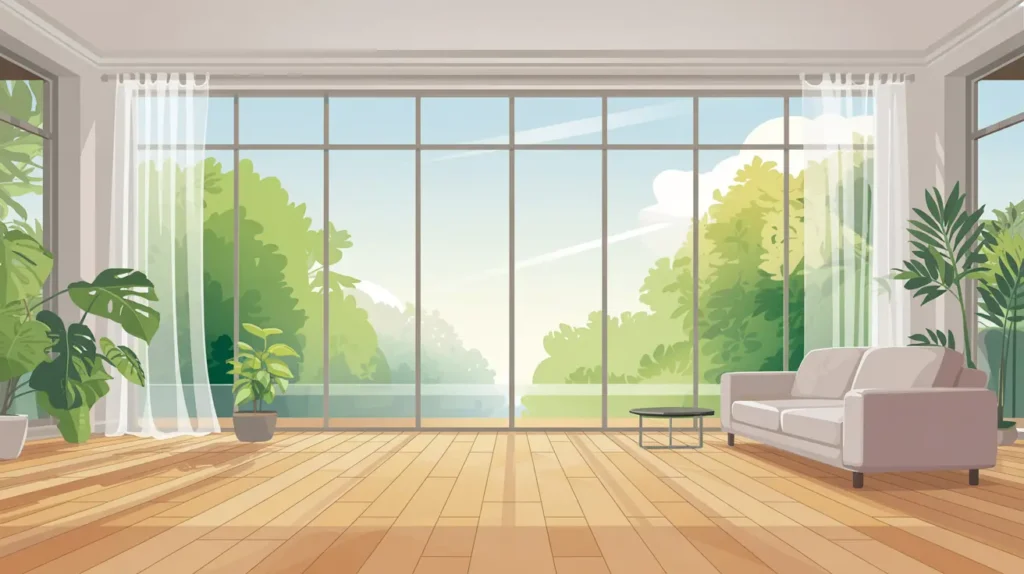
Many A-frame homes have a full glass wall on one gable. This wall often faces the best view and acts as the star of the house. Reports on A-frame design highlight this glazed end as the main source of daylight and visual drama.
The downside is that the back can feel dim compared with the bright front. To balance this, use several layers of light. Ceiling fixtures or track lights can follow the ridge. Wall sconces help lift dark corners. Floor and table lamps create cozy pools of light near seating and beds.
Colour and surface choices also matter. Lighter finishes on the rear walls and ceilings reflect light and keep the shell from feeling like a cave. Mirrors on side walls or near the staircase can bounce daylight deeper into the plan. Designers often use light woods, white or soft neutrals for the main shell, then add colour through textiles and art.
Plants tie the interior back to its setting. A few well placed trees in pots or trailing plants near the window wall echo the forest or lake outside and soften all the angles.
Materials, Textures and Colour Palettes
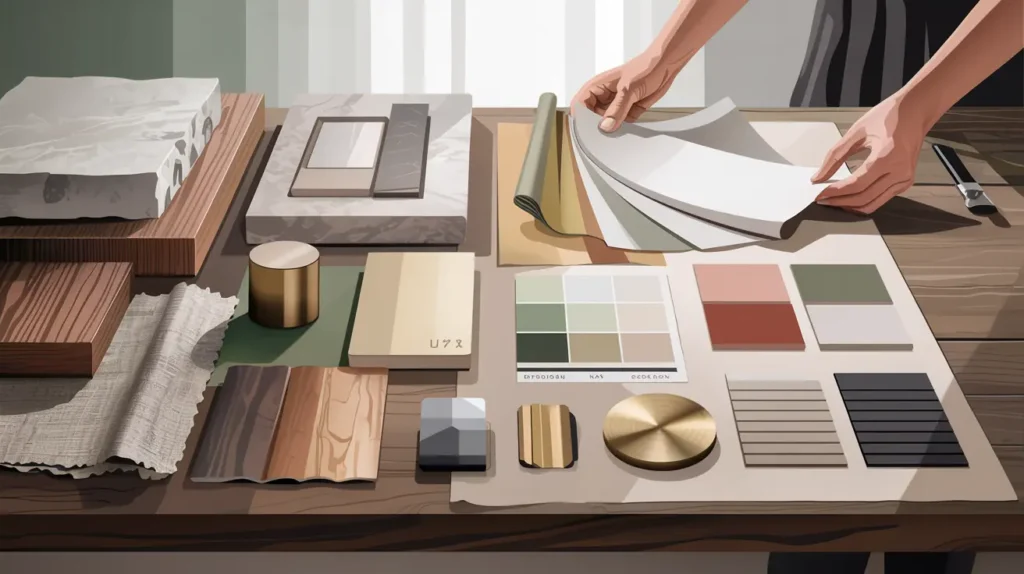
Wood is almost always the base material in A-frame interiors. Many projects keep ceiling rafters exposed and cover walls with tongue-and-groove boards. Some use a mix of light and medium woods to avoid a heavy “orange cabin” feel.
Stone or masonry comes next. A fireplace in stone or brick grounds the main room and makes sense in cold climates. Natural stone floors or stone-look tiles at the entry or around the hearth can handle mud, snow and boots.
Soft textures help balance all the hard surfaces. Linen, wool, cotton and leather feel right in this kind of home. Layer rugs over wood floors to soften sound and add warmth underfoot. Cabin makeovers often rely on simple, tactile fabrics rather than shiny or delicate ones.
Colour palettes usually fall into three families. Some owners choose light and airy, with white walls, pale wood and a few black accents. Others go rustic, with warm timber, earthy browns and forest greens. A third group goes more modern, with calm neutrals and one deeper accent shade. All three approaches work if they respect the shape and setting.
Style Directions for A-frame Interiors
A rustic cabin look feels natural in a wooden shell. This often means visible beams, rougher textures, leather seating, plaid or woven textiles and a stone fireplace as the main anchor. The goal is comfort and warmth rather than perfect polish.
A Scandinavian inspired interior pushes more light. It uses white or very light walls, pale wood, simple shapes and a limited colour palette. Black metal railings or frames add sharp contrast. This works well in snowy landscapes, where bright interiors feel clean and calm.
Japandi style blends Japanese and Nordic ideas. In A-frames, this often means low furniture, simple forms, lots of wood and an earthy palette with soft greens or clay tones. The structure stays clear and the decor stays quiet. Some real projects show Japandi A-frame bedrooms that feel like forest retreats rather than typical cabins.
Clean modern styling uses fewer pieces but pays more attention to line and proportion. Sectional sofas, slim profile chairs, plain cabinets and strong yet simple lighting work well here. This path suits people who like the cabin shell but prefer a more urban feel inside.
You can also mix elements. The main risk is clutter. Pick one style as your base and add only a few touches from others.
Room-by-room Ideas for A-frame Interiors
In the living room, use the peak and the window wall. Place the main sofa facing the view or fireplace. Keep furniture slightly low so it works with the sloping sides. Add a rug to define the seating zone and a coffee table that does not block sight lines.
In the kitchen and dining area, lean into the long shape. A straight kitchen with a long island or peninsula suits a narrow plan. A dining table in line with the island stretches the space visually and gives you a natural gathering point under a statement light.
Loft bedrooms need careful planning. Place the bed where ceiling height allows you to stand comfortably at the sides. Use the railing wall for low storage and keep taller pieces at the flat gable end. Calm colours and soft textures work well up here because the roof angle already adds drama.
Bathrooms under the slope can be very striking. Designers often place the shower against the tall wall and the vanity under the lower part. Bold tile on the high wall and simpler tile on the sides can make the height a feature. A glass shower keeps the small footprint open.
Entries and mudrooms should respect the outdoor lifestyle that often comes with these homes. Durable floors, hooks for coats, deep trays for boots and good lighting near the door make daily life much easier. Built-in benches with storage are especially useful in narrow spots.
Storage and Function in A-frame Homes
Storage is often the main complaint in A-frame houses. The best solutions are built for the shape. Custom cabinets under eaves, drawers in stair risers and full-height storage on gable walls all help.
Hallways and landings can host shallow shelves or linen cabinets. Benches with lift-up seats add hidden storage in living rooms and entries. Coffee tables and ottomans with storage inside also earn their place here.
Think about what you really store. Outdoor gear, bedding for guests, books, games and seasonal clothing all need homes. Plan storage for these items before you fill the house with freestanding furniture that does not fit the angles.
Full-time Living vs Vacation Rental
Some A-frame houses serve as weekend cabins. Others become full-time homes. Daily use asks more of the design. Heating and cooling matter more in a tall volume. Good insulation, careful window shading and ceiling fans can keep temperatures even.
Sound carries easily between the main room and lofts. Soft surfaces, rugs and curtains help. In full-time homes, you may choose more enclosed bedrooms or use partial walls to gain privacy.
Vacation rentals benefit from simple, durable choices. Easy-to-clean fabrics, hard-wearing floors and clear layouts help guests relax and prevent damage. Strong focal points, such as a view-focused living room or a dramatic dining light, also help photos stand out on listing sites.
Common Mistakes in A-frame Interior Design
One common mistake is fighting the sloping walls. Forcing tall cabinets or big wardrobes against them wastes space and looks awkward. It is better to keep tall items at the gable ends and accept that the slopes want lower pieces.
Another mistake is over-cluttering a narrow shell. Too many small items break the long lines and make the home feel cramped. Choose fewer, larger pieces and keep circulation lines clean.
Many owners also forget to balance light. The glass front glows while the back fades into shadow. Without thoughtful lighting and light surfaces at the rear, the home can feel split in two.
Finally, some designs ignore real life. Ladders to lofts, no place for wet gear, too little closed storage and no quiet corner all cause stress later. A-frame homes work best when they support daily habits as well as weekend escapes.
FAQs About A-frame House Interiors
People often ask what style works best inside these homes. The honest answer is that many styles can work if they respect the triangular shell, natural light and views. Rustic, Scandinavian, Japandi and clean modern can all look at home here.
Decorating sloping walls is another common question. The safest method is to keep big art on flat walls and let slopes stay cleaner, perhaps with smaller pieces or simple wood cladding. Built-ins under the slopes give more benefit than extra decor.
Many owners worry about brightness. The best approach is to lean into the glass gable, then add layers of light and lighter surfaces at the back. Mirrors and thoughtful lamp placement finish the job.
First Steps to Design Your A-frame Interior
Start by walking through the empty shell and finding the true centre of each space. Choose the main focal points and respect the roof lines. Decide on one layout, one colour story and one main style direction for the whole interior.
Then solve the biggest pain points first. Plan storage into knee walls and under stairs. Balance light from front to back. Choose furniture that suits the height and width you have, not the house you wish you had.
With that foundation in place, details like cushions, art and small decor will come more easily. When the structure, light and layout feel right, A-frame house interior design stops being a puzzle and starts feeling like a clear, enjoyable project.